- Статьи
- Science and technology
- Base shift: a new type of space "perpetual motion" engines has been invented in the Russian Federation

Base shift: a new type of space "perpetual motion" engines has been invented in the Russian Federation

Russian scientists have invented a new way of moving in space. According to the hypothesis, it can be used to create spacecraft that practically do not need fuel and can fly between the stars simply using the force of universal gravity. But so far only in theory. Whether alternative theories will allow a person to get out of the Solar System is in the Izvestia material.
A new way to move in space
Researchers from the Engineering Academy of the P. Lumumba Peoples' Friendship University of Russia (RUDN University) have theoretically substantiated a new way of moving vehicles in space. This approach does not require the release of fuel or any reactive mass. If this method can be implemented, it will make it possible to fly to the stars, one of the authors of the development, Doctor of Technical Sciences, Professor, Deputy Director of the Engineering Academy of the RUDN University Sergey Kupreev told Izvestia.
The scientist explained that the development is based on a hypothesis that currently does not correspond to established ideas about the nature of things, but it does not contradict fundamental laws. The experts presented their idea to the scientific community for discussion.

— Articles have been published in a number of sources in Russian and English. In particular, the hypothesis is posted in the archives of scientific publications for discussion before publication. An article is being prepared for publication in Acta Astronautica, an authoritative scientific publication," said Sergey Kupreev.
The development of the proposed ideas will change the principles of space navigation. The theory is based on the physical phenomenon that extended objects in space can move due to the difference in gravitational forces, since all objects in the universe with mass cause gravity. As a result, the internal "rotational moment" changes. For example, if a flywheel is placed on a dumbbell-shaped device and it is unwound, the device itself will change its orbit according to the law of conservation of kinetic momentum.
Scientists have proposed to apply this principle at the level of microobjects — elementary particles, using their spin as a "flywheel". This is the intrinsic angular momentum of the particles, unrelated to their motion, which can be represented as their internal rotation.
— The new principle of motion in space is based on a change in kinetic momentum. This approach uses radiation and absorption of streams of low-energy particles with spin in a direction perpendicular to the trajectory of the body. In particular, in the course of research, in strict accordance with the laws of classical and quantum mechanics, the possibility of creating an acceleration of the order of tens of thousands of m/s2 was theoretically proved," explained Yuri Razumny, Doctor of Technical Sciences, Professor, Director of the RUDN University Engineering Academy.

He added that if all the atoms of a body emit particles with spin at the same time, then it will move smoothly and without overload and deformation. Putting this idea into practice could lead to the creation of engines that operate based on quantum effects rather than chemical reactions.

What experiments can confirm an alternative theory?
As the scientist explained, the presented idea of moving in space is in good agreement with modern approaches to solving the problem of gravity quantization (for example, string theory, loop quantum gravity, etc.), as well as with the results of experiments with the motion of bodies in a vacuum.

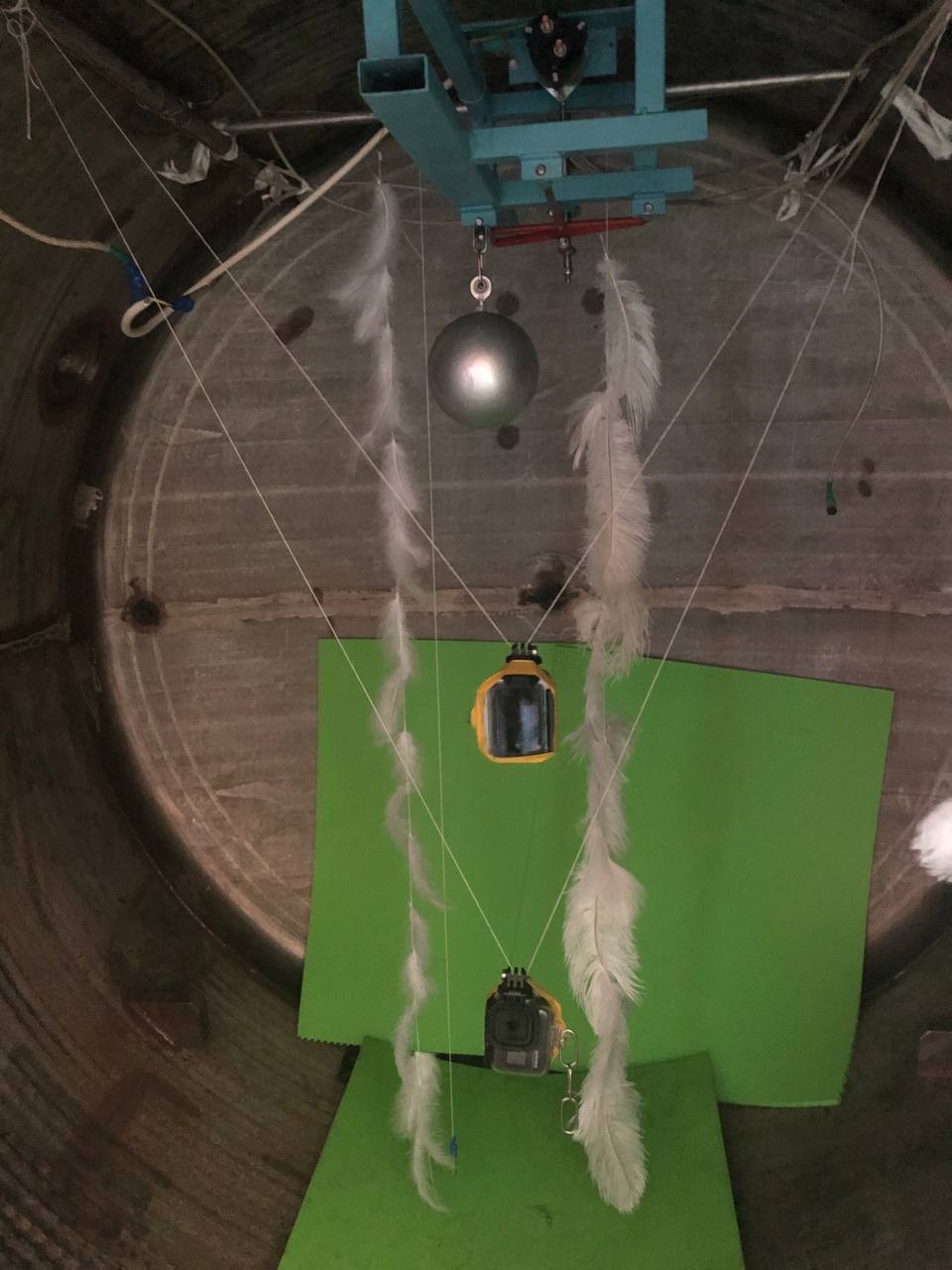
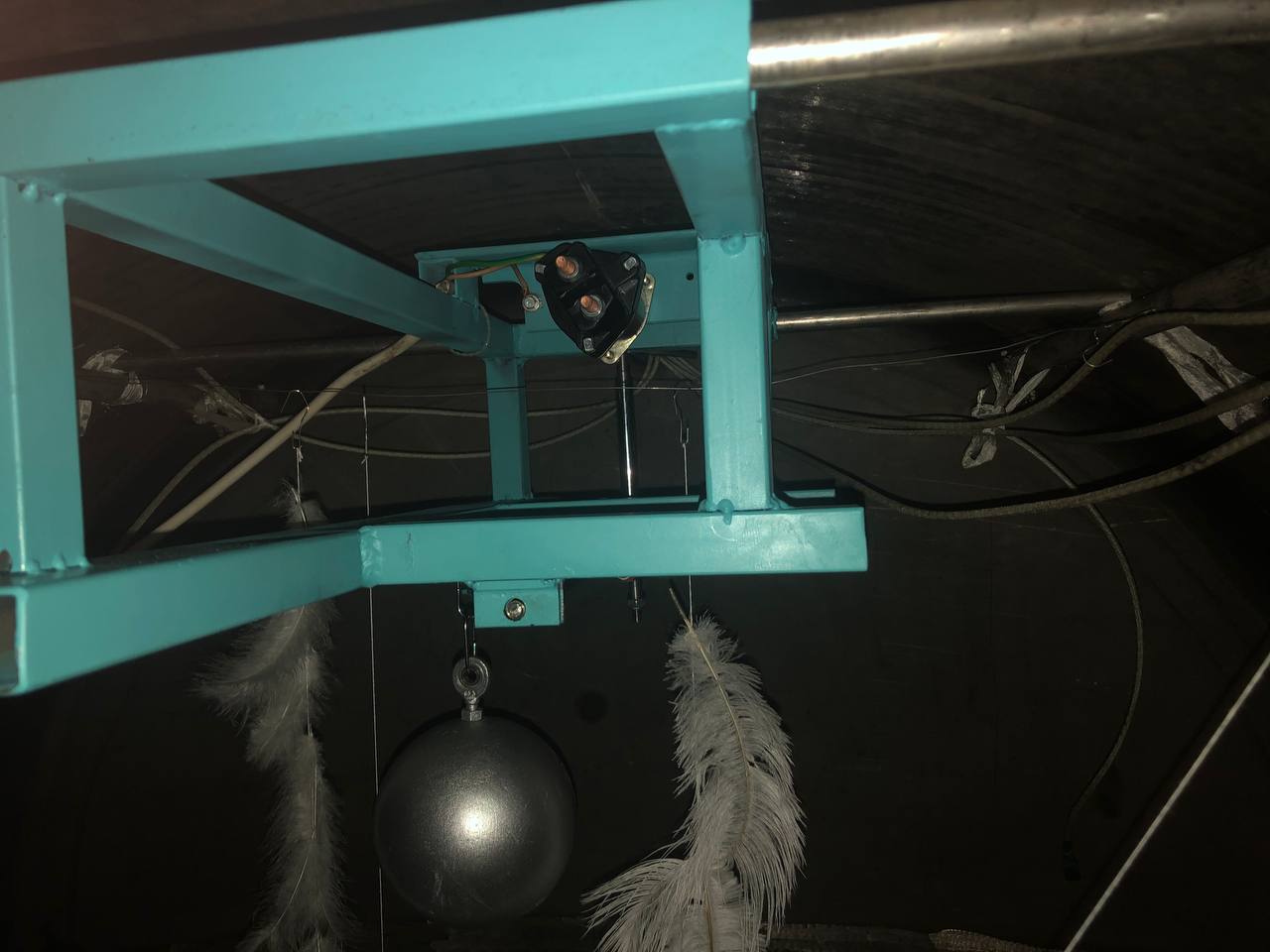
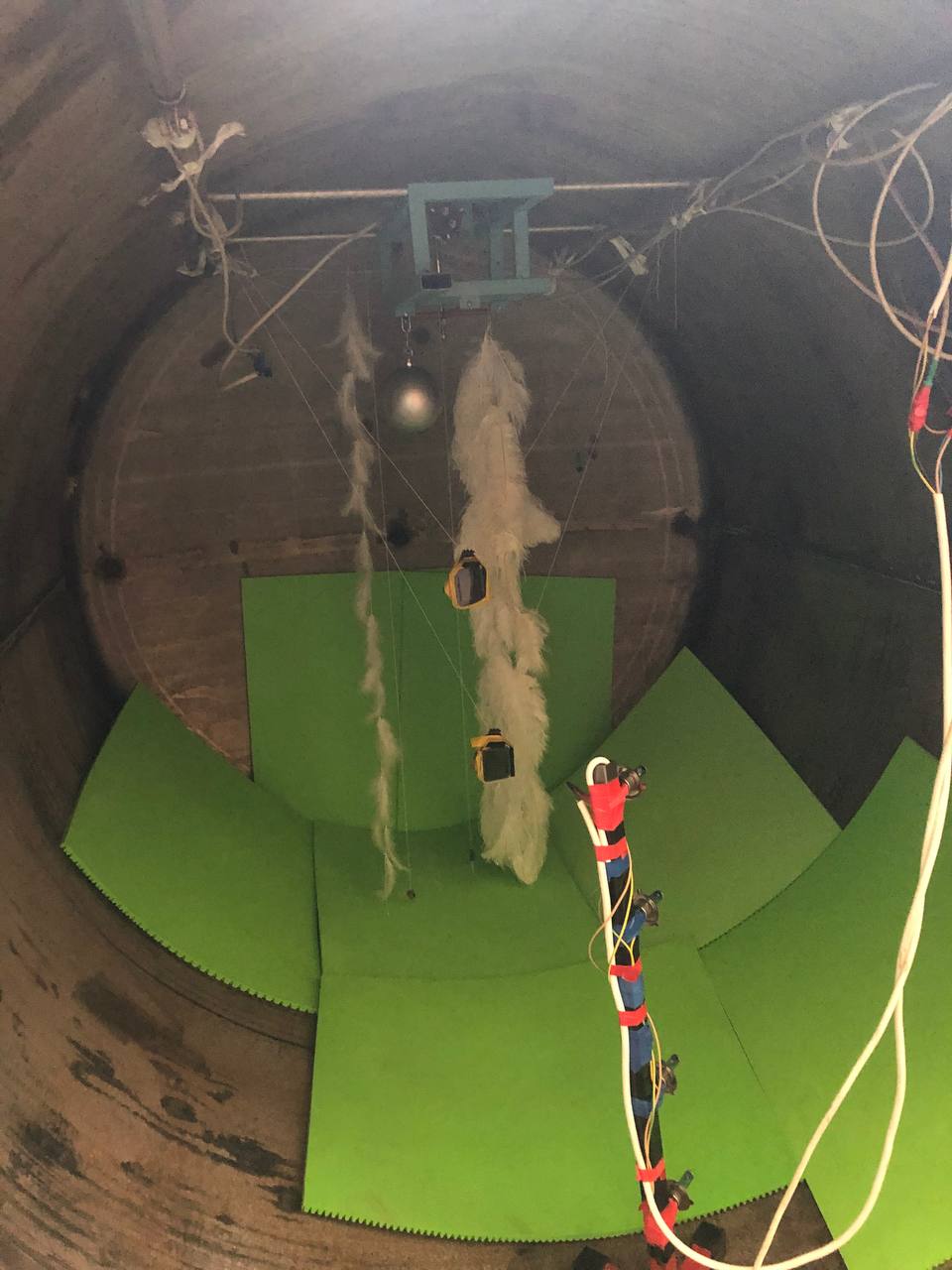
In particular, the authors of the theory organized a series of experiments that include observing in vacuum conditions the vibrations of ostrich feathers suspended on an independent thread when a heavy body, a cast—iron ball weighing 7.26 kg, falls freely near them. The scientists recorded the results of the experiment on a video camera at a speed of 240 frames per second.
"In experiments, we tested the hypothesis of the presence of low—energy particle radiation, which could affect the dynamics of objects (feathers), causing their fluctuations and deviations," explained Sergey Kupreev.
He noted that the videos showed the fluff deflecting in his direction when the ball fell. At the same time, changes in the amplitude of their oscillations were observed on different frames. For example, in one of the frames, the fluff is deflected towards the ball with a reduced amplitude, which indicates abnormal fluctuations. On the next one, a new fluff appears, located opposite the center of mass of the ball, which may be caused by the radiation of low-energy particles.
According to the scientist, examples of motion without mass ejection exist in nature. For example, as a result of tidal interaction, the Moon is gradually moving away from the Earth, and the planet is slowing down its rotation. This is due to the redistribution of kinetic momentum between them — the satellite receives an additional orbital angular momentum and moves away, while the Earth gives up part of its internal kinetic momentum and slows down rotation.

In addition, stars in galaxies rotate faster than they should, according to known laws. This is usually explained by the action of "dark matter", but this phenomenon can also be associated with the emission and absorption of particles with spin.

Is it possible to implement a new way of moving in space
Many of the provisions of the presented theory do not agree with the repeatedly proven ideas about particle physics, said Viktor Zosimov, professor at MIPT, Doctor of Physico-Mathematical Sciences.
— As for the possibility of changing the orbit of a dumbbell-shaped device due to changes in angular momentum when interacting with other bodies, this is possible and is known in various ways. It is also acceptable to change the moment of rotation when particles with parallel spins are ejected," he clarified to Izvestia.
The rationale for the proposed method raises questions, said Alexander Senkevich, Director of Zvezda LLC and a member of the Frontiers of Science Guild.
— For example, the spin of a free particle cannot be measured, since this requires an external magnetic field, which makes the particle unfree. However, there are no ways to convert spin energy into motion of a macro object," he said.

From the point of view of classical physics, the conclusions drawn are based on current experience and descriptions of the interaction of elementary particles. Therefore, the application of the theory requires a large evidence base and research, the expert added.
— In Soviet times, experiments were conducted on spacecraft to prove the possibility of creating thrust without mass loss. But they turned out to be untenable," said Nathan Eismont, senior researcher at the Space Research Institute of the Russian Academy of Sciences.
However, these hypotheses expand the horizons of thinking and can push the development of scientific thought in the right direction, the expert believes. Interstellar travel projects that do not go beyond the laws of physics exist, although they are difficult to implement. For example, a nuclear rocket engine with a gas-phase reactor, developed by Valentin Ievlev.
Переведено сервисом «Яндекс Переводчик»
