Gas intermission: Germany promotes the abandonment of energy resources from the Russian Federation by 2027
- Статьи
- World
- Gas intermission: Germany promotes the abandonment of energy resources from the Russian Federation by 2027

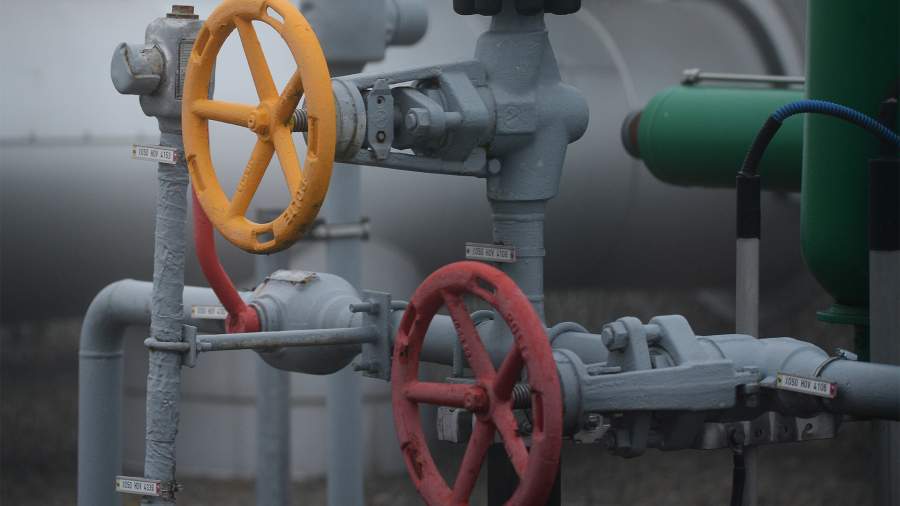
Germany supports the European roadmap for eliminating energy imports from the Russian Federation, the German Embassy in Moscow told Izvestia. However, Berlin still receives Russian liquefied natural gas, the Russian Embassy in Germany told Izvestia. According to experts, supplies are likely to go through Belgium and the Netherlands. In the West, new restrictions against Russian energy resources are being discussed. An attempt to completely ban Russian gas imports to the EU has faced resistance from within the union. And the proposal to lower the price ceiling for oil from the Russian Federation has not yet found consensus in the G7, the Western press writes. About why it will be difficult for EU countries to abandon Russian gas and how the situation in the Middle East affects this, see the Izvestia article.
Is Germany buying Russian gas
Germany welcomes the roadmap presented for the abandonment of Russian energy imports to the EU by 2027, the German Embassy in Moscow told Izvestia.
— After Gazprom stopped its supplies in 2022, Germany refused to import Russian energy directly. Germany already does not receive direct supplies of gas, coal or oil from Russia. The use of nuclear energy has been discontinued in our country," the German diplomats noted.
The strategy of Germany and the EU includes three elements: diversification relative to supplier countries, energy efficiency and increased use of renewable sources. This approach makes it possible to become more independent and increase resilience to crises, the German diplomatic mission said.
However, Germany still receives Russian gas in the form of LNG, despite the formal refusal of direct supplies, the press service of the Russian Embassy in Berlin told Izvestia.
— The situation with gas is more complicated. Formally, the customs statistics do not contain information about pipeline gas or LNG imported into Germany. However, it is no secret that Russia ranks second after the United States in LNG exports to the EU, having supplied about 19 billion cubic meters in 2024. Part of this volume was re-exported to third countries, but the bulk ended up in Europe. The presence of "Russian gas molecules" in the German gas transportation system was even acknowledged by former Vice Chancellor and Minister of Economy Robert Habek, Russian diplomats told Izvestia.

Germany does purchase Russian LNG in transit through Belgium and the Netherlands, where it is regasified and supplied to Germany, Igor Yushkov, an expert at the Financial University and the National Energy Security Fund, tells Izvestia.
— Germany does not directly accept LNG of Russian origin. Germany records this as an import from Belgium, although Belgium does not produce gas at all. Therefore, of course, it is mainly Russian-origin gas. Liquefied natural gas has partially replaced Russian pipeline supplies on the German market," the expert noted.
There are no prospects for restoring direct supplies. Germany is ready to shell out an order of magnitude more taxpayer funds for LNG supplies from the United States and the Middle East in order to prevent the resumption of cooperation with Russia in the energy sector. This fully applies to the Nord Streams. This position is not close to everyone in Germany, but the primacy of politics over the economy is still indisputable, the press service of the Russian Embassy in Berlin told Izvestia.
Since 2022, LNG supplies have become the main way to import Russian gas to the EU, due to the fact that pipeline pumping is difficult. In 2023, Russia supplied 15.1 million tons of liquefied natural gas to the EU, and 17.8 million tons in 2024. In January, the European Union purchased more than €1 billion worth of raw materials from Russia. Russia's share in total LNG exports was 23.6%, which moved the country to second place in this indicator. Igor Yushkov notes that European politicians are putting obstacles in the way of Russian energy, while businesses are trying to buy our LNG.
Western sanctions against the Russian energy sector
Germany's actions to stop importing Russian energy resources are in line with Brussels' policy. The European Commission intends to ban the receipt of pipeline gas and LNG from the Russian Federation under existing contracts from 2027. Moreover, spot purchases of our gas are planned to be stopped before the end of 2025. The roadmap for abandoning Russian energy sources was presented in May, but specific legislative decisions have not yet been taken.
According to European Commissioner for Energy Dan Jorgensen, the ban on energy imports from Russia should be in effect even after the end of the conflict in Ukraine. Brussels also does not intend to provide compensation to countries whose economies will suffer due to the abandonment of Russian gas.
There is no agreement on this issue within the European Union. Hungary and Slovakia will suffer the most from the cessation of gas imports from the Russian Federation, since they do not have access to the sea to receive LNG. According to Slovak Prime Minister Robert Fico, the damage to his country will amount to about €1 billion. She also faces a fine of €20 billion if Gazprom seeks compensation through international arbitration for Bratislava's non-compliance with existing contracts.
Hungary adheres to a similar position, whose head of government Viktor Orban has already proposed to abandon the idea of a complete ban on Russian energy supplies, focusing on the risks due to the conflict between Israel and Iran. Hungary and Slovakia vetoed the European Commission's plan, which suggested serious progress in phasing out energy from Russia as early as June, but the fight will be long, Hungarian Foreign Minister Peter Szijjarto said. According to Politico, the two largest European buyers of Russian LNG, France and Belgium— also oppose the ban on the import of this gas.
In addition to Hungary and Slovakia, which have signed long-term contracts for Russian gas supplies, the Balkan states, such as Greece, are not interested in abandoning it, Stanislav Mitrakhovich, a leading expert at the National Energy Security Foundation and the Financial University under the Government of the Russian Federation, said in an interview with Izvestia.
— The situation in the Middle East can also have an impact, because it can lead to an increase in the cost of hydrocarbons. It may be difficult to refuse Russian supplies against such a background, the expert believes.
Oil prices rose by more than 13% last week amid news that Israel had attacked Iran's nuclear facilities. The head of Iraq, Fuad Hussein, allowed quotes to rise to $ 200-300 per barrel due to the possible closure of the Strait of Hormuz. Gas prices in Europe also rose to a maximum in more than three months amid the escalation of the Iran-Israel conflict, reaching $470.92 per 1,000 cubic meters.
The EU's decision will also be influenced by the upcoming elections in the member states of the association, for example, the French president in 2027. In addition, if a compromise is reached in resolving the situation in Ukraine, European companies and their political allies may try to reverse the decision to refuse to import Russian gas. For example, the head of the Austrian Ministry of Energy, Elisabeth Zechetner, said that the supply issue would need to be "reviewed", allowing a return to the import of Russian energy resources. It should also be borne in mind that Brussels has a difficult relationship with the administration of Donald Trump, and it is the United States that has the main hope for replacing LNG supplies.

Along with the embargo on energy supplies, Western countries are trying to reduce Russia's oil export revenues by using a price ceiling. Recall that the G7 countries (Great Britain, Germany, Italy, Canada, France, Japan and the United States, the EU leadership is also participating in the meetings) introduced a ceiling on prices for Russian oil in December 2022, and in February 2023 restrictions against petroleum products from the Russian Federation came into force. Companies from these countries are prohibited from providing transportation and insurance services for Russian oil and petroleum products if they are sold at a price higher than the limit.
The current price ceiling is $60. At the G7 summit, which is being held in Canada from June 15 to 17, the EU will propose to reduce it to $45, and the United Kingdom supports this idea, the media writes. At the same time, the United States is against this proposal, Bloomberg reports, citing sources. The final decision rests with Trump. The United Kingdom and the European Union could consider lowering the ceiling on Russian oil prices without the participation of the United States, but this would not be as effective.
The price ceiling as an instrument of pressure on Russia has not worked, and its oil export revenues have not decreased either. There are many players who work with the Russian Federation thanks to the discount system. The discount is now around $13, and it's pretty stable. Stanislav Mitrakhovich summarized: if the G7 decides to lower the price ceiling, Russia will still sell its oil, but the discount may increase by several dollars.
Переведено сервисом «Яндекс Переводчик»
