
Resource actor: Russia may increase gas exports to Serbia

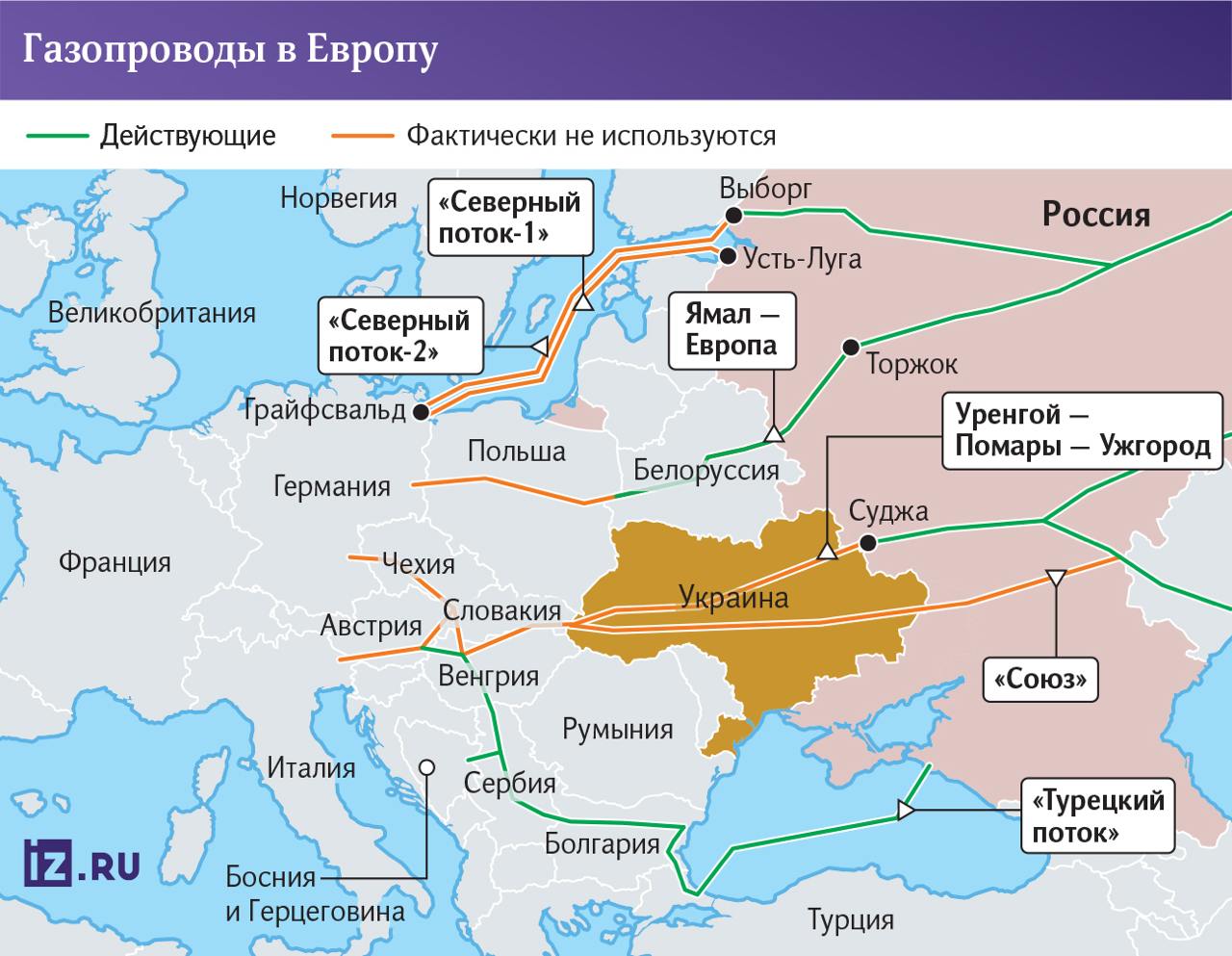
Russia will increase natural gas supplies to Serbia, which implies a new contract that the parties are working on, Serbian Ambassador to Russia Momcilo Babic told Izvestia. According to him, Moscow and Belgrade agreed on this issue during Alexander Vucic's visit to Moscow on May 9. The current contract runs until the end of September 2025. The fact of negotiations between Gazprom and Serbiyagaz on its extension was also confirmed to Izvestia at the Russian Embassy in Belgrade. However, experts note that an increase in supplies is technically possible only if the Nord Streams pipeline, the Yamal–Europe gas pipeline, or transit through Ukraine are restarted. The negotiations may also be influenced by the general background of relations between the two countries: the Russian special services reported that Serbian weapons enter Ukraine through third countries, and Belgrade promises to investigate the situation.
New gas contract between Russia and Serbia
As part of the negotiations on a new gas contract between Russia and Serbia, an increase in natural fuel supplies is being discussed, Serbian Ambassador to Russia Momcilo Babic told Izvestia. According to him, this issue was resolved at a meeting of the presidents of the two countries during Alexander Vucic's visit to Moscow on May 9. However, there are no deadlines for signing a new contract, as well as possible supply volumes.

"Yes, of course, Serbia needs a lot more Russian gas," the diplomat told Izvestia when asked if an increase in Russian gas supplies was being discussed. — There are no exact dates for signing the contract, but everything must be done to ensure that the supply of various products, including gas, continues.
Gazprom and the state-owned enterprise Serbiyagaz are negotiating an extension of contractual relations for gas supplies to Serbia, the Russian Embassy in Belgrade confirmed to Izvestia.
In 2012, Serbia and Russia signed a 10-year agreement on natural gas supplies of up to 5 billion cubic meters. m per year.
After the agreement expired in 2021, Belgrade and Moscow extended it for six months, and then signed a three-year contract until 2025.
At the same time, Serbia received a significant discount by buying gas at a price of $270 per 1,000 cubic meters — "practically free," as President Alexander Vucic said in 2022.
The previous long-term contract between the two countries expired in the spring of 2025, but in May it was extended until September 30. This was announced by Dusan Bayatovich, Director of the Serbiyagaz company. According to him, Belgrade will receive 6 million cubic meters at a price of €290 per 1,000 cubic meters. This will allow Serbia to fill its gas storage facilities before the heating season.
Belgrade is in a hurry to fill its storage facilities, fearing the imposition of EU sanctions against Russian gas imports. Earlier, Brussels published a roadmap for abandoning Russian energy sources by 2027, while by the end of 2025 it is planned to ban spot supplies of Russian blue fuel.

Earlier, Bajatovic announced the Serbian side's desire to sign a new agreement on the supply of Russian gas for a period of 10 years. He also spoke about the need to include clauses in the contract in case of force majeure in the form of the impossibility of supplies due to the potential expansion of the EU anti-Russian sanctions regime.
However, experts see difficulties in increasing supplies to Serbia via the Turkish Stream in the current conditions. The total capacity of the second line of the gas pipeline, through which supplies are carried out, is 15.75 billion cubic meters. m per year, and this is about the amount that Russian gas consumers in Central and Eastern Europe are already receiving.

This means that it is possible to increase Russian gas supplies to Serbia via the Turkish Stream only if other routes are restarted: the Nord Streams, the Yamal–Europe gas pipeline or transit through Ukraine, Igor Yushkov, an expert at the Financial University and the National Energy Security Fund, told Izvestia.
In addition, the expert stressed that the Serbian economy needs 2-2.5 billion cubic meters of the volume supplied by Russia. m per year, however, Belgrade can resell the excess gas to other countries.

— Serbia would like to buy gas as a trader and resell it in neighboring markets. The question here is whether we want to sell to them as a trader or not. Gazprom does not benefit from the situation when the Serbian company will keep the main earnings, it is easier for it to sell these surpluses and earn more,— Igor Yushkov noted.
To whom does Russia sell its gas
Currently, Russian pipeline gas is supplied to Europe only through the Turkish Stream. Supplies from Turkey go through Bulgaria and Serbia to Central Europe. Starting in 2021, Gazprom began supplying gas via this route to Hungary (the contract is for 15 years) and Croatia. And since February 2025, Slovakia has also been receiving fuel in this way (the contract runs until 2034).
Hungary used 7.6 billion cubic meters of Turkish Stream gas in 2024. About 1 billion cubic meters are available for Slovakia as the end point on the pipeline route. The importance of the route is underlined by the fact that Hungarian Prime Minister Viktor Orban and Serbian President Aleksandar Vucic stated that ensuring the safety of the pipeline is a task for both countries.
It is worth noting that many EU countries purchase Russian LNG, including through intermediaries.

Recall that by the end of 2024, Russia became the second largest gas supplier to the European Union, overtaking the United States, according to data from the analytical company Bruegel. In total, the EU imported 297.9 billion cubic meters of gas. Of these, he bought 54.45 billion cubic meters from Russia. This is 21% more than the volume acquired in 2023. The country's share in the local market increased from 14.2% to 18.3% over the year.
How are relations between Moscow and Belgrade developing?
Serbia remains virtually the only country in the Balkans (apart from Bosnia and Herzegovina) that has not imposed sanctions on Russia. Belgrade maintains direct flights with the Russian Federation, and also maintains a visa-free regime. Serbian President Aleksandar Vucic has arrived to celebrate the 80th anniversary of victory in the Great Patriotic War, despite threats from the European Commission.
However, Western restrictions still affect the relations between the two countries. In particular, Serbia has terminated several contracts with Russia for the supply of weapons, the Chief of the General Staff of the Army of the Republic, Milan Moisilovich, reported in January 2025. In addition, the trade turnover between the two countries is suffering from sanctions: in 2022 it amounted to $4.2 billion, in 2023 - $ 3 billion, and in 2024 — $ 2.4 billion.

A separate issue was the supply of Serbian weapons to Ukraine. The press bureau of the Russian Foreign Intelligence Service recently reported that Serbian defense enterprises, contrary to the neutrality declared by the authorities, supply ammunition to the Armed Forces of Ukraine. A scheme using fake end-user certificates and intermediary countries serves as a cover for anti-Russian actions. According to the SVR, the largest Serbian companies are involved in this, and their contribution to the armament of the Armed Forces of Ukraine is estimated at "hundreds of thousands of shells for MLRS and howitzers and a million cartridges for small arms."
Moreover, the first reports of Serbian weapons in Ukraine appeared back in August 2024. The Russian Foreign Ministry then called on Belgrade to adhere to the refusal of assistance to Kiev and to be vigilant when exporting military products.

The Serbian authorities reacted immediately. Vucic said that he had discussed this topic with Vladimir Putin, and a joint working group had been formed to establish the facts. Nevertheless, Serbia will continue to sell weapons abroad, as its military enterprises, which employ 24 thousand people. a man who "must work and survive," as the Serbian leader put it.
There is no state monopoly on the sale of weapons in Serbia, more than 200 enterprises are engaged in this. Sales bring Belgrade a good income — $1.3 billion in 2021.

Belgrade is objectively in a difficult situation. The country is surrounded by NATO members, and in any case, the Russian Federation will not be able to provide it with large-scale military and economic assistance. Therefore, Serbia is forced to reach agreements with the West on certain issues, while maintaining close relations with Russia.
Balancing Belgrade is becoming increasingly difficult, and the room for maneuver is narrowing, INF program manager Milan Lazovich said in an interview with Izvestia. According to him, the costs lie in the fact that pressure from the West is now significantly increasing in order to spoil relations between Moscow and Belgrade. Serbia is not interested in this and therefore, for sure, will begin to monitor the supply of weapons more carefully so that ammunition or shells do not reach Ukraine through intermediaries, the expert on the Balkans concluded.
Переведено сервисом «Яндекс Переводчик»
