We got close to the key: how assault groups liberate Konstantinovka


Konstantinovka, which is currently being fought for, will be the key to liberating the entire Donbas, the Russian Defense Ministry believes. The 6th Motorized Rifle Division is fighting for the eastern part of the settlement, and soldiers of the 1442nd Guards Regiment are advancing in the center of the battle formation. The Izvestia correspondent visited the location of the unit and found out what the specifics of the attack on the AFU positions in this city are, how another pipe hidden from the enemy's eyes helped our soldiers, and what role simple cloth nets play in achieving the goal.
A complex city
Motorized rifle units are based in the Artyomovsk area, they were transferred here in 2023. They recaptured Kleshcheyevka, which stood like a bone in their throat, preventing any further action, and began to systematically move west. More than 30 kilometers through fields and plantings, crossing the dried–up Seversky Donets—Donbass canal, taking the villages of Stupochki and Predtechino, and as a result, reaching the borders of Konstantinovka this autumn.
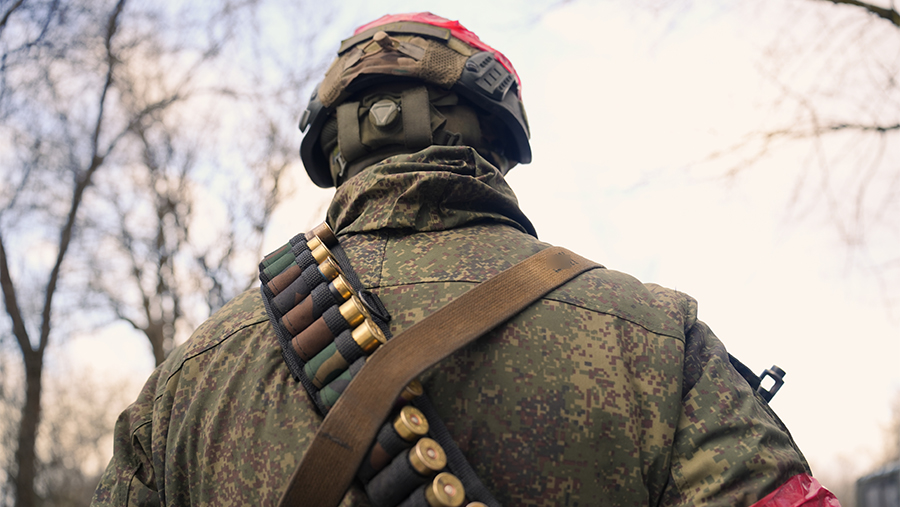
Defense Minister Andrei Belousov called this settlement the key to the last stronghold of the Kiev regime in Donbass— the Druzhkovsko-Kramatorsko-Slavyanskaya agglomeration. According to him, the capture of this frontier will make it possible to complete the liberation of the DPR in a short time.
"The city is complex, large, and one and a half times the size of Artemovsk," says the deputy commander of the 1442nd regiment with the call sign Belaz. — A serious industrial center — there are metallurgical, glass and chemical plants in it, and these are large industrial areas turned into fortified areas. Our tactics are intensive artillery training and the subsequent approach of infantry groups.

At the moment, more than half of Konstantinovka has been liberated. This was stated by President Vladimir Putin during his direct line on December 19.
The 1442nd regiment is moving in the center of the battle formation, wedging into the enemy's defenses, in fact, conducting vanguard battles. The reason for this responsible position is the experience gained over the past three years and the results, including Kleshcheyevka. At the beginning of this year, the regiment was awarded the rank of Guards. It was formed from scratch during the mobilization, in Siberia, the backbone was made up of Omichi and Altaians. Receiving an honorary title in such a short period of time is almost unprecedented.
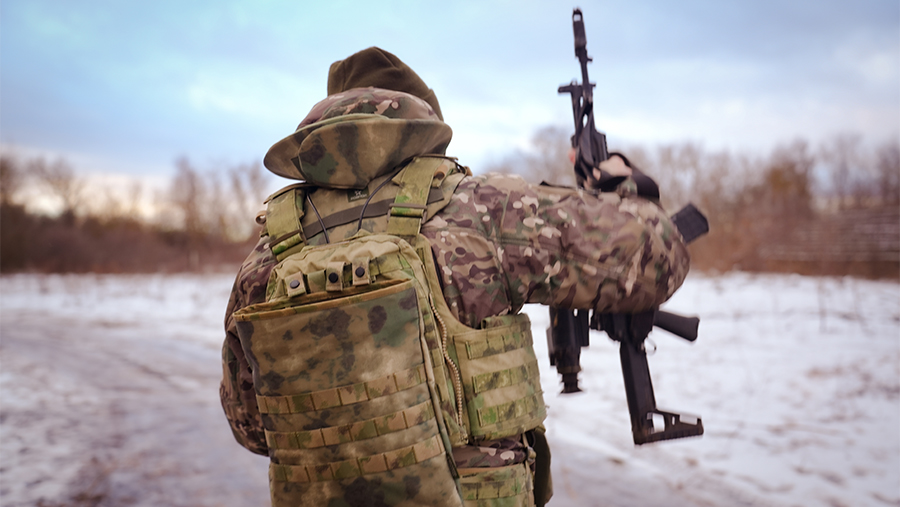
The assault is traditionally conducted in small groups of two and three people. More is impractical, given the danger from the air. According to Belaz, the approach to the positions most often occurs during low clouds and, as a result, non-flying weather. Sometimes you have to wait for such conditions for several days.
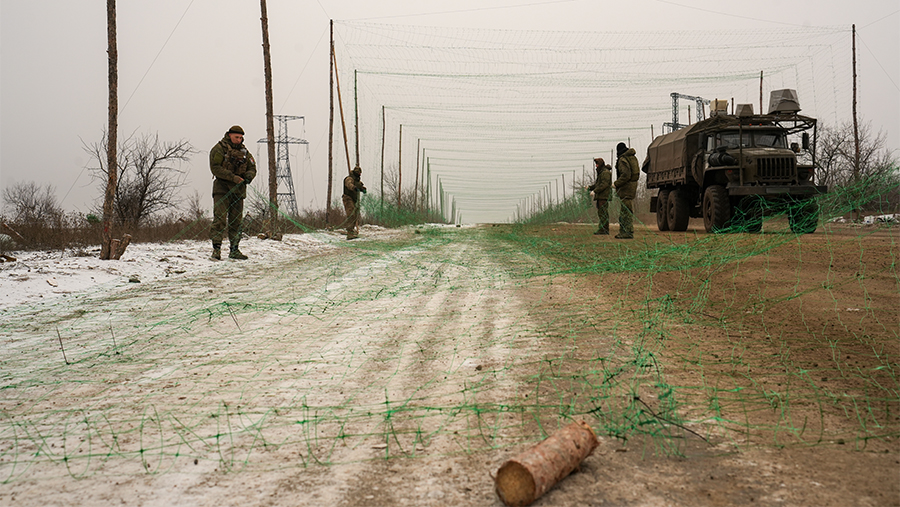
Of the enemy's drones, our operators are trying to destroy, first of all, "maviki"-reconnaissance drones that monitor the territory and aim kamikaze drones at the identified targets. The main and most effective remedy against such "eyes" is mesh nets. These are copters with trap nets, they have been actively used in the shelf since 2024. According to the commanders, they became a key factor in neutralizing the Ukrainian UAVs in Kleshcheyevka, as a result of which they managed to liberate the village.
Conscripted into the army
The company commander, call sign Pioneer, joined the regiment with the first stream of career officers. He is 26 years old. Almost all of the wards are older, and many are old enough to be fathers. The tasks of his fighters are to gain a foothold on points, equip secrets, conduct reconnaissance, and sweep. The commander has so much work to do that he has to literally pull him out of the whirlwind of urgent matters.
He himself is from the Nizhny Novgorod region. He says that since his youth he dreamed of becoming a military man, did not see himself as anyone else and systematically went towards his goal. In the year of the 65th anniversary of the Victory, as a schoolboy, he became interested in the memoirs of Soviet military leaders being published at that time (Marshal Vasilevsky became his main authority).
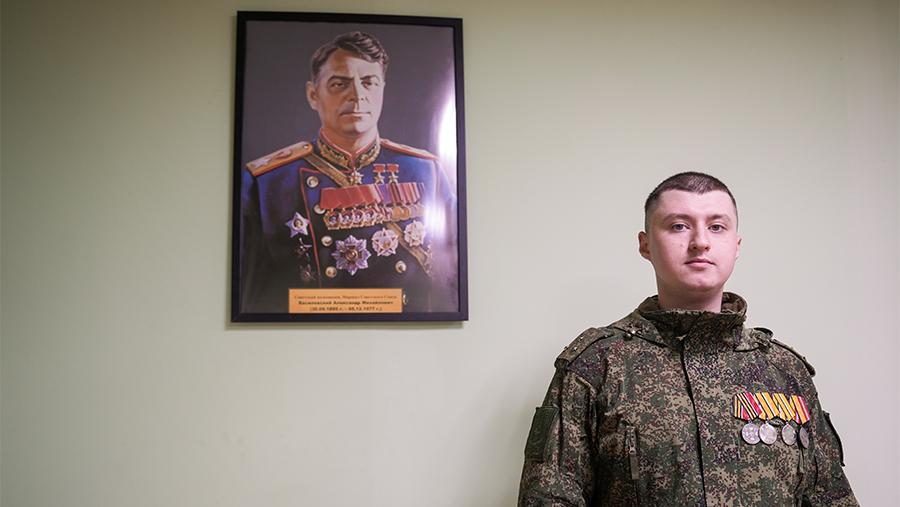
He served for a year in the Rosgvardiya, where he established himself in choosing a path. This was followed by the Moscow Higher Combined Arms Command School. As a cadet, during an internship in 2023 in the Belgorod region, he got into the very flames — at the site of an attempt by the militants of the Red Army (a terrorist organization banned in the Russian Federation), he commanded a detachment for two weeks and held the defense at one of the sites.
In early 2024, he joined the 1442nd regiment. In one of the exits with soldiers, he captured an APU fighter.
"We approached the enemy's dugout in front of the Steps in the forest," the Pioneer recalls. — They blocked him from two sides, offered to surrender, and there was silence in response. They threw a grenade. One Ukrainian soldier died, the second surrendered. The prisoner told us that he was mobilized, the task of his two was to sit on a point and keep a square, they were actually isolated from their own.

On two wheels and on your own
A motorized rifleman with the call sign Pilgrim — 53, a motorcyclist with almost 40 years of experience. He is a mechanic by profession. He volunteered for his military in March 2025.
— I wanted to check if I was scared or not. And to set an example for my son," he explains.
At the training ground, a recruit joined a motorcycle group. It took a month to master the enduro motorcycle, designed for extreme off-road driving. After that, they were sent to the regiment along with a dedicated two-wheeled vehicle.
— We work in double digits. We deliver the necessary cargo to positions where the car will not pass," says Pilgrim. — On a motorcycle, an electronic warfare station is installed on a special platform at the back, along the sides there are pockets for ammunition, rigging, and so on. You must wear armor on yourself. As a weapon — a machine gun or a shotgun, to choose from. I'm taking a shotgun with me.
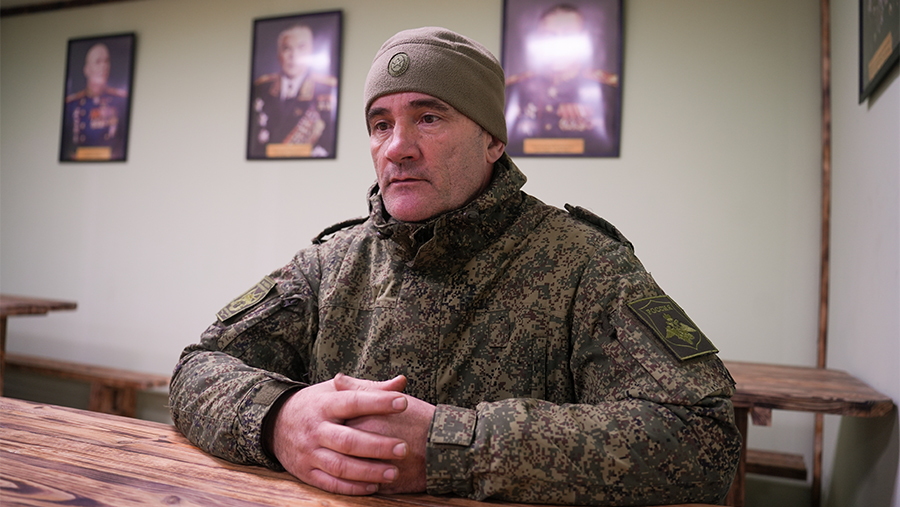
Once, the fighter shares, they managed to shoot down a kamikaze with a double-barrelled shotgun: an APU drone with a suspended shot for an RPG-7 went straight into the forehead. The pilgrim fired a rifle, his partner fired an AK. They managed to hit it from 30 meters away: it collapsed without exploding. Another time, a loaded UAV going on the attack fell about 15 meters away — the electronic warfare system went off. However, there was an explosion: the motorcycle was hit.
Now the Pilgrim has dismounted and is acting as a classic motorized rifleman. He explains that it is too dangerous to enter Konstantinovka by motorcycle: the entrances are in the palm of your hand, and there are no suitable roads anymore.
The pipe again
The deputy commander of the military-political work company of the first motorized rifle battalion is Omich, call sign Dixon. In the past, he was a flaw detector in the construction of oil and gas pipelines. He participated in the assaults, was an escort for combat groups. He received the Order of Courage for the operation to capture the fortification.
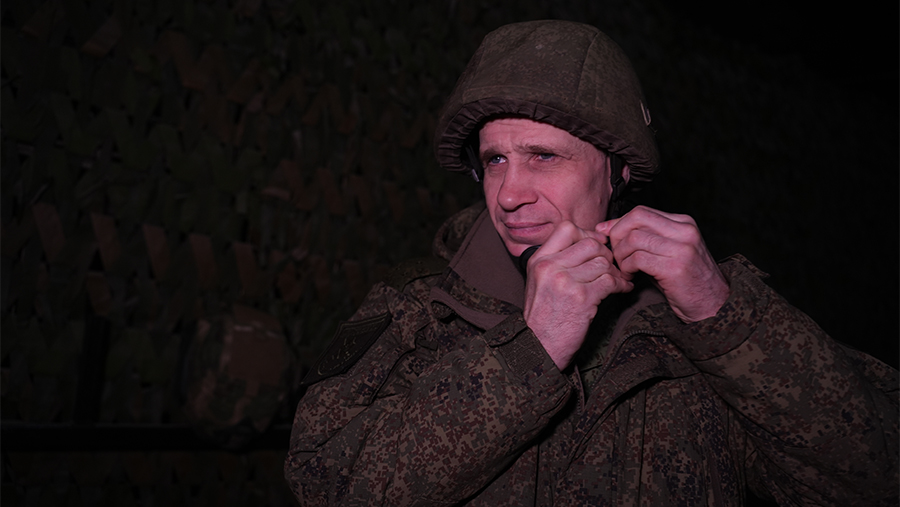
— The task then was to take a puncture (water pipe. — Izvestia) Under the road, the enemy had a machine gun and an automatic grenade launcher there," Dixon says. — We moved in threes. They got close, unnoticed, but for some reason they missed us. Either they were distracted, or they were hiding after the mortar attack. They were blocked from two sides. A grenade was thrown, and shooting began. As a result, they shouted, "Surrender!" Four people came out. One immediately fell to the ground, and three decided to resist, reaching for the bolts. I had to shoot ahead of time. And to defeat… The survivor had an American flag helmet on his head. He probably received some kind of special training in the NATO camps.

Another memorable episode is related to how the fighters used the pipe of the dried–up Seversky Donets-Donbass canal to achieve their goals (partly it runs not on the surface, but underground). Our guys set up a transshipment point there just on the way to Konstantinovka. We lived inside for weeks, since the diameter of the metal structure — under four meters — allowed. Food was delivered to them from the air: the pot was divided into 10 people. The water source was found nearby, filtered and boiled.
Once, from this point, Dixon and his comrade had to evacuate a wounded man with a broken foot. One carried weapons, backpacks, and controlled the sky. The other stretched the "three hundredth" himself on his back, under the continuous buzz of the UAV, 5 km. They pulled it out. Everyone was safe.
The soldiers of the 1442nd regiment have three years on rough terrain and in forest belts behind them. Konstantinovka is their first experience of urban combat. As the commanders explain, they got used to it, got involved. Industrial facilities are being stormed. According to them, the capture of the strategic center for the liberation of the DPR is only a matter of time.
Переведено сервисом «Яндекс Переводчик»
