- Статьи
- Society
- Was there a purchase: what threatens blogger Alekhine for discussing schemes of "unbanking" money

Was there a purchase: what threatens blogger Alekhine for discussing schemes of "unbanking" money

Blogger Roman Alekhine could face up to 10 years in prison if the incident with the leaked video becomes a reason to initiate criminal proceedings, lawyers believe. On September 9, Izvestia published covert footage of Alekhine discussing how to spend a donation of 200 million rubles, which they want to transfer to his charitable foundation. From the conversation, it can be concluded that 150 million is planned to be allocated for the purchase of medicines, but at the same time they will be supplied less than according to the documents. And 50 million rubles should be used for other, unknown purposes. The lawyers saw in the situation the composition of at least two articles of the Criminal Code — on fraud and money laundering. In a conversation with Izvestia, Roman Alekhine declared his innocence and the absence of documentary evidence of malicious intent — the words on the video, according to him, were taken out of context. Details can be found in the Izvestia article.
What happened to blogger Alekhine
Information about the alleged intention to "launder money" spread in the media space does not correspond to reality, military commander Roman Alekhine said in a conversation with Izvestia.
On September 9, the publication received covert footage showing a well-known military blogger and former adviser to the governor of the Kursk region, Alekhine, discussing in detail how to "rip off" a large sum that the donor intends to transfer to his charitable foundation. It follows from the conversation that the unknown businessman intends to transfer 200 million rubles to Alyokhin's organization. The man asks that 150 million worth of medicines be purchased from related structures. At the same time, he openly says that 10-12% fewer medicines will be supplied than according to the documents.
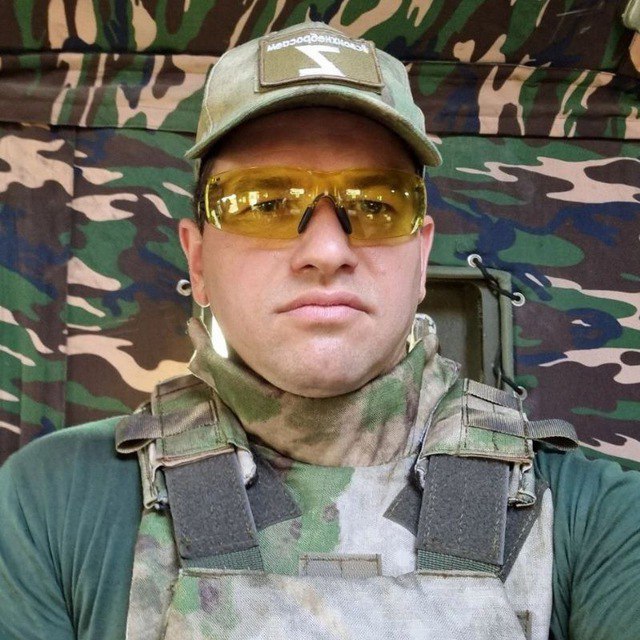
"Now I have to think for a day or two and find a mechanism. If we want to do this, 10% is a small [loss], but we need to make it (the mechanism. — Ed.) was really perfectly clean. We need to make sure that our documents are white from beginning to end," Roman Alekhine says in the video.
The recorded conversation also discusses plans to find a unit commander who would agree to sign the documents, knowing that the number of medicines is underestimated.
"We need to make sure that the trusted recipient ...for another thousand, nefopan (a drug for the symptomatic treatment of acute pain syndrome. — Ed.) signed it. Officially. He will write them off [later] in a moment," Alyokhin assures the interlocutor.
In addition, it follows from the video that Alyokhin can dispose of the remaining 50 million rubles at his discretion.

Roman Alekhine was born and raised in Kursk. He is now 45 years old.
In his youth, he survived an accident, as a result of which he suffered a severe spinal injury. After school, Roman entered the Tula branch of the International Law Institute. After completing his studies, he returned to his hometown and joined the police. There he worked in the department for combating economic crimes.
Law enforcement agencies have launched a pre-investigation check, the press service of the Ministry of Internal Affairs of the Kursk region reported on Wednesday, September 10.

In a conversation with Izvestia, Roman Alekhine called the online messages "false information" and threatened to go to court.
— Common information is based on fragments cut out of context. Upon full review of the recording and its decoding, there is no mention of "money laundering," Roman Alekhine said. — The presentation of the case in this form has no legal basis. There are no documents confirming the fact of illegal actions, which makes any accusations groundless. In this regard, we will not take any action on this issue. However, in response to what happened, we are preparing lawsuits against all those involved in spreading false information.
In particular, he will complain about the violation of privacy, because the video was filmed without proper permission. In addition, civil lawsuits will be filed to protect honor and dignity, Roman Alekhine said.
As the blogger explained to Izvestia, and later in his Telegram channel, a few months ago he was approached by people who introduced themselves as serious businessmen. They offered to transfer about 200 million, 100 million rubles a month, to the accounts of his foundation, after which the military commander allegedly had to conclude an agreement "with their company" and spend two thirds of these funds on the purchase of medicines from them.

— They said that we can spend the remaining third on the main purposes of the charitable foundation. I want to buy walkie-talkies, I want to open a museum. Well, whatever," Alyokhin said.
Many of the military commander's colleagues strongly condemned what was happening on the video, saying that "there is no getting away from it." They expressed the hope that one person would not be able to cast a shadow over the entire volunteer community, which for three and a half years has voluntarily borne the burden of responsibility for helping Russian units in its area. And Denis Kozlov, head of the Association of Veterans of the Russian Military in the city of Zhukovsky, believes that such people should be sent to the line of combat contact so that they can experience for themselves what the soldiers on the front line are experiencing.
This is not the first scandal related to Roman Alekhine's activities. In the early 2000s, he founded a company that started manufacturing prosthetics. The state bought medical equipment from him and provided it free of charge to Russians with disabilities. But in 2014, Alekhine went on trial for selling substandard prosthetics for the disabled. He was accused of selling old prosthetics instead of new ones, which he bought for a song from the families of deceased disabled people or from those who found themselves in a desperate situation and needed money. Then he got off with a fine.
What could threaten a video blogger?
If there is sufficient evidence, the actions of a military blogger can be viewed through the prism of two crimes, said Olivia Livingston, lawyer and head of the Law and Sport Research Center.

— First of all, this is the legalization of criminally acquired funds, where the key element is to prove a person's awareness of the illegal origin of finances. Secondly, it is possible to qualify under the article on fraud on a particularly large scale if the fact of embezzlement of funds under the guise of charitable activities is established," she said.
In addition, if it is established that the actions led to the fact that vital medicines were not supplied to the fighters and their health was harmed, additional crimes may be involved.
— The investigators will carefully analyze which crime is the main one. Fraud may be primary and money laundering secondary. But these compositions often go together," Olivia Livingston explained.
The lawyer gave an example of several recent cases where a similar scheme appeared. Among them, she named the case of the Patriot Foundation — its management was found guilty of purchasing food and medicines at inflated prices from affiliated commercial structures. The difference in value was appropriated. The actions are qualified under Part 4 of art. 159 of the Criminal Code of the Russian Federation (fraud on an especially large scale).

In the Rostov region, the case of volunteer A. Petrov is in court. According to the investigation, he organized a fundraiser for tactical glasses and thermal imagers, which were either not supplied at all or were supplied in quantities that did not correspond to the stated amount. The investigation qualified the actions under art. 159 of the Criminal Code and art. 174.1 of the Criminal Code (money laundering).
A criminal case has been opened in the Sverdlovsk region about problems with the supply of substandard body armor. The investigation found that a non-profit organization, which raised over 300 million rubles, purchased and handed over protective equipment to military personnel that did not meet the stated characteristics. A criminal case has been opened against the organizers on the grounds of a crime under Article 201.2 of the Criminal Code of the Russian Federation (misuse of funds).
And in St. Petersburg in 2023, the coordinators of one of the volunteer communities were accused of embezzling more than 50 million rubles collected for the purchase of UAVs. The funds were transferred to controlled commercial enterprises as an advance payment for supplies that were never completed. The actions are qualified under Part 4 of Article 159 of the Criminal Code of the Russian Federation.

Vasily Burdyug, a lawyer and a member of the Moscow Bar Association, discovered the composition of three articles of the Criminal Code in the situation. In addition to fraud and legalization, there is also embezzlement.
"Given the amount of funds, we are talking about fraud on a particularly large scale — it can result in imprisonment for up to 10 years," the expert explained.
Andrey Nekrasov, a lawyer and managing partner of the Nekrasov, Rudomanov and Partners law firm, said that the sentence in such a situation could be up to 10 years in prison.
— In case of confirmation of the fact of a crime, the maximum penalty is imprisonment for up to 10 years. And under the article on legalization — up to seven years," he said. — However, I cannot say that these articles will work in this way — this is just one of the scenarios. In general, based on practice, such crimes can result in imprisonment for up to 10 years.
The severity of liability may depend on various factors, said Alexey Gavrishev, lawyer and Managing partner of AVG Legal.

— Among them are the targeted nature of donations, that is, what exactly the money was given for and how it was fixed, the reality of purchases — the fact and volume of supplies, market prices, compliance with the nomenclature. As well as the personal role of specific individuals, that is, who initiated the scheme, signed contracts, managed accounts, and benefited," he explained.
According to him, there is already a practice of profiting from supplies for self-defense in the regions. The courts considered stories with fictitious "logistics", empty consultations for supplies, extra charges without delivery of goods, and the damage was estimated in the tens of millions, the expert noted.
"In a number of cases, the investigation tried to add an article on legalization, but it all depends on proving the purpose of making the stolen person look legitimate, and not just spending it," he stressed.
If the stated version is confirmed, then we are talking about a "particularly large amount", and the maximum sanctions can be up to 10 years in prison with fines and restrictions, he believes.
Переведено сервисом «Яндекс Переводчик»
