- Статьи
- World
- Forces of regression: The situation with NABU and SAP will not stop the unrest in Ukraine

Forces of regression: The situation with NABU and SAP will not stop the unrest in Ukraine
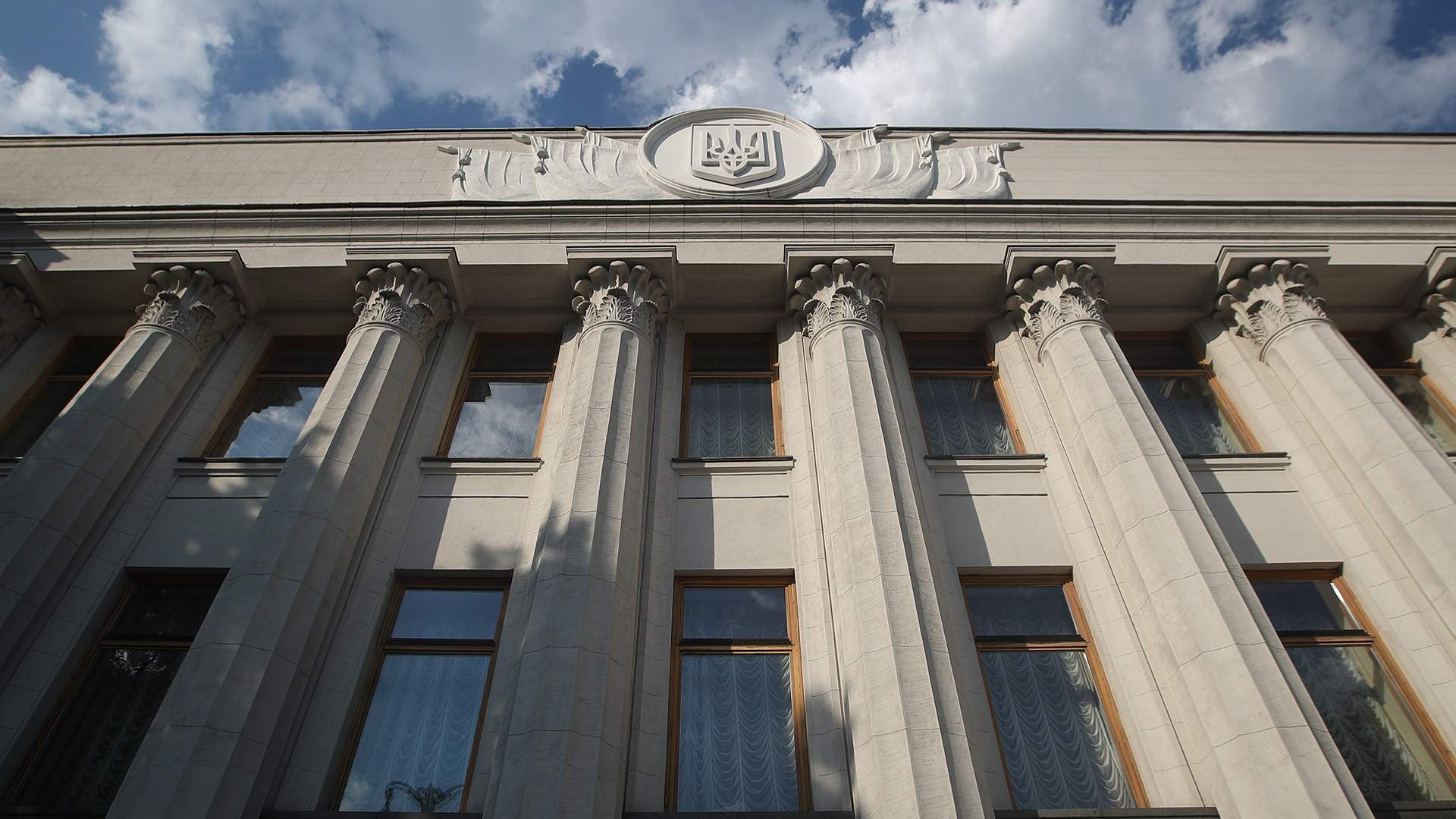
The Verkhovna Rada returned the independence of NABU and SAP under pressure. The bill was considered against the background of large-scale protests: hundreds of people gathered outside the Ukrainian parliament on the morning of July 31. But despite the newly acquired independence of anti-corruption structures, unrest in the country will not stop, experts tell Izvestia. Earlier, the Russian Foreign Intelligence Service said that representatives of the United States and Great Britain discussed the replacement of Vladimir Zelensky at a secret meeting with members of the Ukrainian leadership. Whether the intensifying protests in the country can push for a change of power is in the Izvestia article.
Will the protests continue in Ukraine
The Verkhovna Rada has adopted a presidential bill on the return of independence to the National Anti-Corruption Bureau of Ukraine (NABU) and the Specialized Anti-Corruption Prosecutor's Office (SAP). 331 deputies voted in favor. And Vladimir Zelensky signed the relevant law. It is important to note that six months after its entry into force, the SBU should conduct an audit of employees of the NABU, SAP, the office of the Prosecutor General, the national police with access to state secrets and other agencies "for possible actions for the benefit of the Russian Federation."
Unsurprisingly, the parliament session was accompanied by protests. Hundreds of people gathered outside the building in the morning. In particular, the demonstrators chanted "Gangba!" ("Shame." — Ed.) to MP Mariana Bezuglaya, who voted for the previously passed bill on limiting the powers of the NABU.

The process of passing the bill in Parliament was also difficult: there was even a fight during the meeting. In addition, MP Dmitry Kostyuk announced that he was quitting the Servant of the People faction due to the situation with NABU. He stated that the deputies were forced to vote for the removal of NABU's powers and were threatened with criminal charges. But Yulia Tymoshenko, on the contrary, criticized the return of the powers of the NABU and SAP. "Yes, it's bad when they depend on the president, on the government, on the prosecutor, but it's just as bad when they depend on foreign citizens. <...> We are introducing an alternative bill that, in our opinion, can fix this situation," she said on Ukrainian television. The leader of the Batkivshchyna party believes that the leadership of the NABU and SAP should be appointed by the national Assembly, which will consist of former soldiers of the Armed Forces of Ukraine who received the title Hero of Ukraine.
Despite the return of independence of NABU and SAP, high-profile corruption scandals should be expected in the near future, former Verkhovna Rada deputy Spiridon Kilinkarov tells Izvestia.
— It won't work out that they returned to their jobs, locked themselves in their offices and sat sorting through paperwork. Therefore, I think they should demonstrate their work in the near future. Perhaps this will affect top officials or those outside the current government," he says.

Protests in Ukrainian cities have been going on daily since July 22, when Vladimir Zelensky signed a law abolishing the independence of NABU and SAP, that is, in fact, eliminated the country's anti-corruption structures. Then more than 9 thousand residents gathered in the center of Kiev. After the return of independence to these structures, large—scale protests may end, but discontent in society is no longer there.
— The very fact that such rallies took place at all has "cleared" the topic of the protests. These are the first such large-scale actions, and I do not rule out that they will not be the last. If it is possible, relatively speaking, to go out to protest against the restriction of the powers of NABU and SAP, then why not go out on some other, no less resonant issues that concern civil society," Kilinkarov argues.
What will lead to a change of power in Ukraine
The whole situation with restrictions and then the return of independence to anti-corruption structures has a negative impact on Vladimir Zelensky's reputation in the West. After the adoption of the initial draft law (on restrictions), EC President Ursula von der Leyen demanded clarifications from Zelensky, and European Commissioner for Enlargement Marta Kos called the abolition of guarantees for the independence of these bodies a serious step backward — both departments are necessary to continue Ukraine's path to EU membership. Dissatisfaction was also expressed in the United States: Senators Gene Shaheen and Lindsey Graham (listed as terrorists and extremists in the Russian Federation) were also concerned about the decisions of the Kiev authorities.

European Commissioner for Enlargement and Neighbourhood Policy Marta Kos
One way or another, the issue of a change of power in Ukraine is becoming even more urgent, and first of all, for the West. On July 29, the Russian Foreign Intelligence Service announced that representatives of the United States and Great Britain had organized a secret meeting in the Alps with the participation of the head of the office of the Ukrainian president, Andrei Ermak, the head of the main intelligence directorate, Kirill Budanov (listed by Rosfinmonitoring as a terrorist and extremist), and the former commander-in-chief of the Armed Forces of Ukraine, and now the Ukrainian ambassador to London, Valery Zaluzhny, to discuss a replacement To Vladimir Zelensky. According to the SVR, representatives of Washington and London agreed to nominate Zaluzhny for the post of president of Ukraine. They emphasized that Ermak and Budanov had secured the promises of the Anglo-Saxons that they would retain their current posts, as well as take their interests into account when solving other personnel issues.
Zelensky's change has essentially become a key condition for Kiev's "reset" of relations with Western partners, primarily Washington, and continued Western assistance to Ukraine in its confrontation with Russia, the SVR added.

The current protests in Ukraine and the recent meeting in the Alps, one way or another, can be seen as an approximation to a change of power in Ukraine, Vladimir Zharikhin, deputy director of the Institute of CIS Countries, tells Izvestia.
— There will be a change of power, but not because of unrest. It will not be a popular revolution, but at the behest of the West," he says.
But there is a caveat: according to Ukrainian law, while martial law is in effect, elections cannot be held. Earlier, Vladimir Zelensky had just extended the mobilization and martial law until November 5. The irony is that, to a large extent, it is Western countries that are doing everything to ensure that the fighting continues by supplying Kiev with weapons.
Negotiations between Moscow and Kiev are progressing, but not very rapidly. The parties have held three rounds in Istanbul, exchanging so far only memoranda on settlement. However, if the West does decide to hold presidential elections in Ukraine, then technically there will be ways to organize all this, says Spiridon Kilinkarov.

— There are structures and people, we just need certain organizational measures, after which everything will go as written. But in any case, it will be decided by the West," he says.
By the way, a partial leadership change is already taking place. On July 17, the Verkhovna Rada approved the new composition of the government. It was headed by former Deputy Prime Minister Yulia Sviridenko. It is curious that the government reshuffle took place right during the visit of US Special Envoy Keith Kellogg to Ukraine, that is, in fact, in the presence of an American representative. The West has been talking about the need for elections in Ukraine for a long time: long before the start of Russian-Ukrainian negotiations. For example, in February 2025, Kellogg himself called on Kiev to organize a vote before the end of the year. Donald Trump has repeatedly spoken about the need for elections.
Переведено сервисом «Яндекс Переводчик»
