
Russian fast: Russia has reached super-speed 5G

Russian engineers have created a new 5G antenna for mobile base stations, which provided data transfer speeds of up to 1 Gbit/s during the tests. This is one of the highest rates in the world that developers have managed to achieve in practice. However, according to experts, it is important that these characteristics are confirmed with the massive use of the development in conditions of high network congestion and dense urban development.
High-speed antenna for 5G
Specialists from the Moscow Institute of Physics and Technology (MIPT) have developed and tested a new Russian antenna that transmits and receives a communication signal between the base station and users' mobile phones. The device belongs to the sector type, that is, it is designed to serve thousands of subscribers in a certain territory. It operates in the 5G communication standard and is completely assembled from domestic components.
During tests at the site of the Department of Information Technology at VDNH in Moscow, the development provided a data transfer rate of 1 Gbit/s. This is at least 10 times faster than a standard home internet connection.
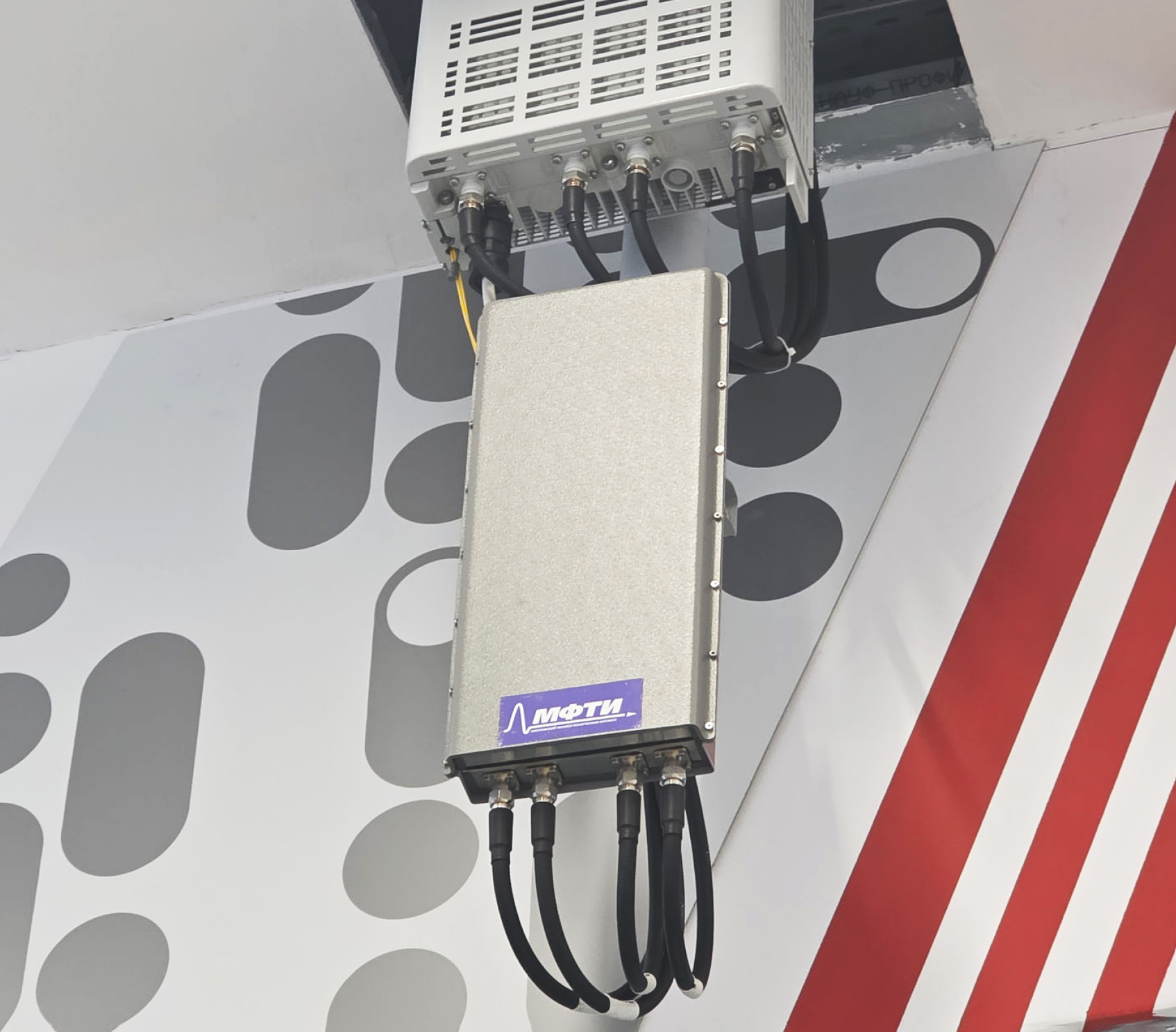
— Our antenna is 100% domestic, down to the screws and connectors used. The use of only Russian components and materials imposes a number of restrictions and complicates the process of developing and manufacturing the device. The test results demonstrate the fundamental possibility of fifth—generation mobile communication networks based on domestic technical solutions with speeds of about 1 Gbit/s, which, in turn, means technological readiness to deploy commercial services," said Grigory Seregin, Head of the Department of Applied Research and Development of Advanced Cellular Solutions at MIPT.

Theoretically, fifth-generation networks can transmit data at speeds up to 20 Gbit/s, but in practice these figures are much lower. According to specialized websites, the UAE, Qatar and Kuwait are considered the leaders in mobile Internet speed in the world today, where subscribers can use traffic at a median speed of 539, 529 and 350 Mbps, respectively. South Korea has also achieved notable success in this regard: the average 5G speed there can reach 456 Mbit/s, and the maximum is 925 Mbit/s. Thus, the characteristics of the Russian development have approached the level of the leaders.
The main feature of the device is support for MIMO technology, which involves multi—channel input and output. Due to this, the antenna has four independent data transmission channels, allowing it to simultaneously serve multiple users without loss of speed, the developers said.

The sector antenna operates in the n79 range and uses frequencies from 4800 to 5000 MHz, which complies with 5G standards that are adopted in Russia. At the same time, the width of the radiation pattern (a graphical representation of how the antenna emits and receives a signal in different directions) is 8 degrees in the vertical plane, and 65 degrees in the horizontal plane. This form ensures optimal coverage of mobile communication services for the urban environment, the experts added.
— Cooperation with universities opens up new opportunities for innovation in the urban environment. We are interested in experts offering their new ideas and being able to see them at work. The 5G Demo center allows you to evaluate the quality of communication in controlled laboratory conditions — without risk to the operating infrastructure of operators and without affecting the service for subscribers," Evgeny Novikov, adviser to the deputy head of the Moscow Information Technology Department, told Izvestia.

When will Russia switch to 5G
According to Igor Bederov, head of the Information and analytical research department at T.Hunter, the data transfer rate achieved by the creators of the domestic antenna is really high. However, it is important that it does not decrease when the mass application of the development begins.
— The main question is how it will all work in real conditions of busy mobile networks and dense buildings. We are already using pre-5G from some operators," he said.
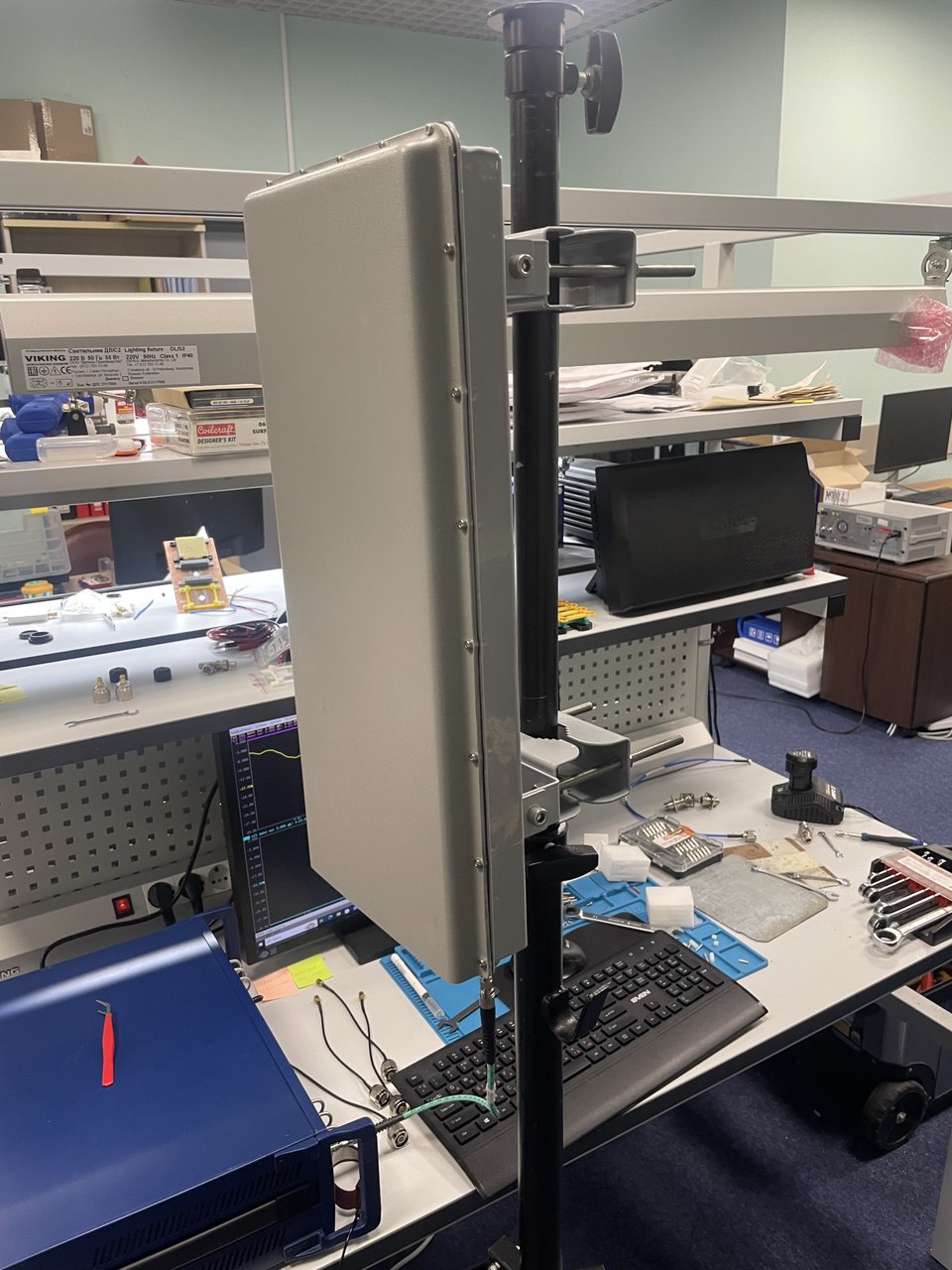
Russia needs high-speed mobile communication antennas of its own design. However, it is necessary that we have the rest of the equipment for base stations to which such systems can be connected. They are already being actively developed in our country, Alexander Timoshenko, Associate Professor of the Department of Telecommunications Systems at NUST MIET, told Izvestia.
— For fifth-generation communication systems, it is important that when a subscriber leaves the range of the antenna, the device can keep track of him, switch and provide the same power. Let's hope that the Russian development provides for such an opportunity," he said.
To use ultra-high-speed Internet, it is necessary that smartphones themselves support this feature. Some modern phones already meet these requirements, the expert added. At the moment, sanctions are hindering the transition to 5G, for this reason it is important to develop our own production that would meet the requirements of the standard. The government has already allocated frequencies for fifth-generation communication systems, so it can be expected that their deployment will begin by 2026. It will also depend on the telecom operators, stressed Alexander Tymoshenko.
Переведено сервисом «Яндекс Переводчик»
