
The call of the first: how Putin responded to Macron's calls for a cease-fire
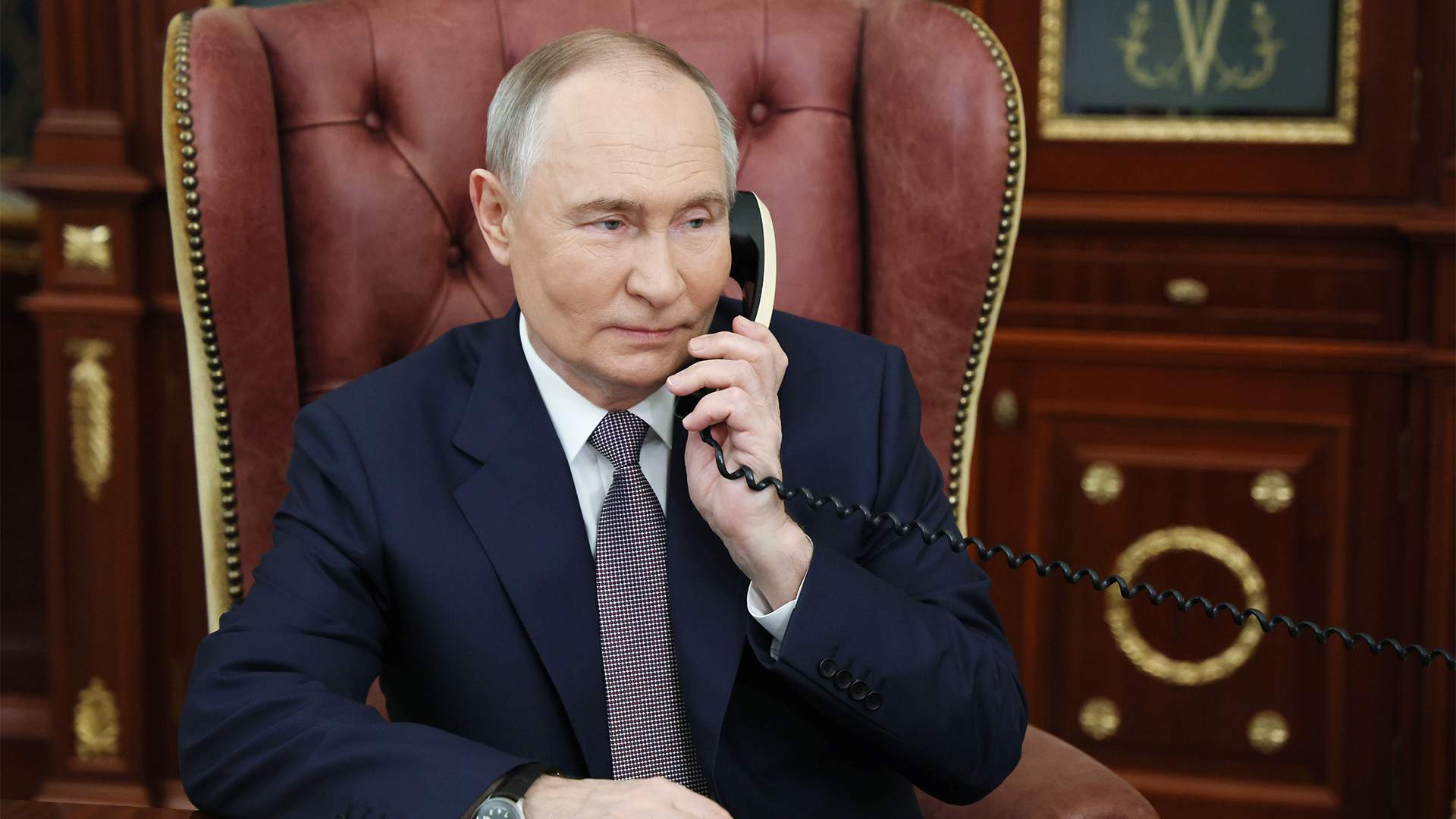
On July 1, Vladimir Putin and Emmanuel Macron had their first telephone conversation after almost three years: the leaders talked for about two hours and agreed to continue contacts. Among the main topics is the recent "12-day war" in the Middle East. The former guarantors of the Iranian nuclear deal confirmed their responsibility to maintain peace and security in the region. We also talked about Ukraine — Macron said that he intends to continue contacts with Putin and called on his Russian counterpart to reach an early truce with his neighbor. The head of the Russian Federation explained that a long-term settlement should eliminate the causes of the conflict, which was a direct result of Western policy. Who Macron called immediately after the conversation with Putin and how the world reacted to the phone call is in the Izvestia article.
All contacts between Putin and Macron since the beginning of their
On July 1, Vladimir Putin had a telephone conversation with French President Emmanuel Macron for the first time in several years. The last time they called was on September 11, 2022. Contacts between the two leaders stopped after a fairly intensive dialogue: in the year of the start of the special operation, the presidents of the Russian Federation and France called on the phone about 20 times. At the same time, in February, full—fledged bilateral negotiations took place in Moscow - they dragged on for almost six hours. And this was the last personal meeting.
Macron was generally the "record holder" in the number of calls to Putin. As the French leader later recalled, in the first half of 2022, he talked with the head of the Russian Federation for a total of "at least 100 hours." However, it is obvious that the conversations did not bring any result, and the international community even linked his active participation in the peaceful settlement of the conflict in Ukraine with the presidential campaign in France. Emmanuel Macron was even criticized by European politicians for his frequent conversations with Vladimir Putin. For example, former Polish Prime Minister Mateusz Morawiecki has now said that Macron has achieved nothing even with such frequent contacts with Moscow. And Kaya Kallas, who at that time held the post of Estonian prime minister, expressed concern that the Russian president allegedly did not feel isolated due to frequent contacts.
In the future, the heads of Russia and France repeatedly hinted to each other in the public space about their readiness for dialogue, but neither side acted as a real initiator.
The Kremlin assessed the conversation that finally took place as "meaningful." According to the Elysee Palace, it lasted more than two hours. The French side, according to an official statement, expects to continue contacts with the Russian leader. The UN welcomed the communication between Vladimir Putin and Emmanuel Macron.
In general, the Kremlin has always stated that it is ready for contacts with anyone who is interested in this. Recall that more than six months ago, on November 15, 2024, the first telephone conversation took place between the President of Russia and then German Chancellor Olaf Scholz in almost two years. Just two weeks ago, Vladimir Putin said that Russia was ready for contacts with Germany again, in particular, with the new leader Friedrich Merz, specifying that this should be the initiative of the German side. But Merz said the other day that he was not going to talk on the phone with the Russian president, allegedly out of fear that this would be followed by an escalation in Ukraine. But Moscow's contacts with the new American administration are actively underway: Vladimir Putin and Donald Trump have already called five times this year.
— Now Macron is trying to play multi-vector and be a link between the West and Russia. Thus, he creates for himself an additional subjectivity, an alternative to the same Trump. There is a situation where Trump is talking to Putin, and everyone else is forced to treat it somehow and actually follow the policies of Trump and Putin. Macron is also trying to be an independent player and somehow conduct a dialogue with the Russian president in this regard," says political analyst Dmitry Yelovsky.
It is possible that this phone call for Emmanuel Macron is another attempt to score "political points" for himself in front of the electorate: the politician's second presidential term ends in 2027, and "he needs to think about his future career, and he really wants to become one of the leaders of the European Union," Dmitry Yelovsky added.
About Ukraine
Unsurprisingly, one of the main topics of conversation was the situation in Ukraine. The French president said he hoped for an early agreement on a truce between the parties, who would be able to "find a reliable and long-term solution to the conflict." To do this, he called for the establishment of a ceasefire and the start of negotiations. Vladimir Putin stressed that peace agreements on Ukraine should be comprehensive and long-term, which means that it is necessary to eliminate the root causes of the Ukrainian crisis and rely on new territorial realities.
"When considering the situation around Ukraine, Vladimir Putin recalled that the Ukrainian conflict is a direct consequence of the policies of Western states that for many years have ignored Russia's security interests, created an anti—Russian foothold in Ukraine, condoned violations of the rights of Russian-speaking residents, and are now pursuing a policy of prolonging hostilities by feeding the Kiev regime with various modern weapons." It follows from the Kremlin's statement.
This is confirmed by the policy of the French leader, despite all his mediation ambitions. In March of this year, Macron again talked about sending military personnel to Ukraine as "peacekeepers and observers," and without Russia's consent. French Le Parisien claims that the NATO military — "several thousand people from each country" — can be sent to key areas of Ukraine, including Kiev, Lviv and Odessa. These "peacekeeping forces" will be able to provide a "military response" in the event of an attack, Macron said earlier. The Russian side has repeatedly said that the presence of NATO troops on Ukrainian soil in any capacity under any flag is a threat to the Russian Federation and will be considered as their direct participation in the armed conflict.
However, the presidents of the two countries agreed to continue exchanging views on the Ukrainian issue and agreed to hold talks again in the near future, according to a communique from the Elysee Palace. Ukrainian media later reported that Macron, after talking with Putin, called Zelensky to convey the details of his conversation with the Russian leader.
This conversation is valuable for Moscow only because it will provide another opportunity to convey its position and the terms of a peaceful settlement in Ukraine to the Western elites. "Putin is simply informing the next leader, who is once again trying to come to an agreement with him about what actions the West should take to end this conflict," Dmitry Yelovsky draws attention.
About the Middle East
The second important topic of the telephone conversation was a detailed discussion of the situation in the Middle East in the context of the Iran-Israel confrontation and the American attacks on Iranian nuclear facilities. The situation there escalated on the night of June 13, when Israel launched an operation against Iran based on information about Tehran's alleged imminent creation of nuclear weapons that it could use against the Jewish state. The targets of aerial bombardments and raids by sabotage groups were, in particular, nuclear facilities.
Russia and France, as permanent members of the UN Security Council, have confirmed their responsibility in maintaining peace and security, including in the Middle East region. The same applies to maintaining the global nuclear non-proliferation regime. Thus, Vladimir Putin and Emmanuel Macron confirmed both Iran's right to develop a peaceful atom and the need for Tehran to continue fulfilling its obligations under the Treaty on the Non-Proliferation of Nuclear Weapons, including cooperation with the IAEA. The other day, the Iranian side, according to local media, announced its refusal to allow the head of the agency, Rafael Grossi, to visit nuclear facilities in the future, as well as to install surveillance cameras there.
However, experts warn that it is not worth waiting for any reset of the situation in the Middle East after this telephone conversation. Although building bridges between the former guarantors of the Iranian nuclear deal is still a good sign, especially since Tehran is still open to negotiations, although it has significantly reduced confidence in the IAEA.
— Russia and France have quite a lot of common ground on this issue. Moscow and Paris are in favor of restoring the agreement on the Iranian peaceful atom, taking into account the realities on earth and the wishes of Tehran. Both sides criticize the escalatory steps of the United States and Israel. On the other hand, there is still a difference in approaches. France, like other Euro-troika countries, believes that Tehran needs to be put under pressure from time to time. Moscow stands for negotiations without pressure. Paris, in general, shares the US plan to limit the Iranian missile program, while Moscow does not have such goals on the agenda," orientalist Leonid Tsukanov explained to Izvestia.
In general, the leaders spoke in favor of resolving the crisis over Iran and other conflicts in the region through diplomacy. On this track, both the Kremlin and the Elysee Palace also confirmed an agreement to continue contacts for possible coordination of positions.
Переведено сервисом «Яндекс Переводчик»
