- Статьи
- Economy
- Gaz is different: the EC's decision to abandon Russian fuel will not affect exports from the Russian Federation

Gaz is different: the EC's decision to abandon Russian fuel will not affect exports from the Russian Federation
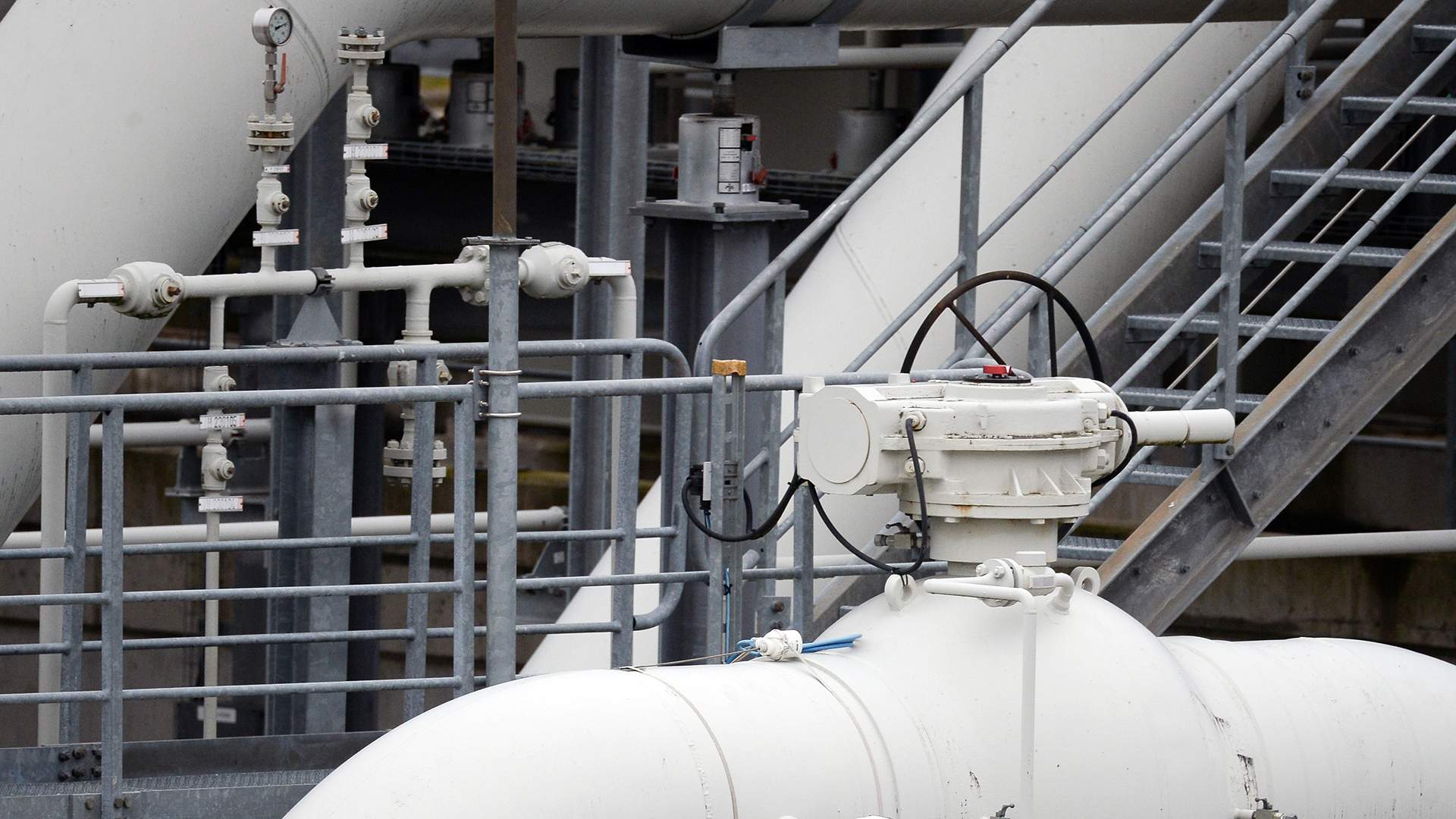
The decision of the European Commission to introduce a phased ban on imports of Russian pipeline and liquefied natural gas (LNG) by the end of 2027 will not affect the export opportunities of the Russian Federation, experts interviewed by Izvestia believe. In their opinion, as a result, domestic consumption will increase, as well as exports to China and the countries of South and Central Asia. The ban itself is based on EU legislation on trade and energy, which means that it can be approved with the support of an overwhelming majority of countries and members of the European Parliament, rather than by a unanimous decision of representatives of all states.
Ban on Russian gas imports
The European Commission (EC) has proposed a legally binding ban on the import of Russian natural gas and liquefied natural gas by the end of 2027, ending a long-standing energy relationship with the former largest supplier of raw materials to Europe. This is stated in the message of the European regulator.
According to the plan, the import of Russian gas under new contracts will be prohibited from January 1, 2026, while imports under existing short-term contracts will cease by June 17, 2026. An exception is made for short-term contracts for the supply of pipeline gas to landlocked countries that are linked to long-term contracts. They will be resolved by the end of 2027. By this time, imports under long-term contracts will be stopped.
As for oil, EU countries that still import Russian oil will need to prepare diversification plans to phase out all remaining imports, taking into account a complete shutdown by the end of 2027.
— The gradual abandonment of Russian fossil fuels will make an important contribution to the transition to clean energy and the overall competitiveness of the EU. This is possible because the EU has a sufficient number of alternative suppliers in the global gas market and a sufficient import infrastructure in the EU. In addition, this proposal contains built—in guarantees that meet the realities of the gas markets, while at the same time providing companies with a solid legal framework, the EC said in a statement.
Commissioner for Energy Dan Jorgensen said that the European Commission plans to implement this ban not as a foreign policy decision, but as a trade norm, which allows it to be approved by a qualified majority in the EU Council, depriving the community countries of the right of veto when voting.
"The less Russian gas there is on the European market, the freer and stronger we are," he formulated Europe's new slogan, adding that the EC intends to create mechanisms to protect against circumvention of the ban by EU countries.
How did the countries react to the EC's decision
According to Alexander Frolov, Deputy Director General of the National Energy Institute, the countries should vote for this plan in the near future. At the same time, he notes that now the decision of the EC cannot be influenced by the veto of countries such as Hungary or Slovakia. The ban is based on EU trade and energy legislation, which means that it can be approved with the support of an overwhelming majority of states and members of the European Parliament. A "strengthened majority" means the support of at least 15 of the 27 EU member states, representing at least 65% of the EU population.
Earlier, representatives of Hungary and Slovakia stated that they would not support the EC's decision to completely ban fuel imports from Russia.
And on June 17, it became known that Austria appealed to Brussels to preserve the possibility of returning gas imports from Russia after the end of the Ukrainian conflict. However, European Commissioner for Energy Dan Jorgensen separately stressed that the ban would remain in force regardless of the situation.
"These are not sanctions, so he will act regardless of whether peace comes or not,— he added.
In turn, Spain, Belgium, the Netherlands and France, which import Russian LNG, said they fully support the ban. At the same time, it must be legally justified enough to avoid penalties or arbitration proceedings, EU diplomats told Reuters.
Representatives of the European Commission said that the legal measures would allow companies to invoke a contractual clause on "force majeure" to terminate their contracts for Russian gas if the documents include this clause. In addition, the EC noted that in order to comply with the ban, companies will be required to disclose to the customs authorities the volumes, validity period and destinations of their contracts for the supply of Russian gas.
Gazprom and the Ministry of Energy did not respond to a request from Izvestia.
Business diversification
The implementation of the plan will be painful, first of all, for Europe itself, since by the end of 2024 Russia was the second largest supplier of gas to Europe after Norway — 53 billion cubic meters, including LNG. This opinion is shared by Valery Andrianov, an associate professor at the Financial University under the Government of the Russian Federation.
— So far, we are talking about a plan to stop purchases of Russian gas, and not about the final introduction of a ban. Back in early May, the EU set a goal to completely abandon Russian energy sources, which caused, to put it mildly, a mixed reaction within Europe. In particular, France and Belgium, which are the largest buyers of Russian LNG, are not ready to abandon these supplies," the source said.
At the same time, he emphasizes that if the restrictions are adopted, both purchases of Russian LNG and transportation of domestic gas via the Balkan Stream (continuation of the Turkish Stream) may be stopped.
"Unlike oil, the origin of gas is not so difficult to track, so the very fact of transit through Turkey will not be a panacea for Russian fuel," the expert believes.
Alexander Frolov from the Institute of National Energy agrees with his colleague.
— Monitoring and control measures, of course, have some obvious gaps. For example, you can imagine a scheme in which a Turkish company buys Russian gas for use in the republic, and sells gas produced in the country or purchased from other sources to foreign markets. Thus, the share of Russian supplies in Turkey is growing, and legally pure blue fuel will be supplied to European consumers," he said.
Among other things, in his opinion, the EC's decision is primarily related to their confidence that by 2030 gas consumption in the EU will decrease due to the growth of energy generation from renewable sources (RES). Europe intends to reduce overall gas consumption by switching to renewable energy sources by 45 billion cubic meters by 2030. And this, in fact, is the volume of gas that we supply there today, the expert added.
By the estimated time of the ban, domestic Russian consumption will be increased by 20 billion cubic meters due to gasification, Alexander Frolov believes.
— In addition, the Russian Federation intends to increase supplies to China by 2027 via the Far Eastern route, which is 10 billion cubic meters; to Uzbekistan — by the same amount. Do not forget about Iran," the expert reminded.
According to Ekaterina Kosareva, managing partner of VMT Consult, everything that Brussels and the leadership of individual EU countries have been doing lately "cannot be called anything but economic suicide."
Russia was ready for such a scenario, and the European Commission's plan did not come as a surprise, she noted. All that the Europeans could come up with was to pacify Hungary and Slovakia, which are trying to save their economies from collapse due to the whim of Russophobes, the expert concluded.
Переведено сервисом «Яндекс Переводчик»
