- Статьи
- Science and technology
- Nano so nano: AI platform will find an antibiotic against superbugs in a couple of days

Nano so nano: AI platform will find an antibiotic against superbugs in a couple of days

ITMO scientists are the first in the world to create a screening platform that predicts the effectiveness of combinations of nanoparticles and antibiotics to combat antibiotic-resistant bacteria. The development reduces the search for new effective compounds from several months to a couple of days and in the future will help create new drugs to fight bacteria that are dangerous to humans and resistant to drugs. Experts interviewed by Izvestia called the technology promising, but noted that the work is still theoretical and requires experimental verification.
What are the dangers of resistant bacteria?
Scientists from the chemical and biological cluster at ITMO University have learned how to identify particles that are toxic to pathogenic bacteria but safe for beneficial microorganisms using AI. According to the developers, antibiotics are getting worse at fighting infections. It takes a long time and is expensive to create new drugs against antibiotic-resistant bacteria, so scientists are trying to increase the effectiveness of existing drugs. One option is to mix antibiotics with silver or gold nanoparticles. Due to their size, the nanoparticles easily pass into the bacteria and cause their death, and in combination with antibiotics enhance the effectiveness of therapy, reduce side effects and the required dosage.
Testing the antibacterial effect of a combination of nanoparticles and antibiotics requires a lot of time and effort. First, scientists need to find a winning combination, then synthesize it and test it experimentally. The whole process can take from several months to a year.
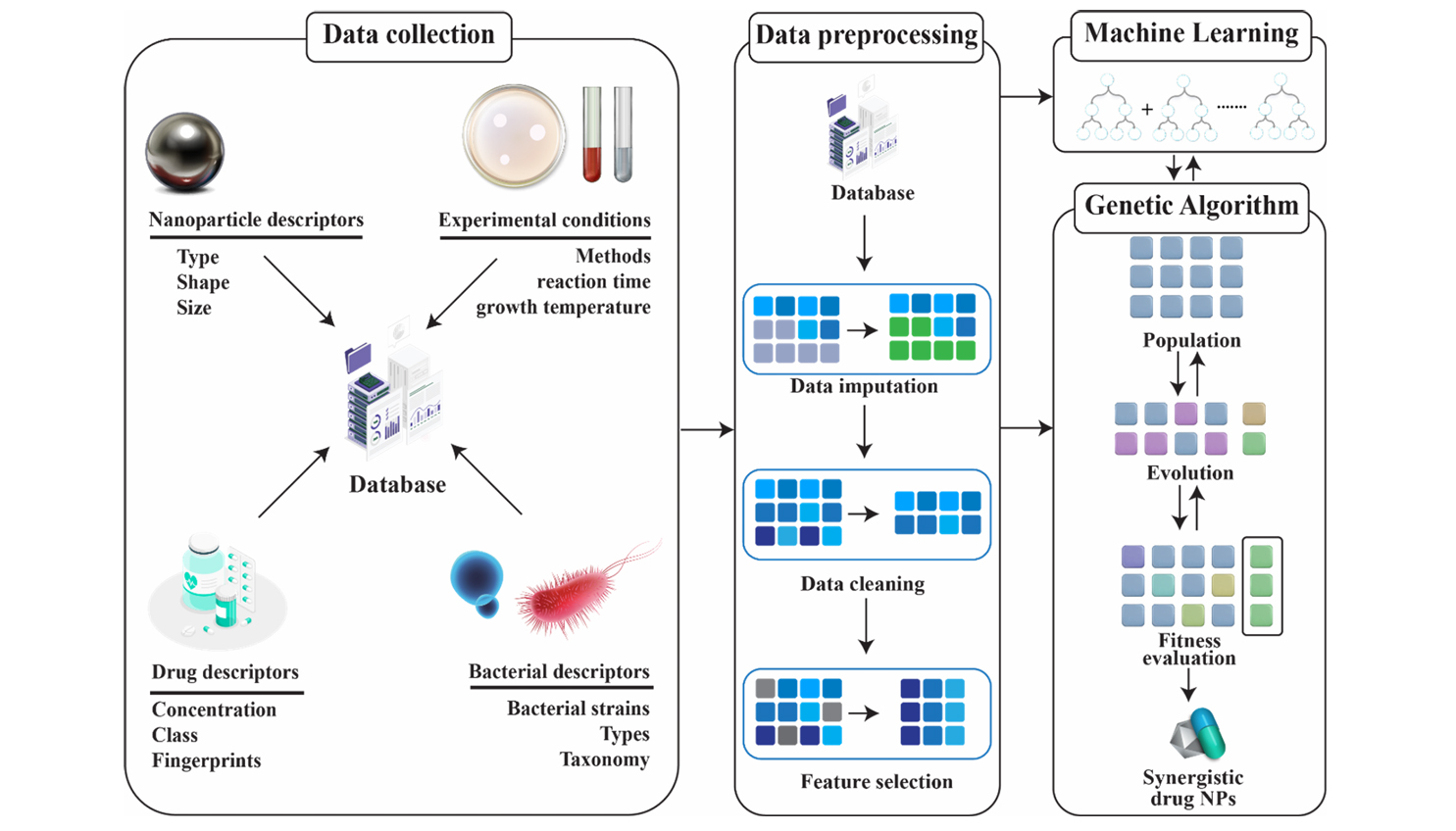
Researchers have created the world's first screening platform that predicts effective combinations of nanoparticles and antibiotics to fight antibiotic-resistant bacteria. It is based on machine learning models and genetic algorithms, which speed up the search for an effective combination from a few months to a couple of days. Now scientists can not waste time and materials on hundreds of tests, but focus on checking the best options.
— The platform allows the use of lower doses of both drugs and nanoparticles, reducing the risk of side effects. In addition, it is now more difficult for bacteria to develop antibiotic resistance, since they will have to adapt to two different mechanisms of action simultaneously — the influence of nanoparticles and antibiotics. Our research will help us to quickly select effective combinations to combat multidrug—resistant pathogens that are dangerous to humans," said Susan Gyakhwo, a graduate student at the chemical and biological cluster at ITMO University.
An analysis of mortality data in 204 countries from 1990 to 2021, conducted by a collaboration of scientists from different countries, showed that more than 1 million people died annually from drug-resistant infections, and by 2050 this number could increase to almost 10 million.
How new antibiotics are made
For the project, the researchers collected data from more than 100 scientific articles over the past 10 years on how antibiotics and nanoparticles act individually and in combination on different bacteria. The processed data formed the basis for training machine learning models and genetic algorithms. At the same time, the platform takes into account many factors: the size of nanoparticles, their shape, the properties of the antibiotic and the type of bacteria.

As a result, the screening platform has discovered several new combinations that can potentially destroy bacteria that are dangerous to humans and resistant to drugs. For example, Salmonella enterica (Salmonella typhimurium), which causes typhoid fever, diarrhea, pain and stomach cramps, can be defeated by gold nanoparticles in combination with the antibiotic chloramphenicol. A combination of silver nanoparticles and the antibiotic amikacin will help in the fight against Klebsiella pneumoniae, which causes pneumonia and other respiratory tract diseases. Moreover, to destroy both pathogens, it will take less of a mixture of drugs than nanoparticles and an antibiotic separately, which means that the side effect will decrease.
— We will test the platform's predictions in laboratory experiments, analyze how other large language models cope with the same tasks, and refine our platform. In the future, we plan to present it to drug synthesizing companies and enlist their support. I would also like to expand the functionality of the platform. We have now collected data on resistant bacteria that are dangerous to humans. If we add data on pathogenic bacteria for animals and crops to them, we can set up the platform to search for combinations of nanoparticles and antibiotics to treat new diseases," said Susan Gyakwo.

This development will really speed up the process from the point of view that pharmacologists will not need to come up with hundreds of combinations, and then choose from them obviously toxic and obviously useful, said Andrey Pozdnyakov, an infectious disease specialist at Invitro. Artificial intelligence can do it all by itself.

Susan Gyakwo
— In fact, this reduces the theoretical time it takes to develop drugs based on nanoparticles with an antimicrobial drug. AI chooses the best ones. And then the check takes as long as before. But the theoretical search itself is getting shorter by a couple of months, and that's good," he said.
The development of ITMO is an interesting step towards accelerated selection of antimicrobial combinations, said Albert Rizvanov, head of the Center for Excellence "Personalized Medicine" at Kazan (Volga Region) Federal University, Corresponding member of the Academy of Sciences of the Republic of Tatarstan.
— However, it is important to remember that the platform is based on published data, where usually only positive results are presented. This may reduce the accuracy of the forecast. In addition, nanoparticles and antibiotics, as well as their combinations, are potentially toxic not only to pathogens, but also to normal microbiota. The work is still theoretical and requires experimental validation," he said.
The results of the study are published in the journal ACS Applied Materials & Interfaces and supported by a grant from the Ministry of Science and Higher Education.
Переведено сервисом «Яндекс Переводчик»
