"We are making Rosatom's cities the best place to live and work"


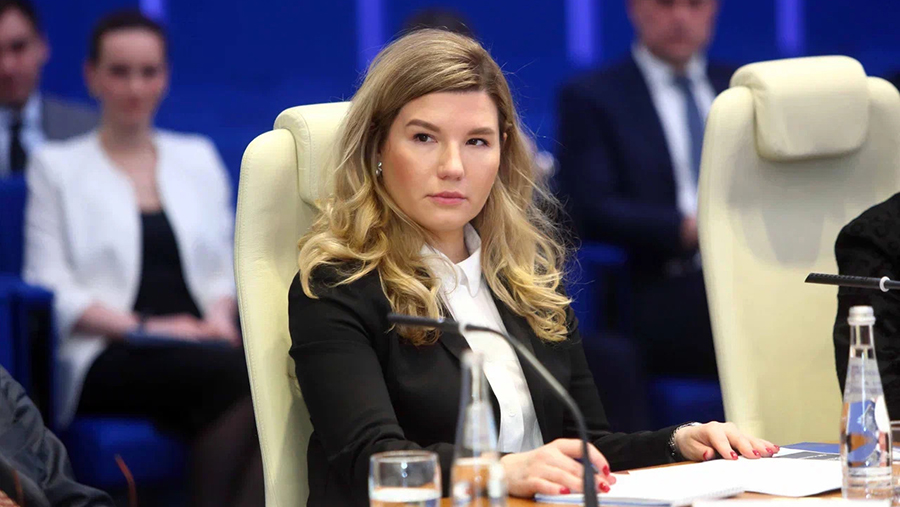
A systematic approach to building a dialogue with stakeholders has become an integral function of any large business today. In this regard, Russian state corporations often work ahead of the curve and act as a kind of "tuning fork" by which other market participants are compared. Rosatom State Corporation is among such structures. Marina Kirdakova, Director of Rosatom's Department for Regional Relations, told Izvestia about how the corporation solves the tasks of interacting with government authorities and implementing a strategy for the socio-economic development of cities where the nuclear industry is present.
— What tasks does your department face?
— One of the goals of our work is to ensure a balance between Rosatom's high—tech business, which ensures the country's technological leadership and strategic security, and the needs of people whose lives are somehow connected with these enterprises. In addition, our area of responsibility includes the performance of certain government functions in the "atomic" BUT (closed administrative-territorial entities). We never divide people into employees and non—employees - there are 2.5 million residents of 31 cities. About 20% of them are employees of the nuclear industry. The future depends on all citizens, without exception.
One of the main questions we ask is, "What do people need?" We always keep our finger on the pulse, monitor the social climate in our cities, adjust our work strategy based on sociology and make operational decisions. The recipe for an ideal city is simple — people need basic security and financial stability, a modern urban and digital environment, high-quality education, medicine, and a developed economy. Rosatom is working with all these areas.
The second equivalent question is: "What does Rosatom need?" Every year, the need for more and more highly qualified employees will grow — this is a trend not only in the nuclear industry. Those who work in enterprises today with secondary specialized education should become engineers working on new advanced equipment tomorrow. And such a specialist will have a request not only for wages and working conditions, but also for the entire urban and social infrastructure surrounding him: what kind of education his children receive, how he can spend his free time with his family, in which house he lives and how safe it is to let a child go to school.
And now we are at the junction, the intersection of points of interest, and we are working with them. We try to take into account the request of each party.
It is impossible to change people's lives for the better only at the municipal level, since there are situations that require regional and federal support. We have established partnerships and work systematically with all regions of our presence and federal executive authorities. This allows us not just to solve some local problems, eliminate symptoms, but to work strategically.
— Can you give specific examples of such a systematic work?
— We can take master plans as an example. There is a Spatial Development Strategy approved by the Russian Government until 2030 with a forecast until 2036. It provides for the creation of a system of support settlements (NPS). With our assistance, all atomic cities were included in the list of the first 200 main cities. We are currently developing and already implementing master plans in some cities— All ONPS should have them. Long-term plans for integrated socio-economic development based on master plans have already been approved at the government level for Pevek and Bilibino in Chukotka and Polar Dawns in the Murmansk Region.
What does this mean for ordinary people, translated from the language of officials? Already now and over the next ten years, their cities, which are of strategic importance to the state, will be rapidly transformed. As a matter of priority, they will begin repairing communal infrastructure, roads, kindergartens, schools, new modern houses will be built, and factories with good salaries will appear. And this is not populism — everything is fixed on paper, responsible persons, financing, and deadlines have been determined. These are the changes that people will see.
When preparing master plans, they take into account not only logistics and energy, but also sociology — how to create a cozy environment in a polar night, how to attract and retain young people. For example, in Pevek, this includes the construction of modern housing with increased energy efficiency, the creation of digital services that compensate for remoteness, and the development of cultural programs that brighten up the long winter.
What is important is that Rosatom is not a financial donor in this case. Our participation is there, but insignificant compared to the cost of the projects. Here we perform more the role of a qualified operator: we monitor the progress of implementation, provide methodological support to the city administration, interact with regional and federal authorities, and business. Ultimately, we want nuclear cities to be attractive centers for living, where families are comfortable and where talented specialists can fully realize their potential.
An example of systematic work at the regional level is Rosatom's agreements with the regions. They make it possible to attract additional funds from the regional budget to our cities for the maintenance of infrastructure, housing and communal services, capital construction and the implementation of other important projects for citizens. The amounts are impressive: for example, in 2025 it amounted to about 6 billion rubles. We consider this to be fair, given the fact that nuclear industry enterprises are often among the largest taxpayers in the region.
These are all examples of an integrated approach that allows cities to develop harmoniously. We adhere to the same ideology when we include the construction of new power units in the master plans. Realizing that the population of the Polar Dawns will double at the peak of construction, it is necessary not only to think about where these people will live, but also to prepare for an increase in the burden on the entire urban infrastructure, including kindergartens, communal services, roads, etc.
— How do you understand that you are moving in the right direction in urban development? Are there indicators to verify the correctness of the chosen course?
— There is an index of the quality of the urban environment, which is published annually by the Ministry of Construction of Russia. This is not paid analytics from some private company, but official, competent data based on hundreds of different indicators. It is worth noting that throughout their existence, "atomic" cities have always differed positively from the average Russian ones. 97% of nuclear cities now have a favorable urban environment. This largely affected our great-grandfathers, who built magnificent modern cities for their age. BUT they have the best performance. Special emphasis was placed on them both then and now. And our task is to keep this high-set bar and set it higher every year.
— Have there been cases when you had to pull up cities that initially had low ratings?
— There are examples of the rapid growth of two "nuclear" cities in the last few years. The first is our uranium capital Krasnokamensk in the Trans—Baikal Territory, which last year was included in the list of Russian cities with a favorable urban environment. It is noteworthy that the master plan for him was developed several years ago and is already under active implementation. In the summer of 2025, a new airport was opened here, new public spaces and modern sports grounds are emerging, but more importantly, it is the very feeling of residents who believe that their city can change for the better.
The second example is Usolye-Sibirskoye. This city with a very heavy ecological legacy has recently joined the family of our atomgrads. In recent years, it has shown a steady increase in the index of the Ministry of Construction of Russia.
We hope that our joint efforts with the teams of the municipality and the regional government will allow the city to be included in this list in the coming years.
Participation in competitions for projects aimed at creating a comfortable urban environment has a great impact on the index. 15 "atomic" cities won in 2025. The total amount of grants received amounted to 1.5 billion rubles. Rosatom helps cities with the preparation of tender documents and applications, which increases the chances of winning.
— Is there a place for information technology in the process of urban development? For example, the use of artificial intelligence?
— Everything that we have just listed, especially the implementation of modern strategic development documents, requires the modernization of the municipal management system and its renovation. We are already witnessing how Rosatom is implementing AI, including in such processes as NPP management. As an assistant operator, of course. And believe me, it was a very deliberate and balanced decision. I am sure that the times are not so far away when the heads of our cities will also have AI assistants who, for example, will promptly collect analytics based on big data, give advice based on the experience of previous years, or colleagues from other municipalities.
Infrastructurally, many cities are already ready for this. A number of them have built Data Processing Centers (DPCs) at nuclear power plants. If we talk about future nuclear construction sites, data centers there are often included immediately in the construction project, as they have proven their effectiveness. Rosatom Infrastructure Solutions (RIR, a division of the Rosatom State Corporation) is doing a lot of work in the field of digitalization of cities. Recently, they introduced artificial intelligence into the housing and communal services management systems in Glazov and Obninsk. The project made it possible to create a "digital twin" of urban water and heat supply networks. The AI there not only records deviations in the operation of equipment in real time, but also predicts possible incidents. Therefore, it is quite possible that similar tools will appear in the arsenal of city heads.
— Did you say that you interact with the business? What does this include?
— There are two directions. The first is our network of representative offices in the federal districts. Their task is to build an effective dialogue between the regions and the State Corporation's new, non—nuclear businesses: composites, renewable energy, medicine, IT, logistics, electric mobility, and others. The second is the Atom-TOR management company. Its goal is to develop the economy of closed cities through its diversification. This allows us to create new jobs and find new growth points. Ultimately, this creates comfortable conditions for urban residents and has a positive effect on the economy of the entire region. Tax deductions of TOP residents to budgets of all levels exceeded 5 billion rubles on an accrual basis. The volume of investments made by residents in the implementation of their projects has now amounted to more than 25 billion rubles.
— There is a lot of talk about social architecture and social architects now. Are similar technologies used in your cities?
— These are tools, creating conditions. It is based on social initiatives so that people themselves advocate for change not only for themselves, but also for others, for the city, region and country. The programs, projects and directions of our department are about this — we are raising educated, talented citizens of our country — conscious patriots. For such a person, it is not enough just to go to work. He sincerely feels the need to serve the community. We always try to support such people.
For example, the award ceremony of the national vocation "New Creators" was recently held. It is held with the aim of encouraging active citizens who, through their work, demonstrate examples of the highest citizenship and dedication, implement projects on youth education, sports, culture and other areas. This year, more than 700 residents from 31 cities where the nuclear industry operates have become applicants. More than 230,000 people took part in the voting. This is a very good indicator of engagement, which is growing every year.
— What are the three main challenges that you set for yourself in the near future?
— The first and main thing is the balance of speed and quality. Our technological projects, such as the construction of new power units as part of the implementation of the General Scheme for the placement of energy facilities until 2042, require rapid involvement of people. However, it is impossible to build an urban environment, a social climate and a sense of community as quickly as to build power plants. We need to be proactive, and here we are helped by master plans, sociological research and competent work with people.
The second challenge is personnel, not in the sense of recruiting. We need motivated specialists who will come to work at our enterprises with their families. That's why we're investing in atomclasses, programs for young parents, infrastructure for early childhood development, and relocation facilities.
The third one is normative. Working with the Arctic territories requires jewelry precision within the framework of special legislation and constant synchronization with dozens of federal and regional programs. My colleagues from the Federation Council and I are in close contact and are working to improve the regulatory framework in order to give a new impetus to the development of closed cities.
— What are your plans for the future?
We will broadcast the successful practices of master planning, the Rosatom School, and the Rosatom Cultural Territories to new regions, especially the Far East and the Arctic, where we will bring new stations. We will continue the digital transformation of the urban economy and develop interactive projects like the Atomic Dictation, implemented by the Atomic Cities Union, which involve thousands of people in the industry agenda.
We see the nuclear cities of the future as "responsible silicon valleys." It combines advanced science and lean technologies, a unique cultural environment and family values, economic sustainability and environmental safety. Our goal is for every resident of such a city to be able to proudly say, "I'm not here by accident. This is my home, my job, and my future." Rosatom and our department, as part of it, will do everything to make this formula a reality for an increasing number of people.
Переведено сервисом «Яндекс Переводчик»
