Sound and Fury: Konchalovsky releases Pink Floyd's Macbeth


Shakespearean passions about the thirst for power, accompanied by incendiary Caucasian Lezginka and one of Pink Floyd's greatest songs — this is how director Andrei Konchalovsky presented the darkest tragedy of the main English bard Macbeth. Starring Evgeny Tkachuk and Yulia Vysotskaya. On December 16, a grandiose presentation of the play will take place on the main stage of the Mossovet Theater. Izvestia was one of the first to see the production at the pre-premiere screening.
Shakespeare's Tragedy in the Caucasus Mountains
Andrei Konchalovsky continues to move on the literary legacy of William Shakespeare. After "The Taming of the Shrew" at the Mossovet Theater, the director took up "Macbeth" — and did it in his own way, rethinking the text translated by Boris Pasternak, as well as the events and characters of the characters.
— How can we match the scale of this genius? This is an immense amount. It's like a glass pyramid that you're trying to climb to the top of, but you're constantly sliding down because of the smooth surface. It's difficult to reach the top, but at least halfway there," admits the director.
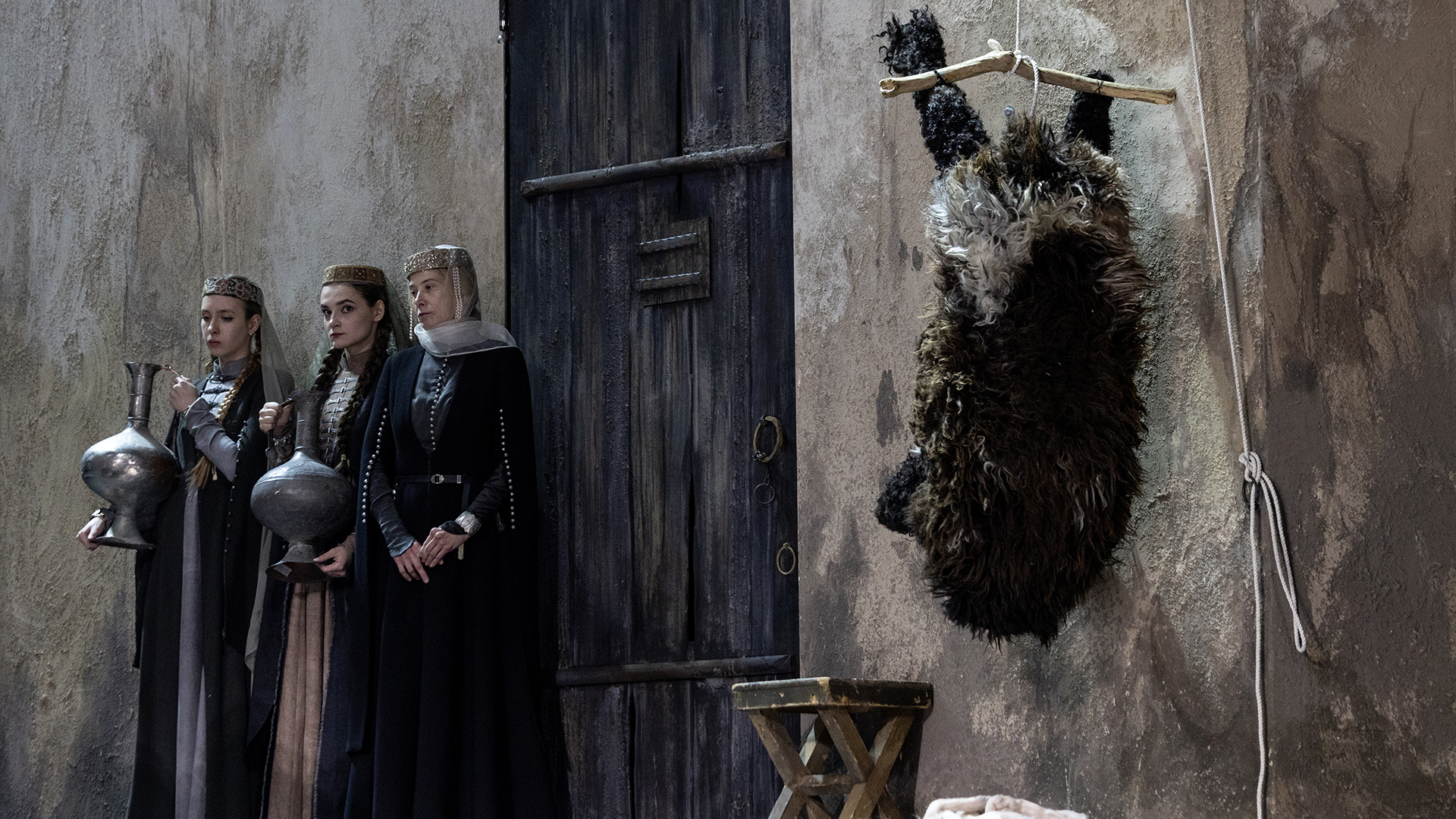
Although Shakespeare sets the action in harsh medieval Scotland, the director resolutely transfers it to the Caucasus — and the story, oddly enough, only benefits from this. The world of Scottish clans, with their rigid code of honor and belief in bad omens, naturally resonates with the Caucasian way of life. In such an environment, betrayal, murder and the struggle for power cease to be abstract politics — here they acquire a fatal, almost mystical sound.
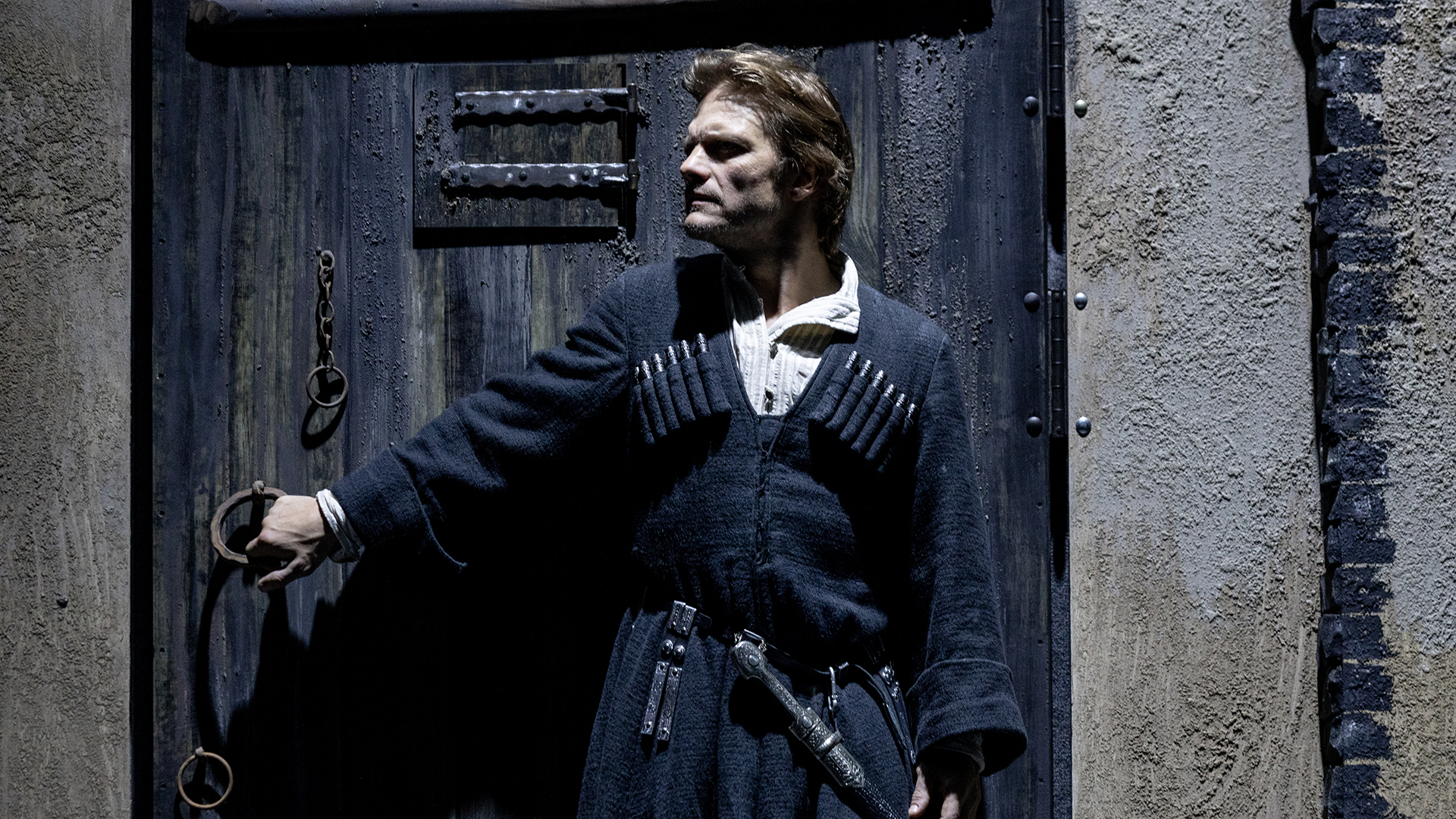
National music is played from a special orchestra balcony to the left of the stage, and an armed battle is unfolding on the stage. Real mountaineers appear in front of the audience — in papakhas and Circassians with gaskets sewn on their chests, where powder canisters were inserted, and later cartridges. As the performance progresses, the costumes gradually change color from white to dark, reflecting the growing tragedy of the story.
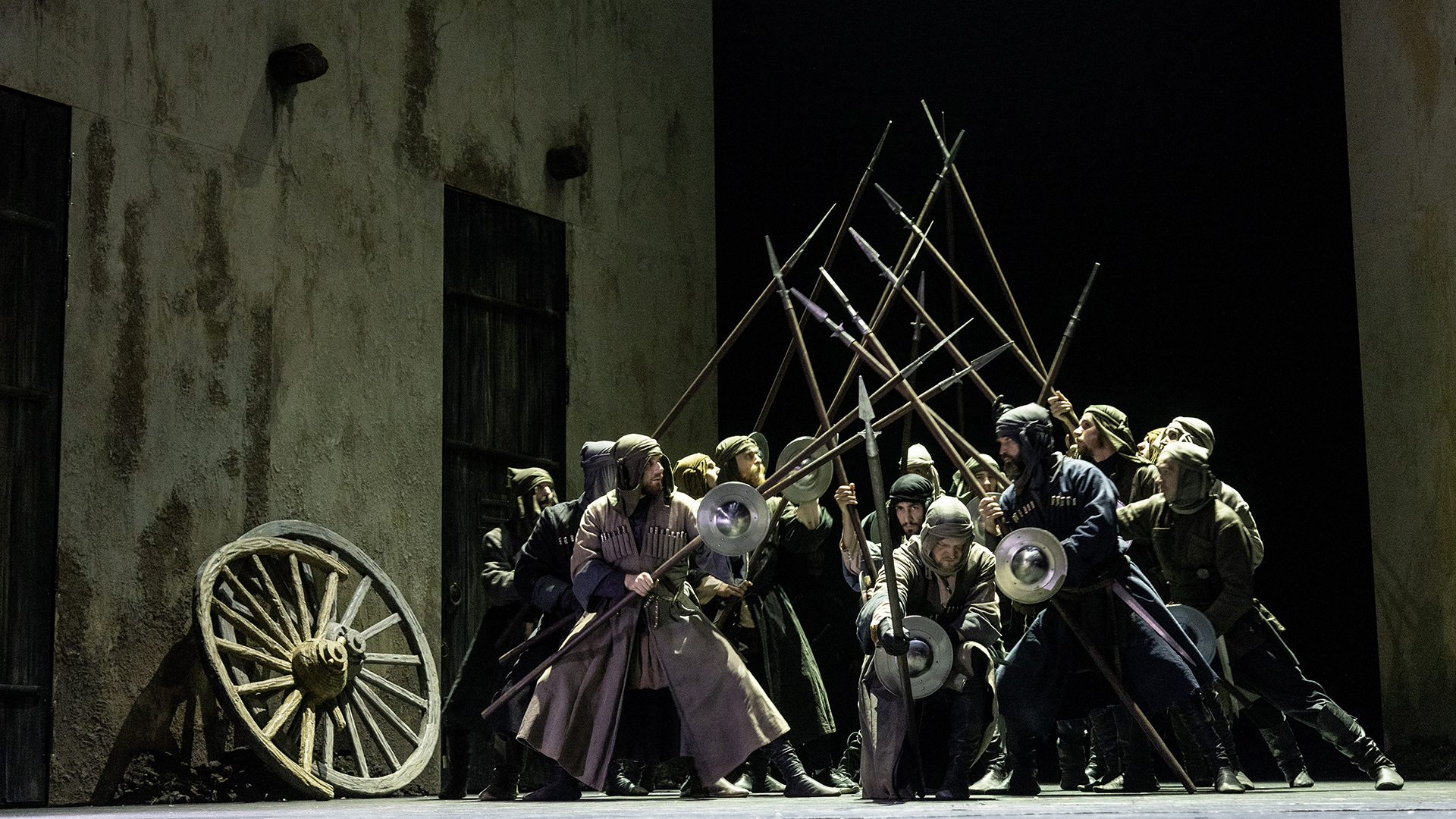
Mountain ranges, fog in the gorges, wind humming through the rocks — this gloomy natural environment becomes a living background, pressing on the heroes. The inevitability of rock is felt more strongly here than in classical productions. Caucasian emotionality — hot, straightforward, short—tempered - gives Shakespearean passions a new breath. Konchalovsky emphasizes that Macbeth's ambitions could have been born not only in the silence of a medieval castle, but also in a harsh culture where honor and power are especially expensive. It is this mixture of temperament and ancient fears that makes history modern and frighteningly recognizable.

Husband and wife are one Satan
Yevgeny Tkachuk, who plays the role of Macbeth, speaks here with a slight accent — not caricatured, but organic. An upturned chin, squared shoulders, a devilish gleam in his eyes — in less than two hours of continuous action, the actor shows not only the formation of the hero as a talented military commander and loyal subject, but also the gradual scrapping of this extraordinary personality. Instigated by his wife, Lady Macbeth, played by Yulia Vysotskaya, he first kills King Duncan, then orders the destruction of the family of his son Malkom (Arseny Vasilyev), and later Banko (Egor Gordienko). After all, according to the prophetic sisters' prophecy, it is Banquo's descendants who should occupy the throne.
The soothsayers in the production are transformed into mysterious mountain spirits, as if descended from ancient legends. Their appearance creates a special atmosphere of premonition of trouble — it seems that fate itself comes on stage and puts its hand on Macbeth's shoulder.
The story of Macbeth is a tale not only and not so much about him, but also about her — Lady Macbeth, the wife, the accomplice of crimes. Yulia Vysotskaya, outwardly soft and collected, had to bring out cruelty and inhuman determination. Her character is ruthless, furious, and insane. Especially scary is the scene where the actress cradles a white bundle with a baby in her arms, which she never had, but which could have been if not for the ambitions of the spouses.
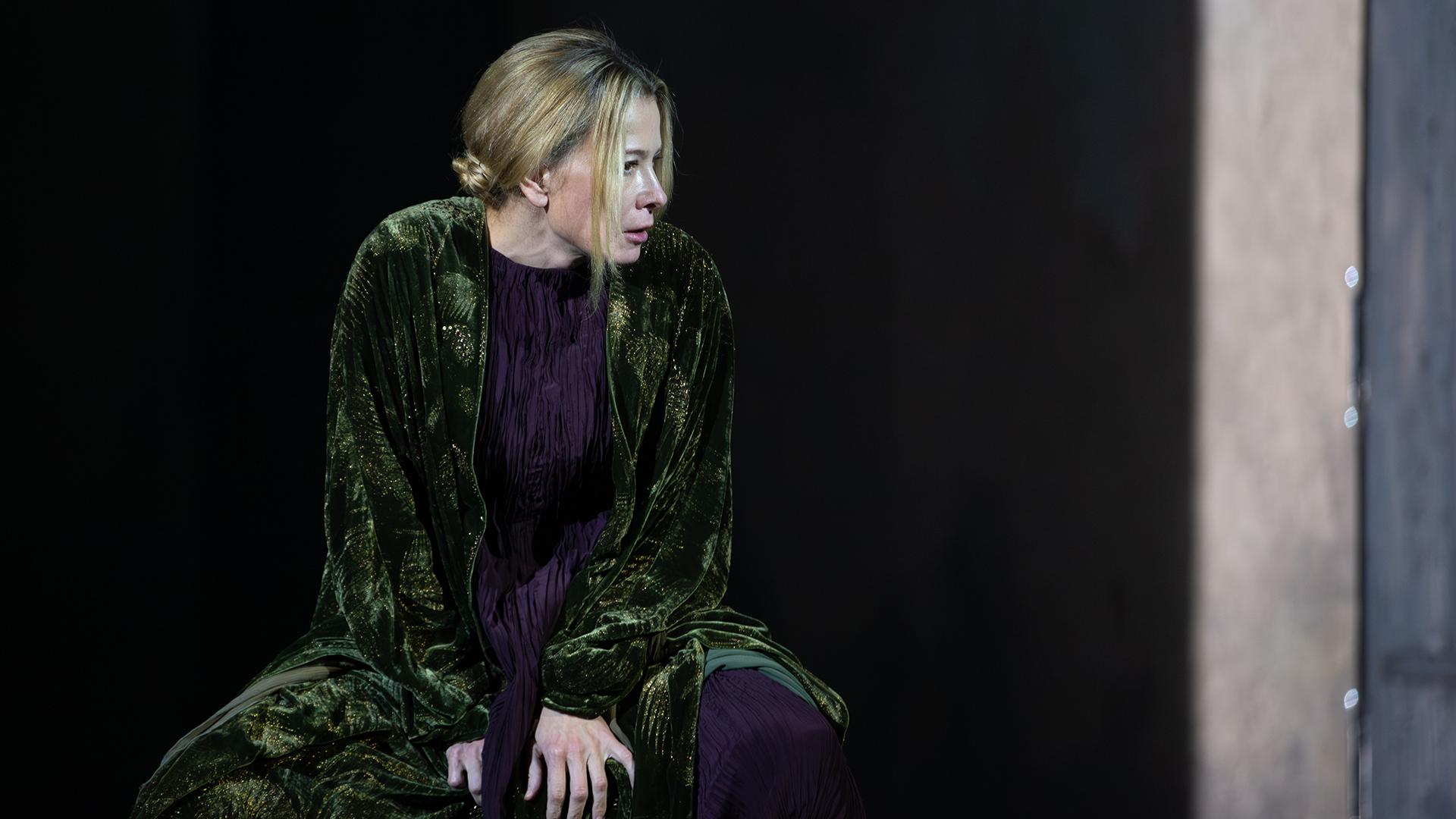
She chooses power at any cost and reproaches her husband: she is ready to commit murder herself if the case required it. And although literally her hands remain clean, complicity in crimes leads to madness — following her husband. Which, of course, rhymes with the newly released Chronicles of the Russian Revolution, where Vysotskaya also has a difficult heroine, a kind of twentieth-century Lady Macbeth.

From lezginka to Pink Floyd
The disturbing atmosphere is enhanced by an unexpected musical theme introduced by Alexander Chevsky: the beginning of the legendary Pink Floyd composition "Shine On You Crazy Diamond" sounds on stage. When the tension reaches its peak, Lezginka's violins and drums are replaced by long, meditative synthesizer phrases and signature guitar arpeggios — as if the hero plunges into inner darkness and remembers the value of lost light. The contrast enhances the tragedy: Lezginka adds primality and rage, Pink Floyd adds melancholy and meditation, making the sound fabric of the performance multidimensional and emotionally saturated.
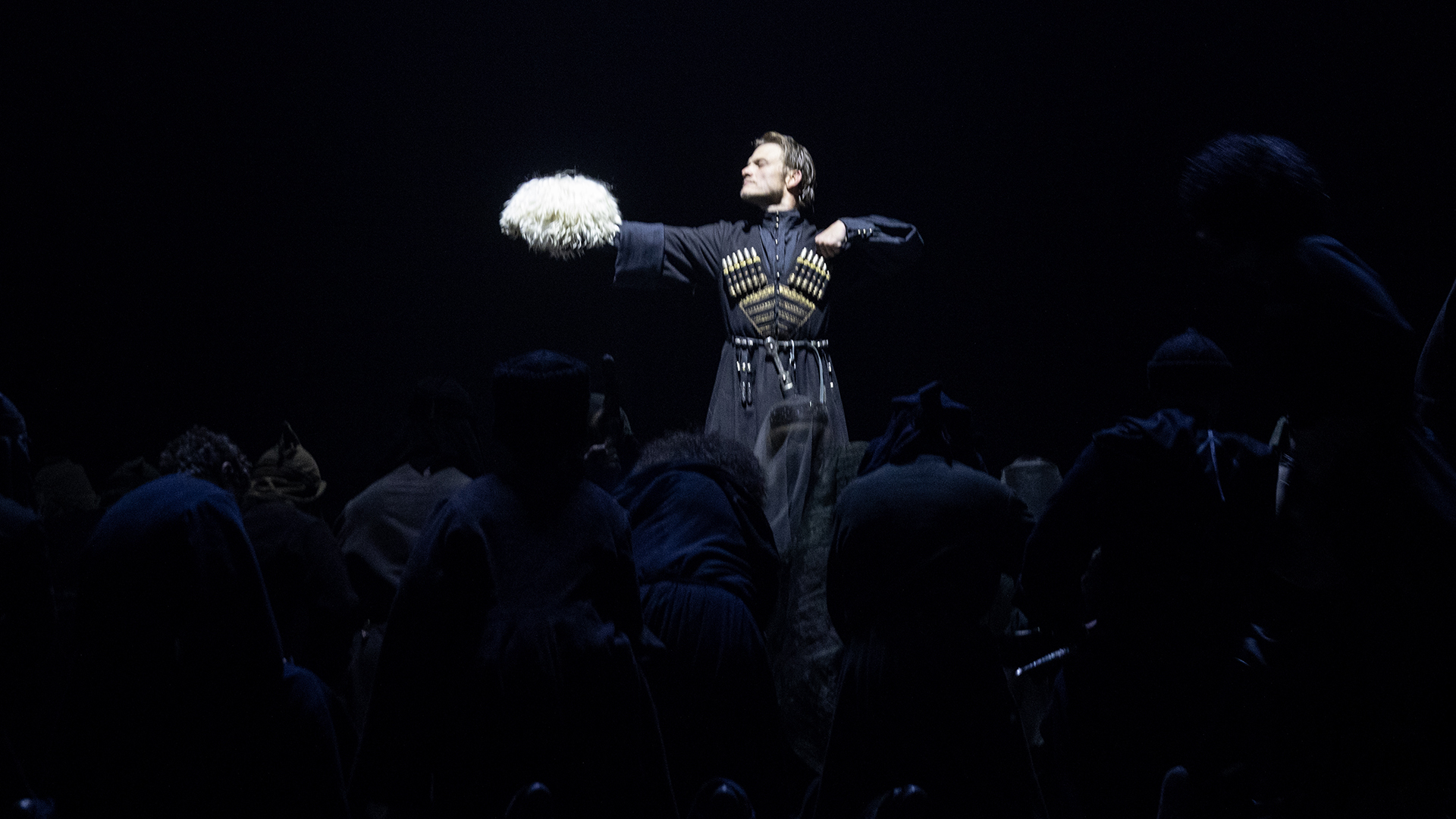
The real story of the song is also important here. "Shine On You Crazy Diamond" is a requiem for Syd Barrett, founder of Pink Floyd and one of the founders of psychedelic rock. Barrett burned under the weight of his own psyche. Macbeth is under the weight of lust for power. Barrett dissolves into visions, Macbeth into crime.
Pink Floyd's music sounds like grief, lamentation, and an attempt to make sense of the loss of a friend. Konchalovsky's play unfolds as a path to realizing the inevitability of death: from disturbing prophecies to the night of the murder and subsequent spiritual disintegration. In both works, there is not only a tragic sound, but also a distinct regret that nothing can be returned.
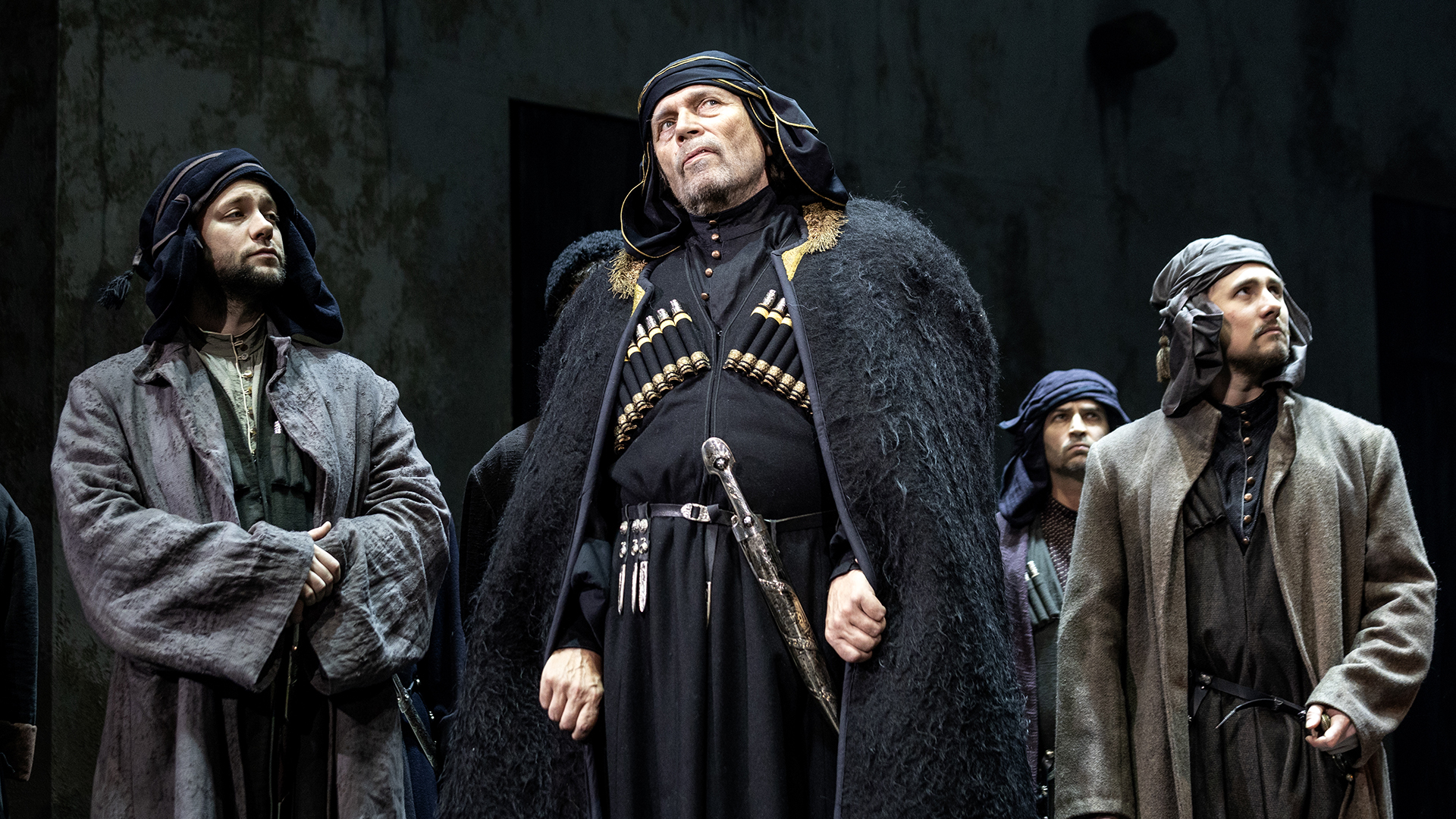
The song repeats the motif of light — shine on, a request to preserve the lost radiance of genius. Macbeth also once possessed this "light" — honor, valor, dignity. But after committing the murder, he gradually fades away: his mind and morals dissolve in the same way that Barrett's consciousness dissolved.
It is to the music — to the devilish rhythm of the Lezginka — that Macbeth meets his doom. He dies like a warrior: on his feet, fighting to the end. Under the rapid drumbeat, he spins in a national dance, falling and rising again, until the last chord takes the soul out of the body, which collapsed onto the stage dead.
Переведено сервисом «Яндекс Переводчик»
