The Demon of the Tower: Alexey Ivanov has released a novel about demons


Demons that devour people, and factories that require even more victims. Industrialist Akinfiy Demidov and statesman Vasily Tatishchev in a deadly battle. Witchcraft, treachery, passion, sophisticated cruelty — such is the 18th century in Alexei Ivanov's new novel The Nevyanskaya Tower. The most adaptable modern Russian writer after "Fallout in the Urals" returned to the time of Anna Ioannovna and mixed real historical events and major figures of the era with folk legends and monsters in the style of Stephen King. Izvestia publishes a review of a novel that has just gone on sale.
Why the Nevyanskaya Tower is a historical novel
"Vegetation" was such a powerful and comprehensive author's statement that it was not very clear how and about what Alexey Ivanov would write next. It's hard to say if Ivanov himself knows the answer to this question, but the Nevyanskaya Tower is a kind of respite and at the same time a perfect crowdplaser (that is, literally, playing to the public). Despite the quite serious volume of 400+ pages, this is more of a novel by genre. It's just somewhat artificially stretched, including through repetitions, in order for the reader to get the most out of the couple of evenings it will take to swallow this work. A local mystical horror set in historical settings that you can take on the road and never regret it.
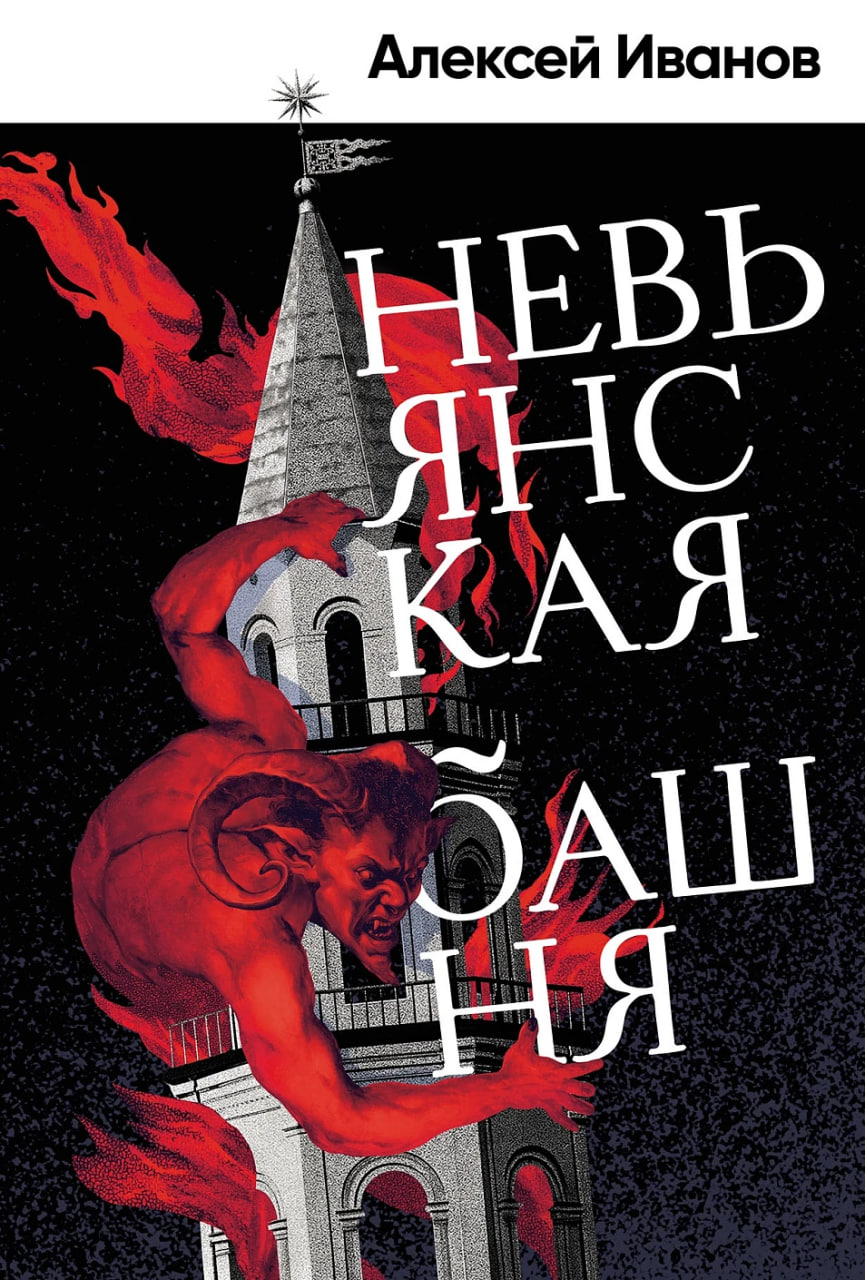
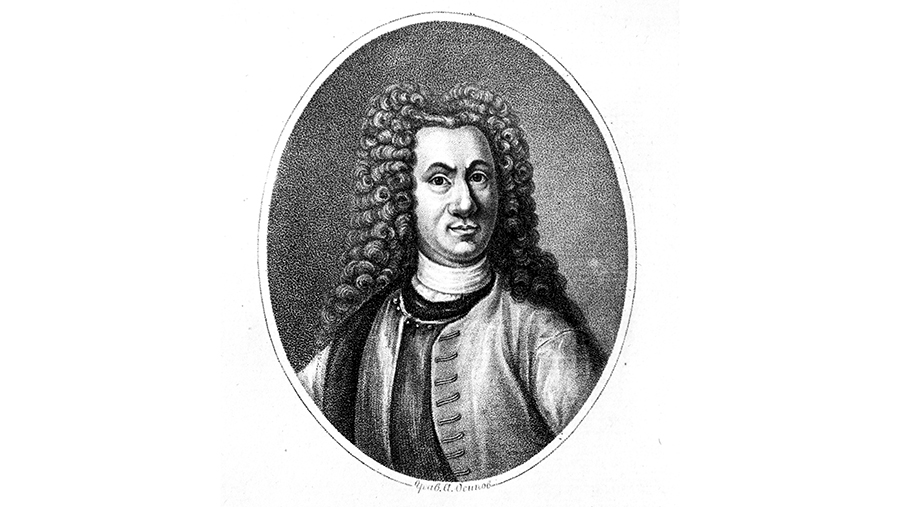
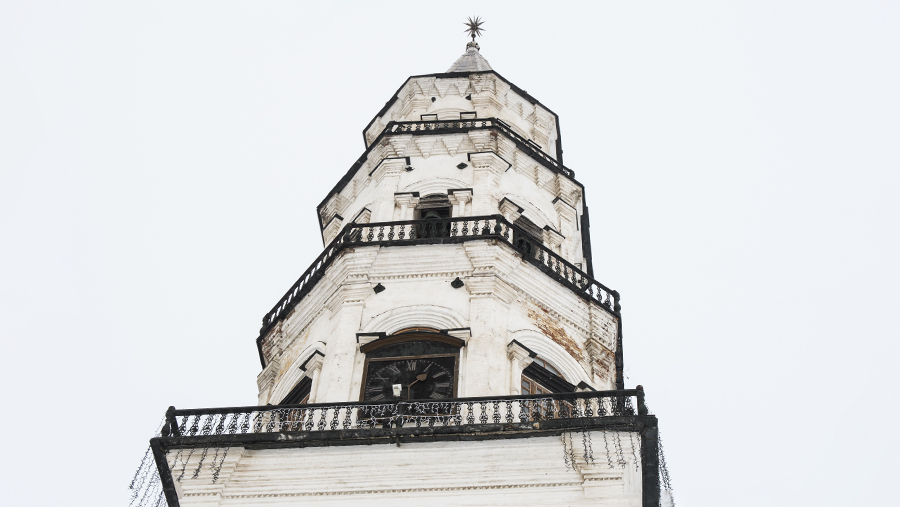
Speaking of "decorations". Everything is very accurate here, and no one will be surprised if Ivanov, following the novel, releases, as usual, another documentary book about how everything really happened. But even here: the ever-leaning Nevyanskaya Tower, no worse than the Leaning Tower of Pisa; industrialist Akinfiy Demidov, who built his own empire in the Urals; historian and official Vasily Tatishchev, who is perhaps the most terrible villain here; mount Blagodat in the Sverdlovsk region — Ivanov writes about all this as closely as possible to historical reference books or at least local folklore where official history is silent.
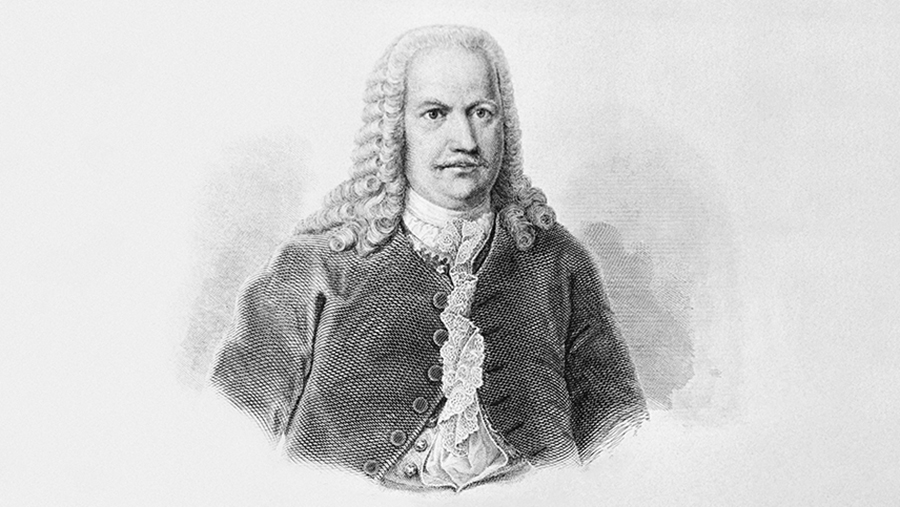
The plot is built around Demidov's construction of a grandiose blast furnace in the 30s of the XVIII century. Something inexplicable is happening in the factory village. People jump into the fire themselves, because they are supposedly called from there by the local sectarian Petalinia, a preacher of free love, a local hippie. The Demidov masters are periodically possessed by a certain demon, from which there is no escape. A very important person for Demidov has disappeared from the tilted Nevyanskaya tower, and there will be big trouble if the wrong people find this guy. And Tanka, Demidov's kept woman, who was nicknamed Nevyana, returned to her homeland from St. Petersburg. Once she went to Akinfiy from master Savvati, but he did not stop loving her and waiting for her. Meanwhile, Vasily Tatishchev, who has long-standing scores with the Demidovs, came to the Urals.
Ivanov confronts the worlds of the growing mining industry, the eternal refugees of the Old Believers, whom Demidov takes care of to work for him, and the Biron political intrigues and corruption in which Demidov and Tatishchev are deeply involved. A little mysticism, a little eroticism — and here is the novel "Nevyanskaya Tower".
How did the novel "Nevyanskaya Tower" turn out?
Alexey Ivanov treats his reader with great respect and is confident in advance that he is well—read - at least at the level of a good humanitarian secondary school. And his literary play with the audience is one of the components of the designer, which the writer owns with filigree. So, already in the first chapter, the action unexpectedly reproduces almost word for word one of Chekhov's most shocking stories, "I want to Sleep." In the second chapter, the image of the local buffoon is copied from the buffoon played by Roland Bykov in Andrei Rublev.
Then the parallels become thinner and less obvious. But — read carefully! In the fourth chapter about Nevyana: "She never asked for anything — except for the first time when she left Savvati. She did not serve, did not please, did not fawn or humour. She accepted favors as if they were paying her debts." It is difficult not to recall the Epistle to the Corinthians here: "Love is long-suffering, merciful, love does not envy, love does not exalt itself, is not proud, does not commit outrages, does not seek its own, is not irritated, does not think evil, does not rejoice in unrighteousness, but rejoices with the truth." The melody, the construction, the individual roots intentionally coincide. This is how Nevyana, at the subconscious level, is equated with the high New Testament ideal — and, by the way, fully corresponds to it, and for us this is no longer Tanka, nicknamed Nevyana, who went from a poor man to a rich man, but a kind of moral tuning fork, which Ivanov makes the core of the work.
Roman Ivanov will increase the scale of the tragic intrigue by introducing "the shadow of Hamlet's father" into the plot, of course, also carefully disguised. And when there is an erotic scene, he will build a paragraph so that the characters, like shoes, fall to the floor, and the Pasternak candle would turn into the Nevyanskaya Tower. Ivanov has the highest aerobatics and a brilliant mastery of the art of reminiscence.

On the other hand, it's not for nothing that this novel remains more of a novel, and sometimes it seems unfinished. The action is concentrated on an area of several hundred square kilometers, although we are constantly informed of the coordinates of those locations that logically should also be present in the work. The Demidov fiefdom of Tula, where family crimes in the style of the "Brothers Karamazov" are committed, is very dotted here. But what is much more traumatic is that St. Petersburg does not appear at all, although we should definitely "be there." Nevyana lived there for a long time, managing Demidov's property in the capital. There's Biron, whom we constantly read about in dialogues and whom we should have "met", like Grand Duke Ivan in "The Heart of Parma" at least. It is difficult to judge why Ivanov abandoned this idea, he clearly had no problems with the material. Moreover, the action of the Nevyanskaya Tower echoes the novel Tobol, almost the same period. Either Ivanov didn't have enough time, or he specifically saved something for the non-fiction iteration of the novel. Maybe both.
In terms of style and techniques, this novel is nothing new for Ivanov. A femme fatale, a God-fearing titan hero, a punishing official with unlimited possibilities, schismatics confident in their rightness, proud representatives of local archaic cultures, a gathering evil fate, a vengeful demon — we have already read all this more than once. After the historiosophical swing of the "Vegetation", I still wanted something more, but Ivanov limited himself to a very simple, detailed metaphor. Factories require human sacrifice, power requires sacrifice, religion and demons also feed on blood. Someone gives himself up voluntarily, someone becomes an executioner who carries the dead to the altar. And this is being done in the name of new achievements, transformations, and progress. And those who do not want to put themselves under the knife or others have lost in advance, they are doomed to oblivion, no one respects losers, even if they eventually perform feats.
Ivanov, as always, allows us to look at what is happening through the eyes of many characters, to see how they seem in the eyes of their interlocutors. He makes sure that we admire each of them, and is in no hurry to take sides. But what he is sure of is that any bloody sacrifice is a crime, it's just that sometimes it can be stopped, but more often it won't work, because that's how the world works and it's moving somewhere forward, in a direction that we don't know, but which we can't escape. And the Nevyanskaya Tower soaked in blood is one of the numerous proofs.
Переведено сервисом «Яндекс Переводчик»
