Bird Rattle: "My Mom's Penguins" has a second season


The second season of "My Mom's Penguins" will begin airing on November 14, although the sequel to the 2021 superhit was not expected and no one was expecting it. In the original, there was a fiercely cynical stand-up, an unexpected look at solving family problems, cyberbullying, an honest conversation about autism, and characters, each of whom was recognizable from the first minutes. The sequel has changed course and not everyone will like it, but the characters are back, and their "cockroaches" have not gone anywhere. Izvestia watched the first available episodes and tried to analyze the contradictory feelings of the sequel.
Why "My Mom's Penguins" is a special series
Four years ago, the series "My Mom's Penguins" became not just an event, but a revelation. It was not for nothing that picky Russian critics presented him with the most rigorous White Elephant film award in Russia. The fact is that most of our shows are attempts to follow each other. For example, "House Arrest" is coming out — and then dozens of exactly the same series are waiting for us, with similar characters, jokes, and rhythm. Liquidation is coming out — and its "clones" are still appearing. But that's not the only problem. More importantly, Russian TV series (and movies, too) are often very disconnected from reality. In other words, we look and see nothing in common between us and the characters, how they live, what problems they have. It's still a fairy tale, "The rich cry too," "The slave Isaura." They only speak Russian here.
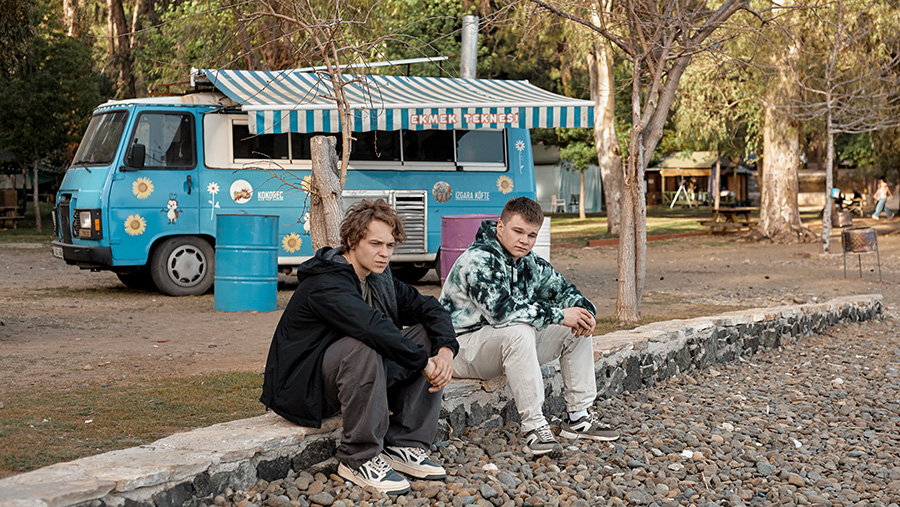
In this sense, "My Mom's Penguins" was like a breath of fresh air. Natalia Meshchaninova and Boris Khlebnikov, long-time friends who regularly work together, often tried to make our time speak to us through their works. It is enough to recall "Arrhythmia", which deservedly became a popular film. But never before or after the Penguins has their reflection on time and us been so sharp, merciless, and sometimes cruel. The series even had two soundtracks: one with authentic speech, the other with smoothed speech, although hardly anyone chose it.
The plot of "Penguins" was like this. A rich husband (Alexey Agranovich) had a wife (Alexandra Ursulyak) who loved children very much, but she could only give birth to one, Gosha (Makar Khlebnikov). But she couldn't raise him properly either, and in order to always have a childhood at home, she began to adopt children from orphanages one by one. The first season began with the arrival of a fourth adopted child (Platon Savvin), a boy with autism, complex, aggressive. And my own son was moved to the kitchen because the youngest needed a room. So, before us is the first "world": the world of family, overprotection, stress and eternal crowding.

15-year-old Gosha showed his teenage rebellion in a stand-up club. He wrote dialogues about what infuriated him, and saw that he was understood, that his malicious jokes caused laughter, that new friends appeared. And his reflection on the stage became more and more violent. Functionally, his performances are like final monologues explaining the action in a drama, or a chorus in a tragedy. This is the second "world".
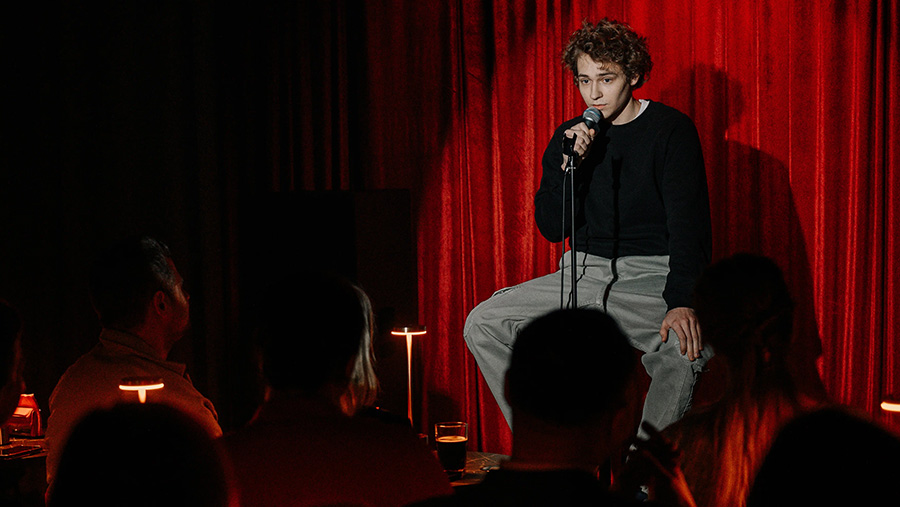
There is a third one. Gosha once joked from the stage that he witnessed how everyone at his school once shit their pants right in front of him, to put it mildly. Because he was there and saw all this, he felt somehow different, an outcast, an outcast. Therefore, he concluded his monologue, he will solve this problem tomorrow: he will come and shit his pants too, in order to become his own again. This performance got online, and then it became dangerous to appear at Gaucher's school. School is the third "world" of the series.
They were heroes whose every color, every word, every gesture was completely recognizable. It was scary and embarrassing to watch (because it was like being exposed on the screen), but funny. And it was impossible to break away. We went to the window, but we came to the mirror, and it reflected something that we would not like to admit to ourselves.

How did the second season turn out?
The main addition to the ensemble in the new series is Elizaveta Ishchenko, who plays a filmmaker. Meanwhile, the second season is a direct continuation of the first. Gosha, who has grown up, still reads stand-up and works here at the club. The bartender. His girlfriend leaves him, he wants to bring her back, but he has to go to Turkey with his sister: her cartoon was taken to a film festival, and her mother is afraid that the curator of the program will molest the girl. So, the first "world" here is Turkey and the film and festival environment, cynical, nervous, ruthless.
The second "world" is the Caucasus. Gosha's half-brother Amir is heading here to see his real father. In the first episodes available for viewing, this world is presented schematically and somewhat idealistically, but perhaps things will change further.
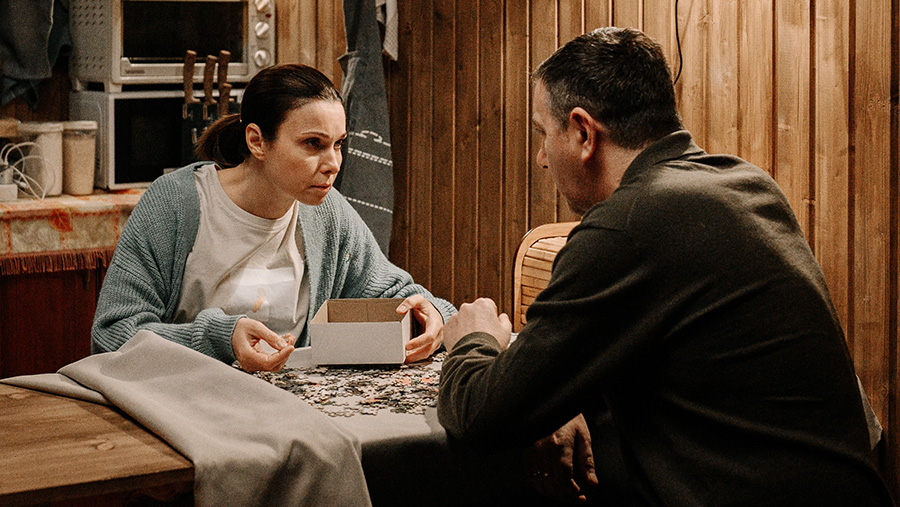
The third "world" is the mother, father, and autistic son we already know. Mom has a new stage: she is afraid of her child, despite all the communication with specialists, despite all the difficulties that they have gone through together. The fact that he was finally accepted by the whole family. She turned out to be a weak link: in the "compensated" boy, she sees a monster in disguise and does not know how to get out of the trap in which she finds herself. Her husband is already egging her on that maybe she decided to return him to the orphanage...
A quick description of the plot of the second season is enough to make it clear that there are much fewer connection points to the characters than there were in the first. A lot has changed in Russia since 2021, but there is none of this in the series, time seems to have frozen. An abstract country of some unknown year. You look and you don't recognize it. Instead of here and now, we are offered two exotic trips — Turkey and the Caucasus, further away. But how many viewers can "connect" to the festival life of the animation event and the quiet idyll of the Caucasian family, where we are invited? In Amir's journey to his father, you can, if you really want, see references to Zaki Abdrakhmanova's hit "Dad Died on Saturday," filmed after "Penguins," but there was complete immersion and clear parallels with the reality of so many people in Russia. So far, it's more of a poetic and somewhat sentimental sketch, a melodrama that previously had no place in Penguins.
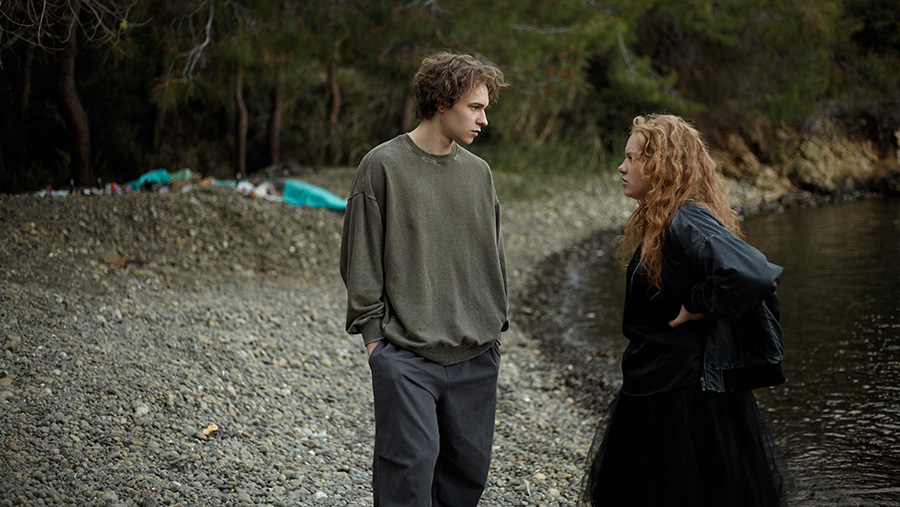
A mother who is afraid of her son is a suspense worthy of Hitchcock, but too specific. Of course, all parents of special children have experienced it at least once, but this way the circle of viewers of the series is sharply narrowed. However, this line is the strongest here, Agranovich and Ursulyak here very often hit the nerve that was in the first Penguins. But Makar Khlebnikov, to whom Penguins paved the way to cinema and who was a shock, a revelation, and a new name in 2021, is still playing a too banal image in the second season. Well, the guy with no money, well, the girl left. He's looking out for his sister, but his thoughts are far away. He doesn't seem to have much to say, so he stays silent.
Probably, stand-up as a method of saying everything important twice does not work, so there is little of it here. Let's say that the adventures in Turkey will take you to the level of the "White Lotus" at some point. But at the level of the first episodes, "Penguins" still looks like a beautifully shot and beautifully acted series, but no longer knocking down, not blindingly honest, not breaking taboos. Rather, it's all there, but the volume control is not turned to the maximum, but stopped somewhere a little beyond the middle. If you know what the name of the series means, you will understand what you mean. And if you don't know, watch the first season, it's brilliant, and nothing better has been filmed in Russia since then.
Переведено сервисом «Яндекс Переводчик»
