Moscow and Moskvich: The Museum of Russian Impressionism praised the "king of reporters"
- Статьи
- Culture
- Moscow and Moskvich: The Museum of Russian Impressionism praised the "king of reporters"


For the first time in the capital, there is a portrait of Vladimir Gilyarovsky by Sergey Malyutin. As well as masterpieces by Repin, Serov, Kandinsky, Korovin, Goncharova, Deineka and other artists. They can be seen at the large-scale exhibition of the Museum of Russian Impressionism and the Polytechnic Museum, dedicated to the anniversary of the legendary writer and journalist. It includes 232 works from 55 museum and 11 private collections, including the Polytechnic, Russian and State Historical Museum. Izvestia visited the opening day.
The Burlak writer
Three floors of the Museum of Russian Impressionism are devoted to a large-scale exhibition. The exhibition "Your man. Vladimir Gilyarovsky" opens on October 16 and will last three months. December 8 will mark the 170th anniversary of the birth of writer and local historian Vladimir Alekseevich Gilyarovsky. The curators have been preparing this exhibition for a year and a half. 55 museums and 11 private collections from Moscow, St. Petersburg, Samara, Perm, Barnaul and other cities were invited to participate.
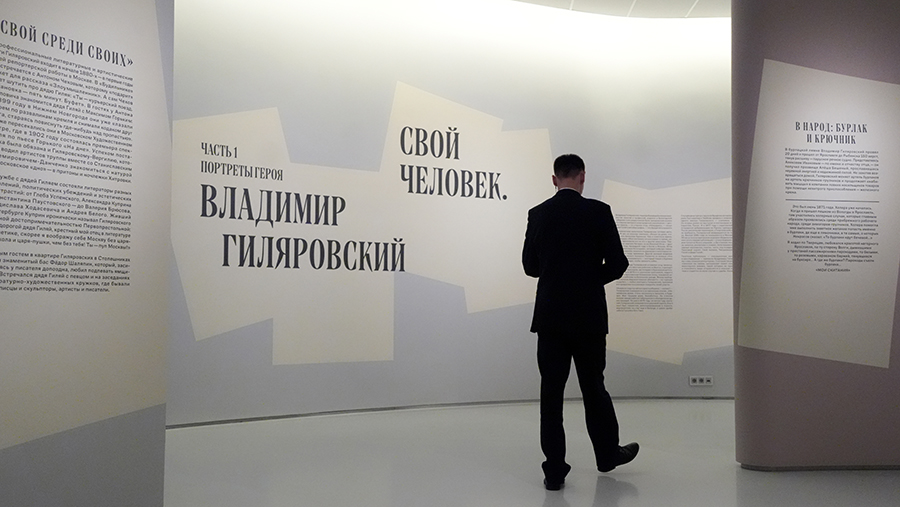
When you say "Gilyarovsky," everyone immediately remembers his most famous work so far, "Moscow and Muscovites." Uncle Gilyai, who sang about the capital, as everyone called him, was born hundreds of kilometers away from it, in the Vologda province. A multifaceted man, generously endowed with talents, Vladimir Gilyarovsky tried himself in various professions. He was a circus performer, actor, boatman, poet, journalist, writer, collector. The inhabitants of urban slums and bohemian circles considered him one of their own. The exhibition is an illustration of a vivid and meaningful biography of a man who has become a legend.
"Gilyarovsky lived a life that is like a movie," said Yulia Petrova, director of the Museum of Russian Impressionism. — He created a lot of legends around himself, made up myths and described Moscow in such a way that we believed it. The city, which was changing and unlike anything else, became a part of him. The exhibition is dedicated to Gilyarovsky, his life, the people with whom his fate brought him, and, of course, Moscow, which he loved.
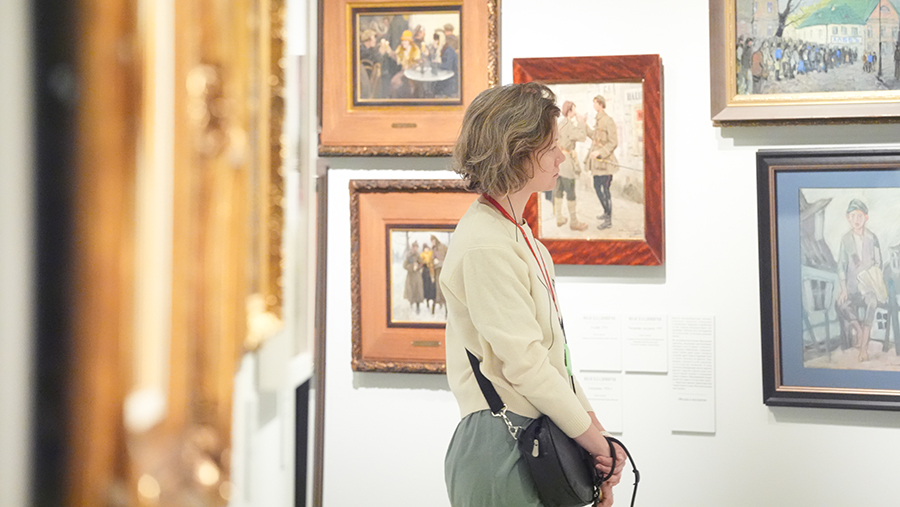
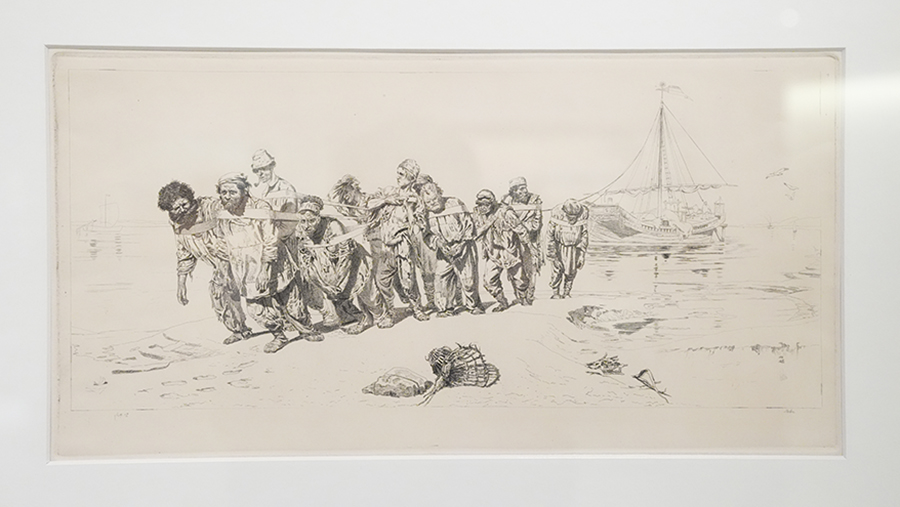
To understand who Gilyarovsky was, it is worth going up to the second floor. There is a part of the exhibition that creates a portrait of this multifaceted personality. He spoke about life's trials in his book "My Wanderings". Excerpts from it are illustrated with paintings and engravings by famous artists. Here on the wall are Repin's graphic sketches for his canvas "Boatmen on the Volga". Because Gilyarovsky, who lived in the era of the next industrial revolution, found the Volga boatmen as a young man and worked with them himself when he composed his first poems.
Vladimir Gilyarovsky dates the beginning of his literary experiments to the 1870s. And in 1882, in the newspaper Moskovsky Listok, he began chronicling incidents. Covering murders, fires, robberies, and railway disasters, Gilyarovsky acquired many informants. Station guards, police officers, and slum dwellers provided him with the latest news. They called him the "flying reporter." Nikolai Pastukhov, publisher and editor of the newspaper, became Gilyarovsky's teacher. It was he who gave him important professional advice: "Be like a thief at a fair! It's a reporter's job."
Gilyarovsky was surrounded by many famous people. The exhibition features several portraits of them: Maxim Gorky was painted by Valentin Serov, Fyodor Chaliapin by Nikolai Kharitonov, Alexander Kuprin by Victor Denis.

A travel guide for all time
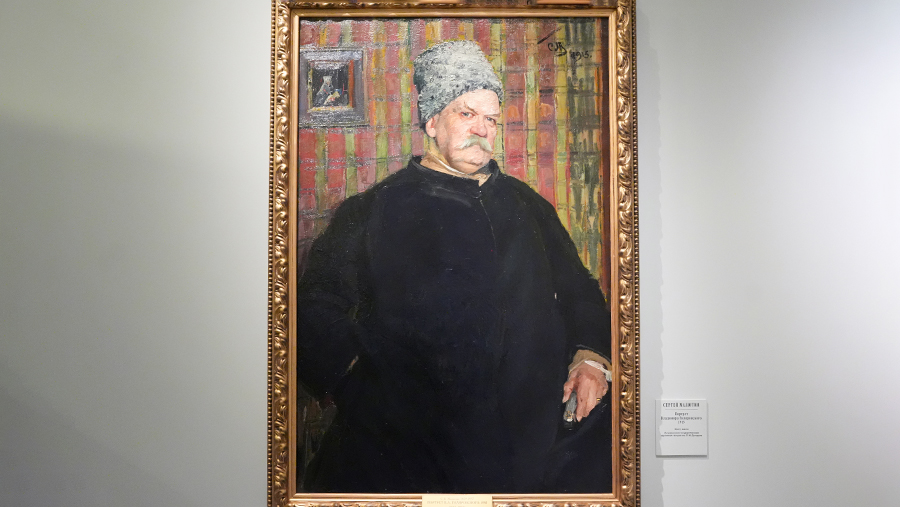
The main section of the exhibition is located on the ground floor. It is dedicated to the myth of Moscow, created by Vladimir Gilyarovsky. As you walk through the hall, it's like flipping through the pages of his book "Moscow and Muscovites" with illustrations by Serov, Deineka, Goncharova, Makovsky, Vereshchagin, Pasternak, Korin. Masterpiece after masterpiece. And each one is amazing. And the guests are greeted by a portrait of Gilyarovsky by Sergei Malyutin. The textbook image was highly appreciated by Ilya Repin. The painting is the pearl of the collection of the Astrakhan State Picture Gallery named after P.M. Gugadin. It is being exhibited in Moscow for the first time.
The exhibition is connected by five installations by contemporary artist Mikhail Rubankov. They embodied Gilyarovsky's dynamism. Dozens of electrical wires intertwine and hum as you approach them. And the composition "You can't cheat, you can't sell" resembles a hardware store with iron objects needed in the household. There is also a column showing a black-and-white chronicle of the turn of the century. And then the names of Moscow streets and districts are listed: Neglinka, Solyanka, Samoteka, Tabletops, Khitrovka…
You can see what Moscow looked like 150 years ago. Ivan Pelevin captured Lubyanka Square in autumn, Viktor Kolenda — Nikolskaya Street, Leonard Turzhansky — a cabman on a team of horses. You can see the innkeeper. As Gilyarovsky wrote, when it was cold, the coachman liked to go into the establishment and eat something fatter, for example, pork cheek. Pea jelly was mandatory, as well as rolls and bread rolls on bran. On Alexander Deineka's chart, you can see how good the workers at the loom were and how seductive the dancers in the cabaret were.
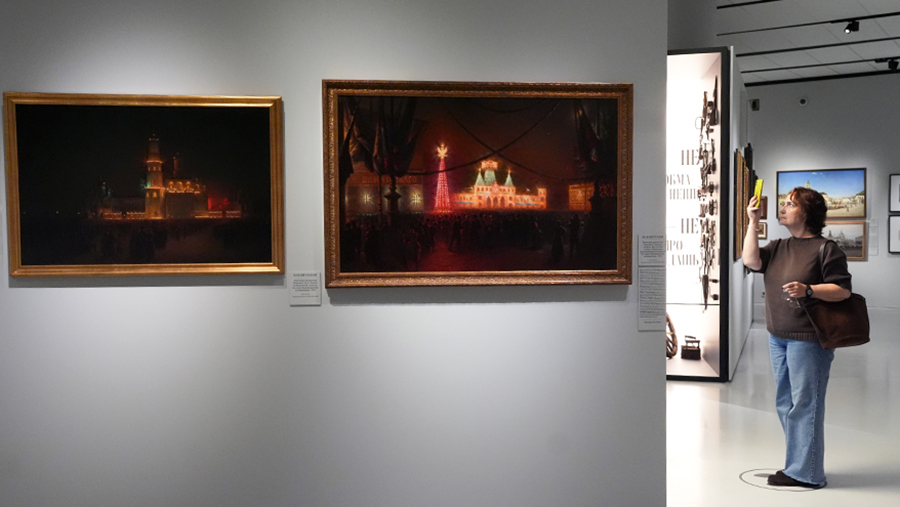
The audio guide for the exhibition was recorded by the team of Fyokla Tolstoy. For visually impaired visitors, the exhibition has tactile stations with descriptions of some paintings.

Technical progress for the writer
The peculiarity of this project is that the artistic component interacts with the scientific and technical component. The Polytechnic Museum became a co-organizer of the exhibition. Unique exhibits in perfect condition are provided from his collection. On the third floor of the Museum of Russian Impressionism, a space dedicated to technology in Gilyarovsky's life was created. A BSA road bike with a closed frame, a portable Kummer Counter, a Magic Lantern projection device, and a Pathé-Baby film camera.
— As they would say now, Vladimir Alekseevich was a techno-optimist, — says Anastasia Vinokurova, the curator of the exhibition. — He was one of the first to bring a phone into the apartment, walked around the city with a portable camera. Gilyarovsky ascended in a hot air balloon and described the experiments of aviator Utochkin. He was brave and courageous. We wanted to tell you about that too.
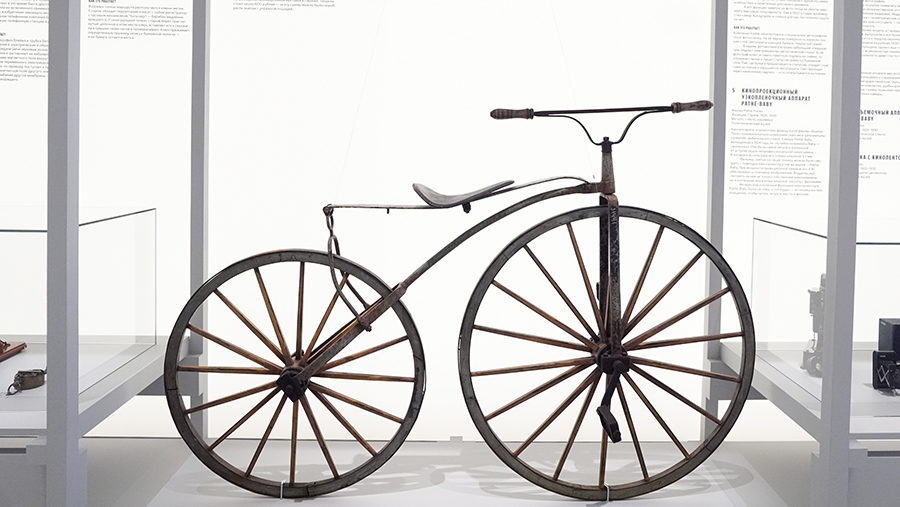
The Polytechnic Museum has always attracted the best minds of the era to its collection. Vladimir Gilyarovsky was among such people.
"It was a time of scientific and technological revolution and progress, numerous discoveries, and the introduction of new technologies," said Alla Nudel, Chief Curator of the Polytechnic Museum. — Vladimir Alekseevich used a lot of what appeared in Moscow in his work. When choosing subjects, we tried to reflect what Gilyarovsky could apply in his work, which could make it better, more precisely, reflect the events he witnessed. In his writings, he introduced these inventions to his contemporaries.
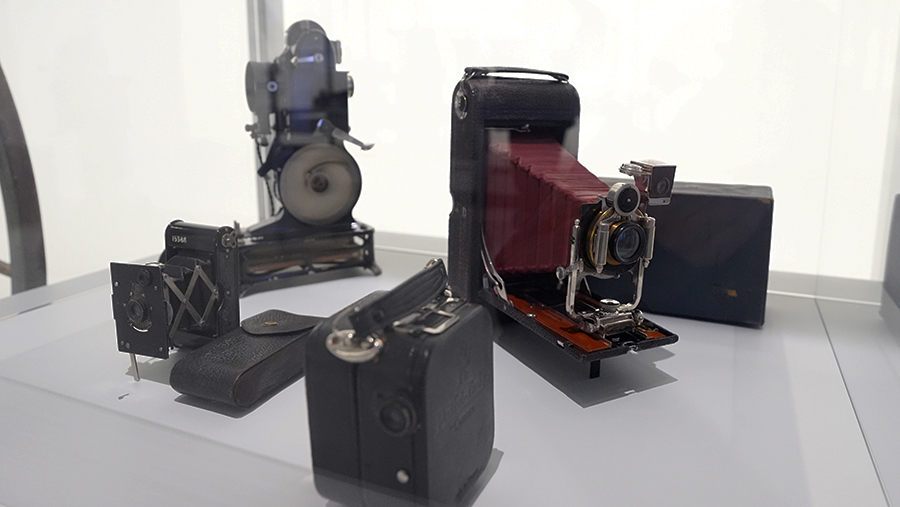
Right there, on the third floor, there is a zone dedicated to modern technologies, which Yandex has been working on. Pavel Demidov, Vice President for Corporate Relations and Government Relations at the company, believes that Gilyarovsky would definitely pay attention to artificial intelligence and explore its capabilities. And I would test it meticulously and meticulously.
The exhibition will run until January 25.
Переведено сервисом «Яндекс Переводчик»
