"I fell in love with ballet thanks to Tchaikovsky and Prokofiev"


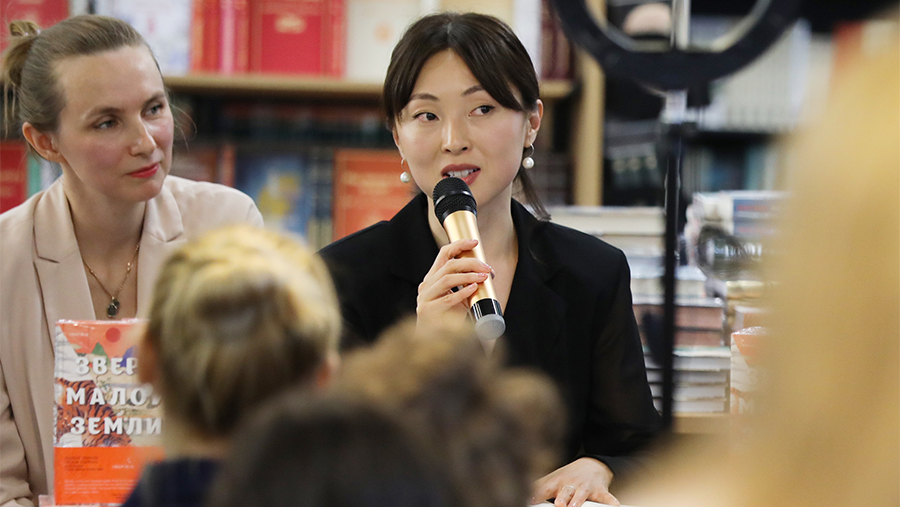
She was born in Korea, studied in the USA, and lives in London. She writes books in English, but she passionately loves Russian literature. The writer Chuhe Kim, who won the Yasnaya Polyana Prize in 2024, came to Moscow to present her new novel— The City of Night Birds. Why she decided to use Plisetskaya and Ulanova as a reference for her characters, she told Izvestia in an exclusive interview about the innocence of Russians and their sincere feelings about what it means to be human, as well as about plans for The Master and Margarita.
"St. Petersburg and Russia have always been part of my writing landscape"
— Your new novel "The City of Night Birds", which will be released in late autumn, takes place in Russia. Moreover, it is dedicated to the Russian ballet. Why did you choose this particular theme?
— I've been doing ballet myself since I was nine years old, continued dancing while studying at the university, and now I've returned to it as an adult. It's a lifelong passion for me. In many ways, I fell in love with this kind of art thanks to the Russian composers Pyotr Tchaikovsky and Sergei Prokofiev. Also, the Vaganova school, as a separate ballet direction, resonates very deeply in my soul.
— Are you familiar with the works of our great ballerinas Maya Plisetskaya and Galina Ulanova?
— Yes, of course! These are legendary artists who have gained recognition not only in Russia, but all over the world. And they are in the novel. But not as individual characters, but as a reference.
— What does the image of night birds symbolize in the title of the book?
— In fact, night birds are a reference to a specific episode in history. One of the characters named Dmitry is a dancer at the Bolshoi Theater. Leaving Moscow, he utters the phrase: "Goodbye, the city of night birds and dreamers." This is a reference to Boris Pasternak. Of course, I read it in English. There, the phrase went like this: "For night birds and dreamers, there is nothing more valuable than Moscow" ("To a dreamer and a midnighter, Moscow is dearer than anything in the world." — Izvestia). Birds create the overall atmosphere of my novel. Throughout the work, we encounter some feathered creatures. That is, it is a common leitmotif.
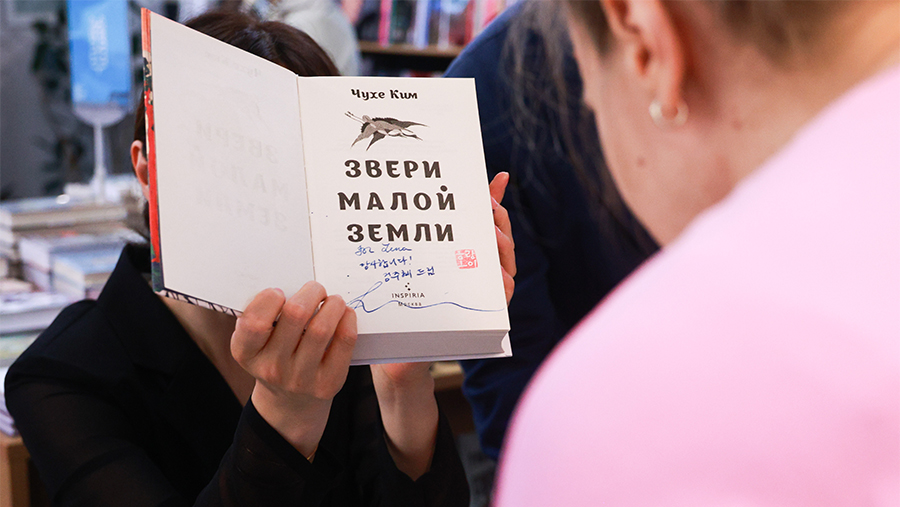
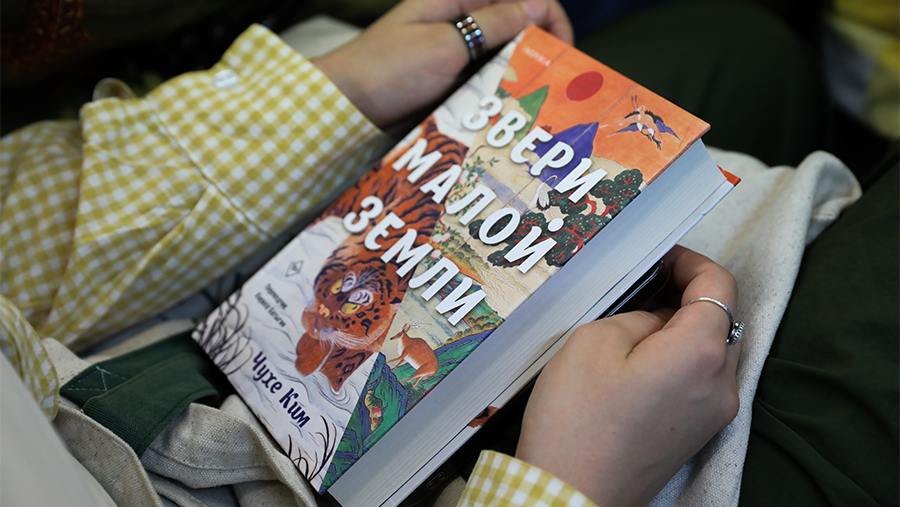
If my previous work "The Beasts of the Little Earth" is still a pastoral novel, then "The City of Night Birds" is an urban one. It seems to me that such a name just fits very well. And the city here actually implies three geographical points: Moscow, St. Petersburg and Paris.
— At the same time, when you wrote The City of Night Birds, you had not yet visited Russia. What would you change in the text if you visited Moscow first?
— Yes, it is. A very unusual situation has occurred. As a rule, I describe the places I've been to. But with Moscow, it turned out the opposite: I finished the novel in 2023, and only then visited the city. Would I change something? Sure. Because it was a completely different experience.
I have just returned from St. Petersburg, where I visited for the first time in the summer. And it was amazing! In particular, the "blue hour". It turned out to be much longer than I imagined. And, most likely, I would reflect this in a new novel. Recently, I was walking down the street, there was a full moon, and suddenly a flock of seagulls soared in the pitch-black sky. Most likely, if I had experienced something similar at the time of writing the book, I would definitely have added this detail to the narrative. Of course, I couldn't imagine that my idea of this city would match reality so much: I'm walking through St. Petersburg and I see what I wrote! It's very surreal. To some extent, St. Petersburg and Russia as a whole have always been part of my writing landscape.
— What places have you seen in Russia? What did you like?
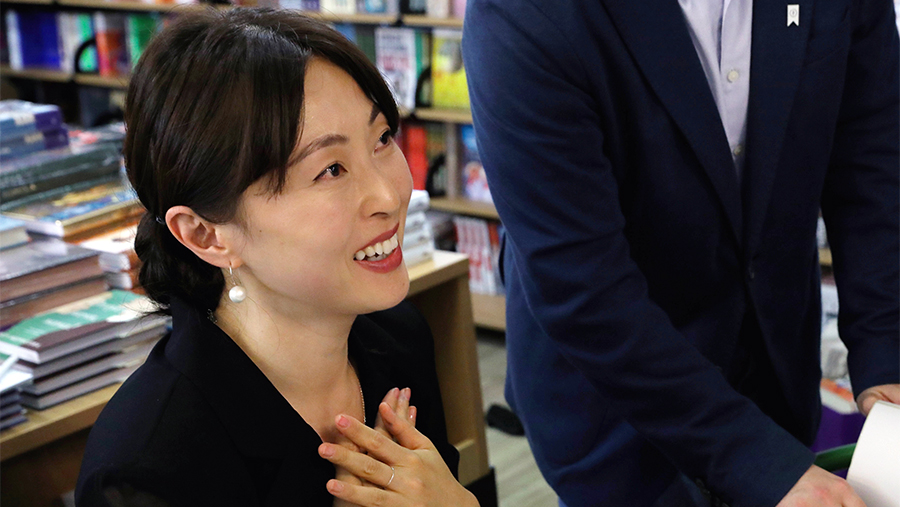
— I liked everything! I know it may sound like I'm lying, but that's the way it is. I just walk around the city, breathe, and feel like it's the air of freedom. Even when I am in Russia not as a writer, but as an insignificant foreigner, I see the warmth with which Russians treat me.
I like a lot of specific places: the Bolshoi Theater, the Mariinsky, the Hermitage, the estate in Yasnaya Polyana. Probably the most important thing for me is that they are full of history, and people give them life. In general, Russians, in my opinion, are very sophisticated, educated and well-oriented in the culture and history of their country.
"I see in Russians a willingness to worry about what it means to be human"
— Speaking of literature, you mentioned Pasternak. And which author did your acquaintance with the Russian classics begin with?
— The first Russian writer I remember is Alexander Pushkin and his "Queen of Spades". As a young Korean reader, it was very interesting and fascinating for me to hear what you call each other. These abbreviations and diminutives with patronymics sound unusual, but at the same time noble and respectful.
— Do you find common features between the characters in our classics' novels and real Russian people?
— We can't say that these are any specific things, but rather general feelings. That is, I cannot say that I see Levin today (Konstantin Levin is one of the central characters in Leo Tolstoy's novel Anna Karenina. — Izvestia). But Russian people are very sincere in matters concerning the meaning of life.

It is important to remind you that I am a representative of the English world. And maybe you don't feel that depth yourself. It is often said that Russians are tough and rude, but I come from my own experience and, comparing with the English-speaking world, I can assure you: this is not the case at all! I see a lot of innocence in Russians, a sincere willingness to worry about what it means to be human. I rarely find this innocence in other parts of the world. That's why characters like Levin, the Fool, the brothers Karamazov, and Alyosha in particular, are exactly what I'm seeing in Russia right now.
— Which Russian writer's work has had the greatest impact on you?
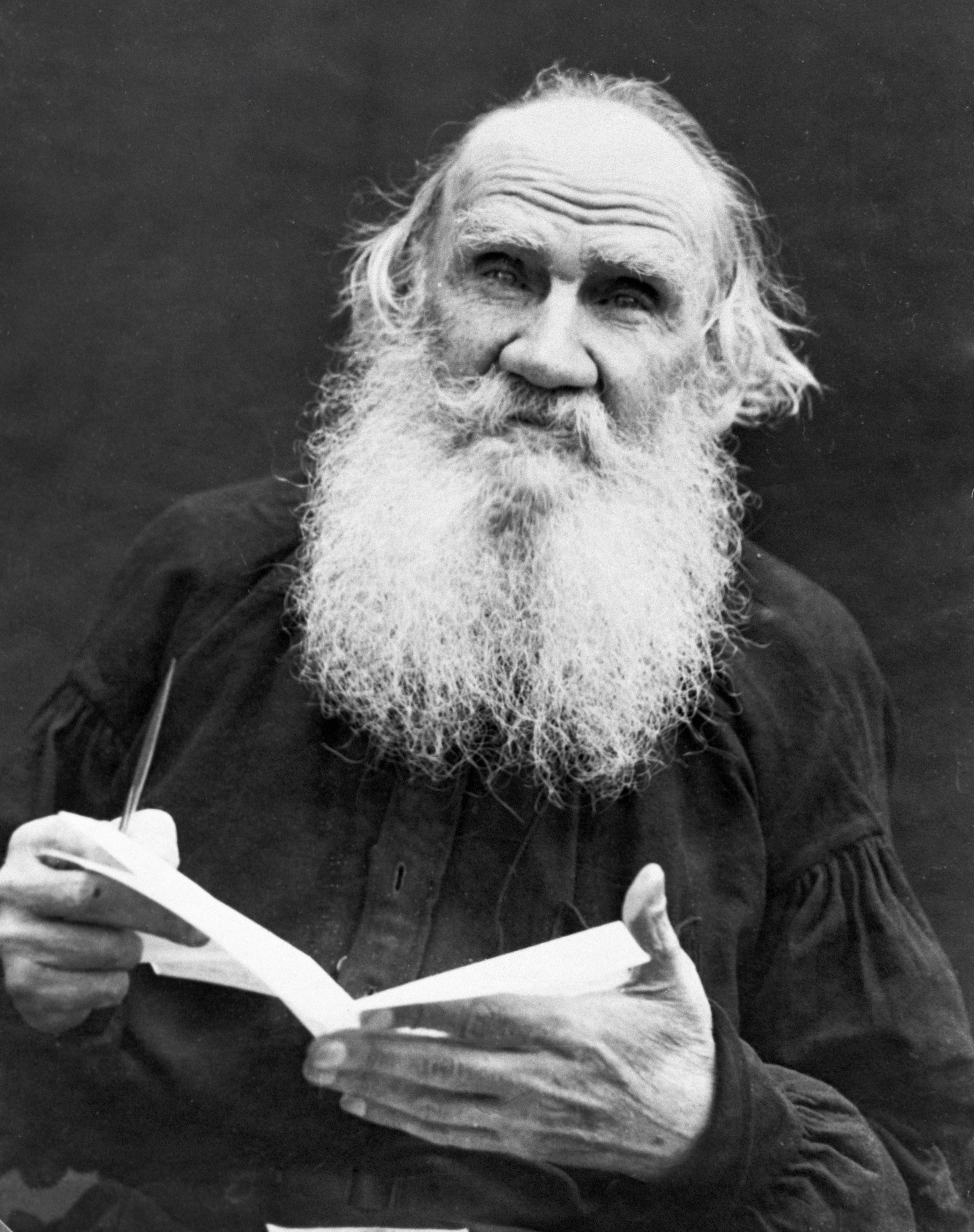
— It may sound a little naive, but Leo Tolstoy made the biggest impact on me. I've read Chekhov, Gogol, Turgenev, and other authors, but every time I come back to Tolstoy. No matter how darkly he describes reality, no matter how creepy his characters and their problems may seem, there is always a sense of hope for the best. I feel connected to him. In his soul, I see a reflection of my own.
"I tried to learn Russian, but I quickly realized that the idea was doomed"
— They say that in order to really know the author, you need to read it in the original language. Have you thought about learning Russian?
— Yes, I tried to learn Russian myself, but I quickly realized that this idea was doomed to failure! However, I think that all readers who discover my works in languages other than English will understand the intent. Therefore, I hope that my communication with Russian writers through English translation also gives me an idea of the essence of what they wanted to convey.
— And what's scarier: to release a debut novel or the next one, if, as in your case, the first one became a bestseller?
— The first one is much more difficult, but in the career of a writer there are always swings, descents and peaks. I've already gotten used to the idea. The problem is that if a writer doesn't try to surpass himself with every next book, then he doesn't stay at the same level, but sags all the time. This is evident in the publishing world. Many authors have published the first work, but they cannot write the second or the third.
But I stopped being afraid of failure when I realized one thing for myself. I write to bring something good to the world. I sincerely believe that if my mission on this earth is not to become the most popular and published nutritious food in the world, but to do good, then God and some heavenly powers will help me in this. I try to give my best to my works. And after I finish, I have to put up with the fact that I've done my best.

— What are you working on now and where will the action take place this time?
— I'm currently working on a third novel called The Divine Comedy. It will be published in the United States and the United Kingdom in 2028. And this is in many ways an autobiographical story.
— I know that you are inspired by another Russian novel, "The Master and Margarita" by Mikhail Bulgakov.
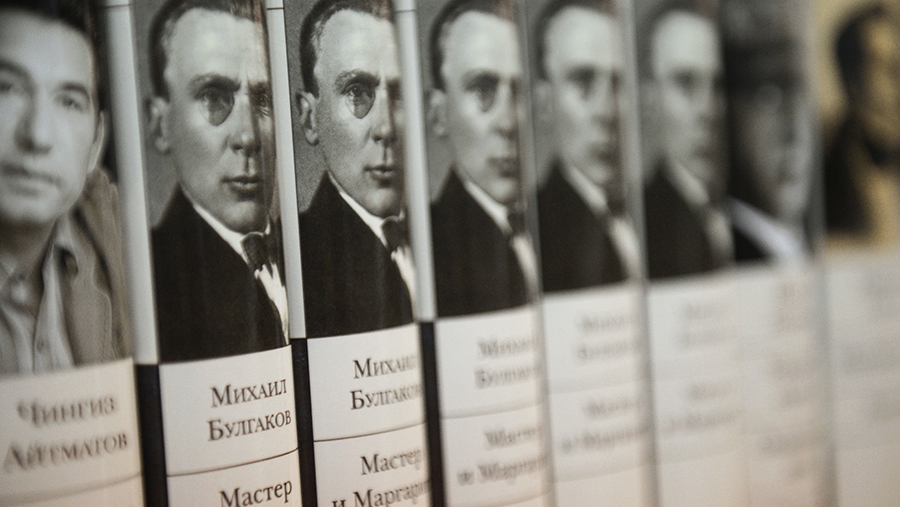
— That's right. As you can see from the title of my future work, it is actually a religious work about the issue of faith. There is a common surreal plot outline here — it is dedicated to the ordeal of an angel who is trying to save people in different parts of the globe. And I want to make something similar to Bulgakov's composition.
In "The Master and Margarita" realism is combined with mysticism, and in a surprisingly humorous way. He plays it amazing, inserting a character actually from hell into the Moscow reality. And we see what happens after that. I would like to have the same effect! "The Master and Margarita" is a profound and at the same time very funny work. I would like the novel I'm currently working on to be thoughtful but entertaining, too.
Chuhe Kim is a Korean writer, author of the bestseller "Beasts of the Little Earth", for which she received the Yasnaya Polyana Prize in the Foreign Literature category in 2024. In the fall of 2025, Inspiria Publishing House is releasing a new novel by Chuheh, The City of Night Birds.
Переведено сервисом «Яндекс Переводчик»
