- Статьи
- Science and technology
- Tokto is better: Russian scientists will help revive extinct sea lions

Tokto is better: Russian scientists will help revive extinct sea lions

For the first time, Russian and Korean scientists have studied the genetic history of the extinct Dokdo sea lions (Japanese sea lions) in the middle of the 20th century. In the course of their work, experts proved that the cause of their death was human extermination. Geneticists also discovered that animals interbred with closely related species, which increased their ability to adapt. The research will help develop programs to protect animals on the verge of extinction. It will also contribute to the revival of the Dokdo sea lions in the future.
How the Dokdo Sea Lion species disappeared
The first and only large-scale study of the genome of Dokdo sea lions, which became extinct in the middle of the twentieth century, was conducted by scientists from the European University in St. Petersburg in collaboration with several major scientific organizations in South Korea. Work can be the first step towards reviving an extinct species.

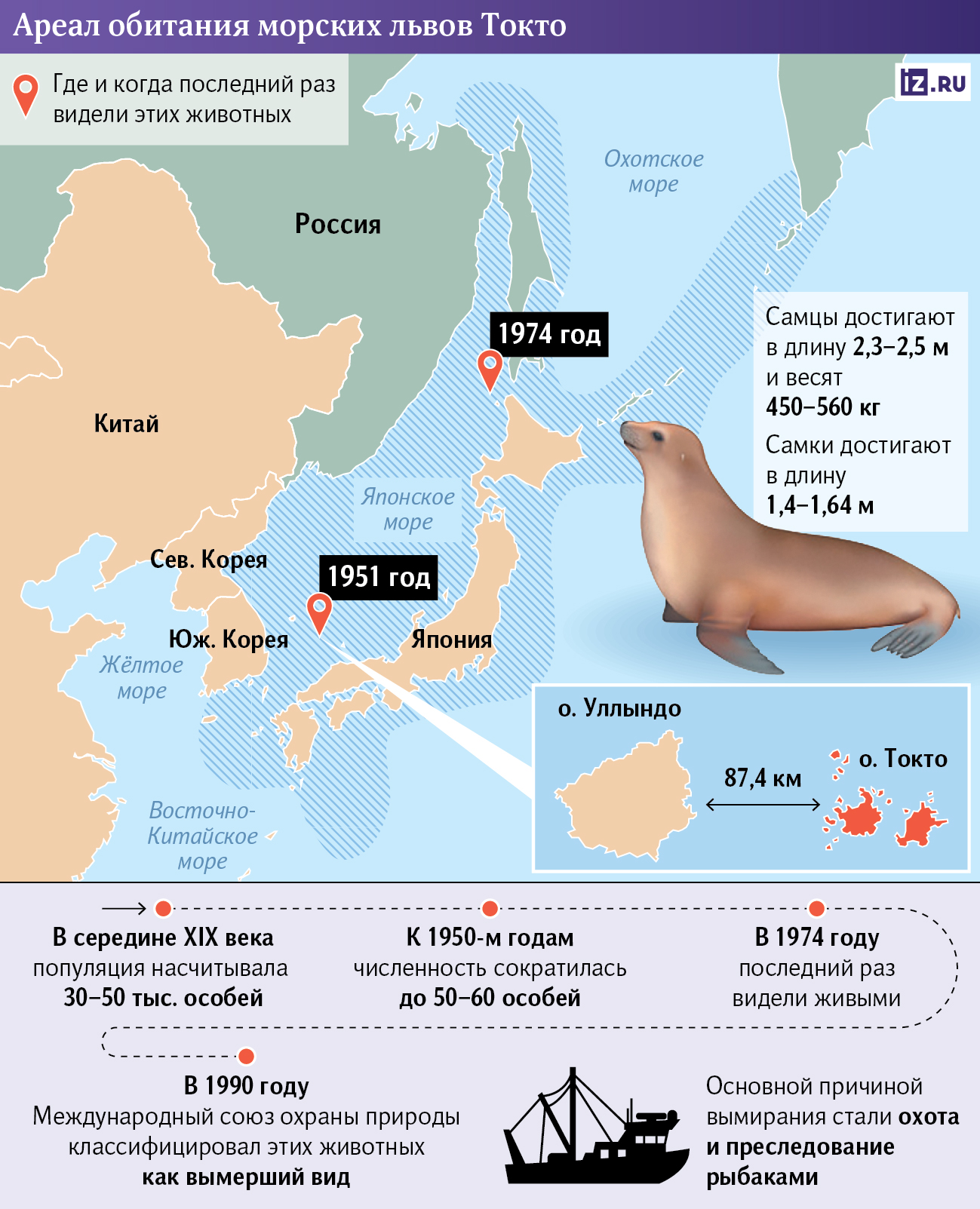
According to scientists, these animals are also known as Japanese sea lions. They belong to the family of long—eared seals and were most common in the southern part of the Sea of Japan - along the coasts of Russia, Korea and Japan. However, their main habitat was in the Liancourt archipelago (Dokdo).
The Liancourt Islands (Dokdo) are an archipelago in the Sea of Japan consisting of two large and 89 small rock islands. The main name comes from the name of the French whaling ship whose crew first discovered them.
However, the Koreans call the islands Dokdo ("lonely islands"), and the Japanese Takeshima ("bamboo islands"). In Russia, they were known as Menelaus and Olivutsa, after the Russian corvette that bore these names.
The islands are currently the subject of a dispute between the Republic of Korea (South Korea) and Japan, which dispute their ownership based on legends, ancient texts and maps.
In 1905, after starting a war with Russia, the Japanese declared the islands a "no man's land" and incorporated them into their territory as an outpost to monitor the theater of operations.
Five years later, Japan occupied the entire territory of Korea. But in 1945, following the results of World War II, it was obliged to return the occupied territories, and Dokdo came under the jurisdiction of Korea (and after the Korean War, South Korea).
— The population of Tokto sea lions used to number tens of thousands of individuals, but in the first quarter of the 20th century there was a sharp decline in their numbers. The reason was the intensive extraction of meat, skins and fat of these animals, which is associated with the period of occupation of Korea by Japan. In particular, females and cubs were exterminated for profit," Artyom Nedoluzhko, co—author of the study and scientific director of the paleogenomics laboratory at the European University in St. Petersburg, told Izvestia.
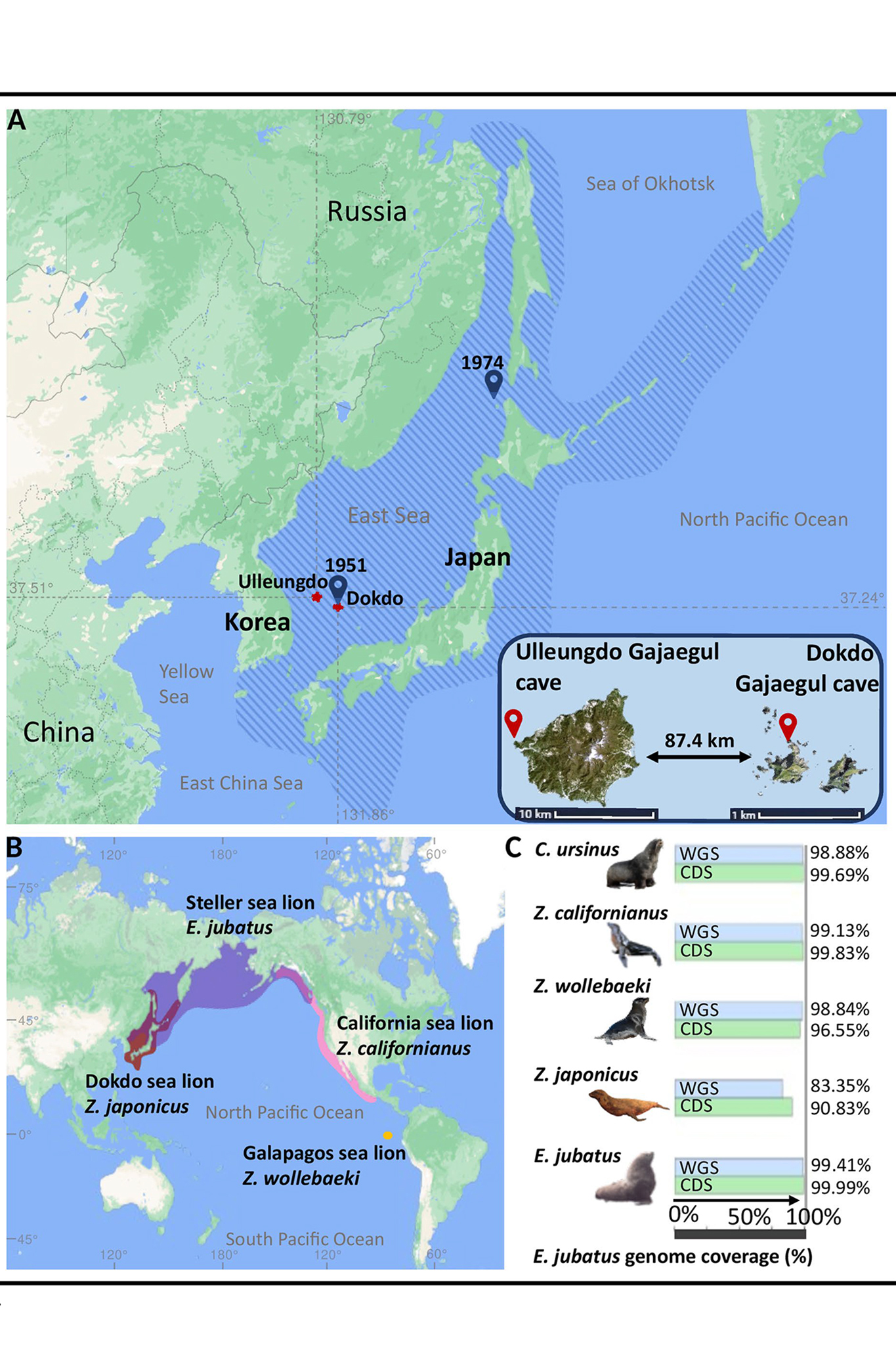
As a result, he said, by the 1950s, the number of Tokto sea lions had decreased to 50-60 individuals, and in 1974, representatives of this species were last seen alive. As a result, the International Union for Conservation of Nature classified these animals as an extinct species in 1990.
How genetic history is studied
According to the expert, South Korean scientists intend to restore this species using genetic engineering and genome editing methods, and Russian scientists are ready to help them in this endeavor.
— The main part of the research took place in South Korea. First, the experts conducted radiocarbon dating. After that, DNA was isolated from the remains and read. But the marine environment is not the best for preserving these molecules. Therefore, the Koreans managed to extract crumbs of genomic information. The Russian contribution to the research was intellectual. We applied mathematical analysis methods to understand what has been happening to the genetic diversity of the species in the last thousands of years. In addition, we analyzed interspecific hybridization with other representatives of the family of long—eared seals," explained Artyom Nedoluzhko.
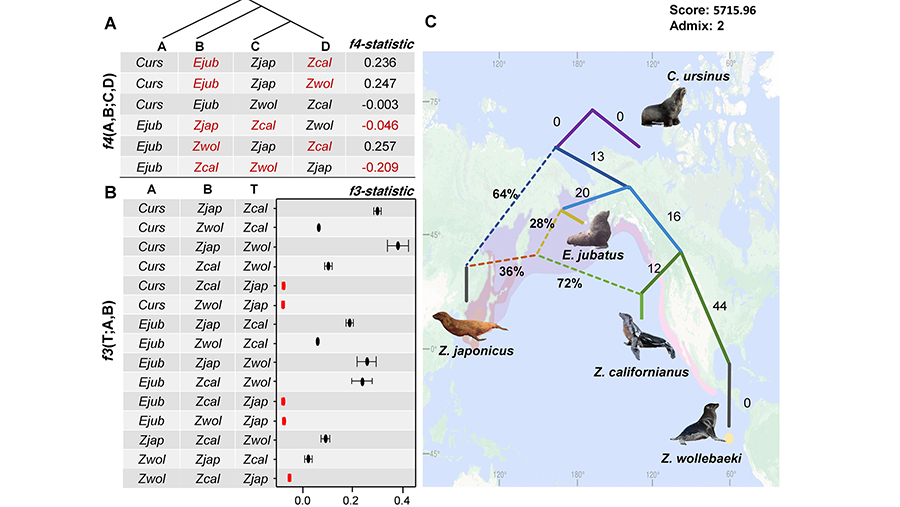
According to him, a number of important discoveries have been made in the course of scientific work. In particular, scientists have found out that Dokdo sea lions are the most ancient of all their relatives, since it was this branch that first separated from the common trunk before other species, the California and Galapagos sea lions, descended from it.
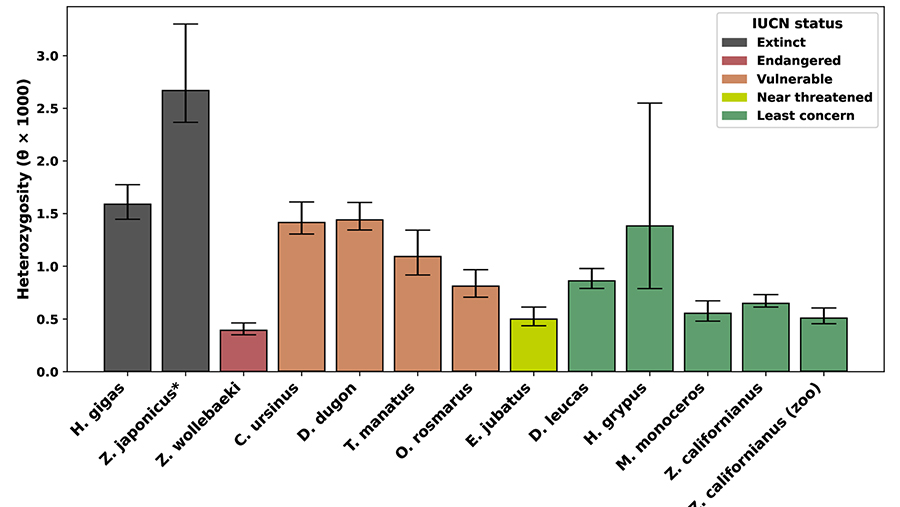
The researchers also showed that the decline in the number of Tokto sea lions began about 100 thousand years ago. However, the latter population, despite its relatively small numbers, remained genetically healthy until its extermination. That is, until the very end, she still had a chance of survival. Moreover, the level of genetic diversity in this population was higher than that of their immediate living relatives.

Another achievement, Artyom Nedoluzhko noted, is related to the identification of traces of mixing with northern fur seals and sea lions in the DNA of Tokto sea lions. This type of gene transfer (introgression) suggests that animals interbred with each other in the past. This enabled the species to find new genetic variants in order to better adapt to changing conditions.
Is it possible to revive extinct animals
In general, the scientist said, studying the genetic history of extinct animals will help develop programs to protect and restore populations that are currently on the verge of extinction.

The sea cow
In addition, the information accumulated during the research can become the basis for the revival of both Dokdo sea lions and other extinct species. Russian scientists are implementing a similar project to try to use genetic engineering methods to bring back to life Steller's sea cows, also mammals from the siren order that became extinct due to human fault.
— Ancient DNA is usually highly fragmented, and the genome has to be "assembled" piece by piece, using data from close living species to align and fill in the gaps. As a result, the resulting genomes do not fully match the genome of the original species. But even if they were fully consistent, modern technologies are not yet able to generate a fully functional synthetic genome," Konstantin Krutovsky, professor of the Department of Genetics and Bioinformatics at Siberian Federal University, commented to Izvestia.
Nevertheless, he noted, historical DNA is of great value. By comparing them with the genome of modern closely related species, it is possible to identify areas responsible for key features. Then, with the help of gene editing, it is possible to obtain a modified set that partially reproduces the hereditary material of an extinct species. The edited genome can then be inserted into an egg of a similar species, which can develop into an embryo either in the uterus of a female of a modern species (surrogacy), or, in the future, in an artificial uterus (such technologies are already in development). Similar work is already underway.
At the same time, the expert added, animals born in this way are not a copy, but, at best, a hybrid, which only partially looks and physiologically resembles an extinct species.
— The published article is a valuable piece of the "puzzle" about the history of Dokdo sea lions. Among other things, scientists were able to record that there was no degeneration of the species, there was no closely related interbreeding and related diseases. This means that the blame for the extinction of these animals lies entirely with humans. At the same time, the study will help to better understand the evolution of animals and better preserve modern populations," explained Yaroslav Popov, paleontologist, popularizer of science and consultant to the 3D Dinopedia project.
He added that the "resurrection" of the Tokto sea lions today is fantastic. However, perhaps in the future it is possible to do something similar to it, but for now it is not a question of the next few years, but rather a long way with a lot of scientific and practical tasks.
Переведено сервисом «Яндекс Переводчик»
