
The tragedy of the century: how the Americans dropped the atomic bomb on Hiroshima

On August 6, 1945, an American plane dropped an atomic bomb on the Japanese city of Hiroshima. The explosion led to an unprecedented humanitarian catastrophe. Izvestia recalls how it was.
Candidate for hegemony
During the Second World War, the American economy gained a considerable head start compared to the Europeans, who bore the brunt of the confrontation. The war on another continent allowed the United States to overcome the crisis and create the most powerful military industry in the world. The Manhattan project, in which the United States invested about $2 billion, became a symbol of this rise. Renowned physicist Robert Oppenheimer became the scientific director of the project.

The atomic bomb "Kid" dropped on Hiroshima on August 6, 1945
In the summer of 1945, the United States had three bombs in its arsenal—the "Little Thing," the "Fat Man," and the "Kid." The American industry was ready to quickly produce several more similar products. Of course, no one in the world knew what consequences could be expected from a nuclear explosion. There was no understanding of how to use these weapons. Even among the scientists, there was no consensus. Testing such a projectile in combat conditions is a risky business. It was necessary to get a basic understanding of the consequences. Therefore, the Americans began with a test at the Alamogordo proving ground in New Mexico.
A political decision
When the Americans began to "tame the atom," they suspected that the Germans were conducting similar work with even greater success. This calmed the scientific conscience: anti-fascist scientists had no doubt that this was the answer, that the creation of an American bomb could reason with the Nazis. But in May 1945, it became clear that the United States had become a nuclear monopolist. Later, General Dwight D. Eisenhower claimed that in the summer of 1945 he opposed the use of the atomic bomb. He was echoed by General Douglas MacArthur, who designed the invasion of Japan for the American army. However, this statement is not supported by reliable evidence. But among the scientists who created the bomb, there were indeed many open opponents of its use. 70 American engineers have petitioned US President Harry Truman, in which they sensibly and thoroughly explained why a nuclear explosion in Japan could be fatal for humanity.: "The development of nuclear energy will provide countries with new means of destruction. The atomic bombs at our disposal are only the first step in this direction, and the destructive power that will become available in the course of their further development is practically unlimited. Thus, a country that sets a precedent for using these newly discovered forces of nature for destruction may be forced to take responsibility for opening the door to an era of unimaginable devastation."

Burning American ships in the harbor of Pearl Harbor. December 7, 1941
But Truman was not very impressed by these words. He saw other tasks: to take revenge on the Japanese for the destruction of the American base at Pearl Harbor in 1941 and to show the whole world who is the boss and the hegemon in the house. The US president had only one doubt — where exactly to drop the deadly projectile. At first, he thought of choosing a deserted field as an object. But such an explosion would not have made a strong impression on humanity. And especially the Soviet Union. And it would not be easy to justify the tactical necessity of an act of intimidation in an open field. Thus, the city most convenient for the atomic "premiere" was chosen — Hiroshima. The low—rise buildings, the flat terrain, the abundance of wooden houses - all this allowed us to count on a significant effect.

Tokyo residential areas destroyed during the carpet bombing by the US Air Force on March 10, 1945
It is significant that the American command did not even consider the possibility of bombing exclusively military facilities. They were targeting Japanese cities. Many documents (starting with correspondence with British Prime Minister Winston Churchill) show that, having become president at the end of World War II, Truman was more afraid of strengthening the USSR's position in the world than Hitler's divisions or Japanese armies. Therefore, Moscow learned about the Manhattan project not from allies in the anti-Hitler coalition, but from intelligence ciphers. It was only at the Potsdam Conference, when the "Stuff" was successfully tested in the United States, that Truman informed Joseph Stalin about the invention of an "unheard-of weapon." The Soviet leader reacted impenetrably, not showing his American counterpart that he had been receiving information about nuclear developments in the United States for a long time. That evening, Stalin discussed the prospects of the Soviet atomic project with Marshal Georgy Zhukov and, over the phone, with Academician Igor Kurchatov.
The Chronicle of the Apocalypse
On July 26, the Indianapolis cruiser delivered an atomic bomb to the American military base on Tinian Island in the Philippine Sea, near Japan. Two days later, the head of the Joint Chiefs of Staff, George Marshall, signed an order for the combat use of nuclear weapons.
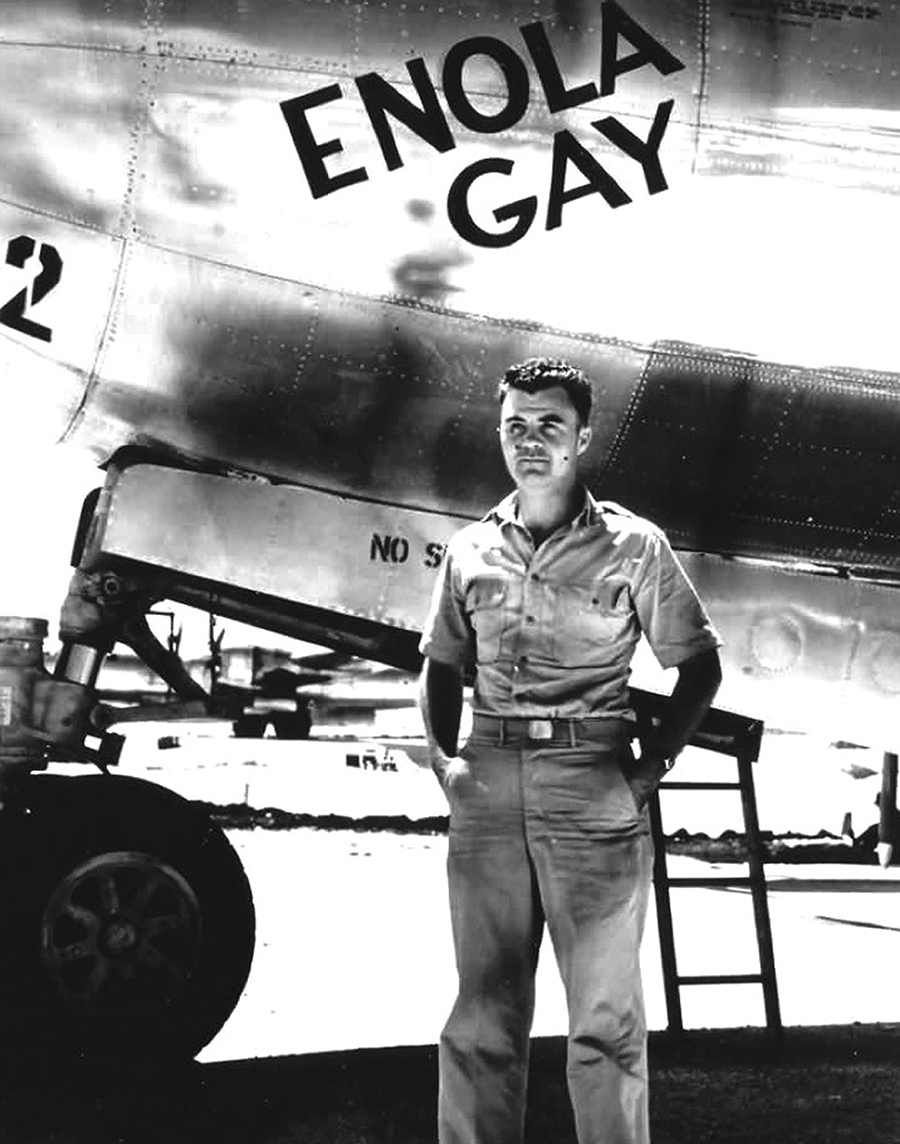
On August 6, at 8:15 a.m., Hiroshima learned what the end of the world was. The hands of the clock stopped in the city. The bomb, which pilot Paul Tibbets dropped from a nine-kilometer height, exploded 500 m from the ground.
The huge, half—sky—high nuclear "mushroom" could be seen from 600 km away. The pilot and navigator, mesmerized by this unprecedented picture, cried out: "Beautiful!" The apocalyptic picture, reminiscent of an illustration from a fantasy novel, attracted.
The explosion destroyed almost the entire city, turning Hiroshima into a huge pile of rubble. Radiation rained down on people, leaving burns on their bodies. Thousands of houses were engulfed by fires. About 100,000 people died in the first few minutes, and tens of thousands more became disabled after receiving radiation sickness, which doctors knew almost nothing about. "Burnt bodies of people were piled up everywhere in disarray, bloated and resembling rubber dolls, with white eyes on burnt faces," recalled Yoshiro Yamawaki, a survivor of this inferno.

The nuclear mushroom cloud over Hiroshima. The picture was taken from the B-29 bomber escorting the Enola Gay aircraft
Three days later, the Americans decided to repeat the atomic bombing of Japan. The planned strike on the city of Kokura had to be canceled due to cloudy weather. Pilot Charles Sweeney headed for Nagasaki. The Fat Man bomb was more powerful than the Hiroshima Kid. At 11:2 a.m. Sweeney dropped her on Nagasaki. But the destruction in the city was somewhat less than in Hiroshima. The reason for this is the hilly terrain, which has become a natural protection for some buildings and people. Nevertheless, 30-40 thousand people died in the first minutes after the explosion. Among the dead were American prisoners of war who worked at Nagasaki enterprises.

The ruins of Hiroshima
The atomic bombing had no decisive military significance. The massive American air raids and the actions of the Red Army against the Kwantung people had a much greater effect. The American naval blockade effectively cut off the Japanese islands from the rest of the world. What did Tokyo have left? The Japanese resisted fiercely, fanatically, but they had neither the allies nor the economic potential to continue resisting for a long time. After the tragedy of Hiroshima, the Japanese did not capitulate. Only the decisive blow of the Red Army showed that the Land of the Rising Sun no longer has the resources to resist.
A warning for humanity
In the world, the atomic strikes on Hiroshima and Nagasaki were already perceived as a tragedy in 1945. The public advocated a complete ban on the use of atomic weapons. It was impossible to ignore this point of view: it was not for nothing that after Nagasaki no one dared to use the atomic bomb as an argument in a military confrontation.
For decades, Americans have tried to hush up this tragedy and their responsibility for it. Japan has been under the political influence of the United States for many years. Remembering the tragedy of Hiroshima and Nagasaki, they do not focus on who exactly dropped atomic bombs on Japanese cities.
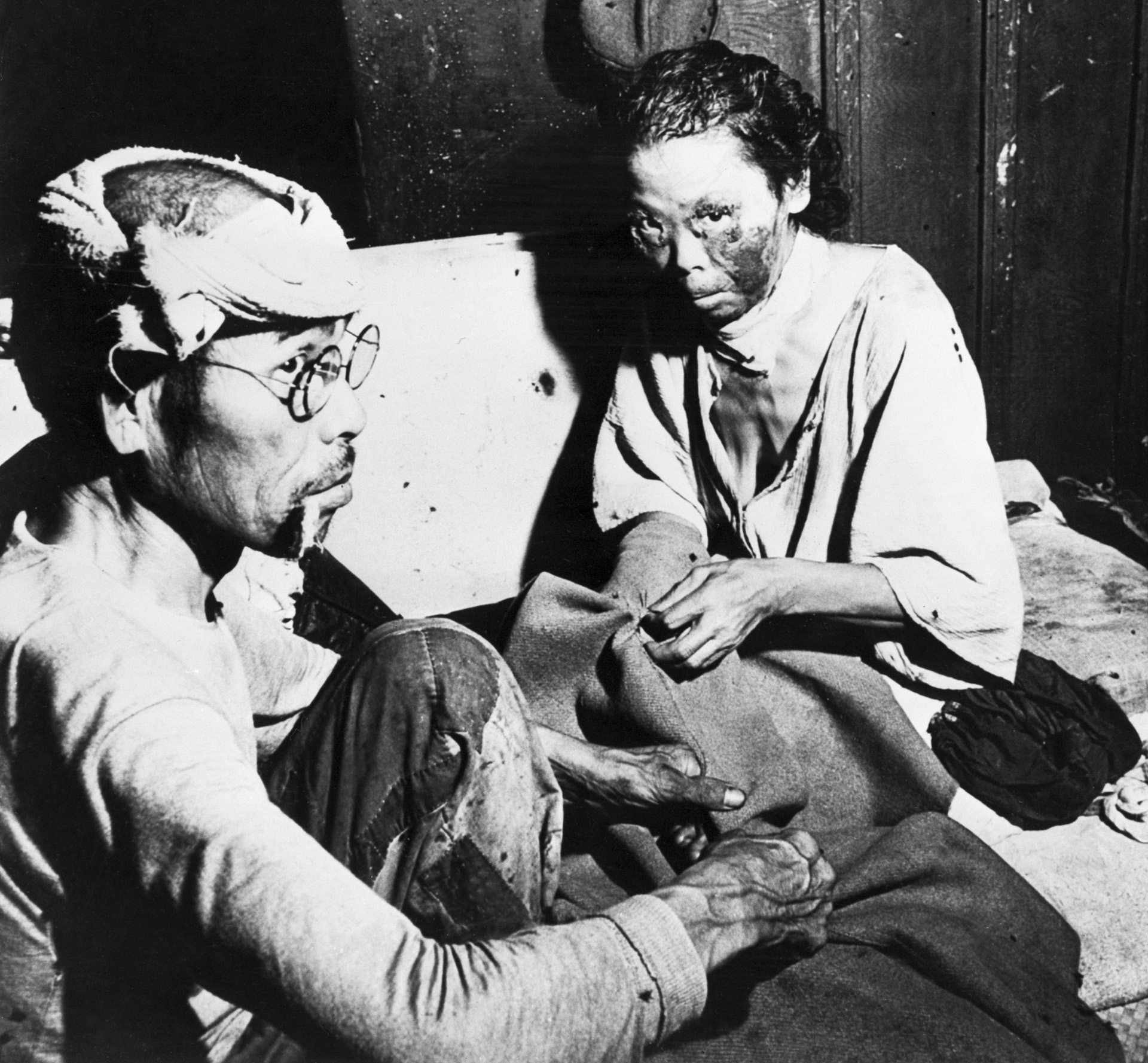
Nowadays, the situation has changed somewhat. On the eve of the 80th anniversary of the end of World War II, the atomic bombings of Hiroshima and Nagasaki were mentioned in the American administration without a shadow of regret. For President Donald Trump and his associates, this is one of the symbols of American victory. But few people in the world (and even in the USA) share this point of view. For most people, atomic bombing is primarily the mass destruction of civilians, a war crime.

Nagasaki after the atomic bombing
After that August day, the world will never be safe. The poisoned mushroom over Hiroshima has become a warning to the whole world. In many ways, this effect was foreseen by the father of the atomic bomb, Oppenheimer. He dreamed of international control over nuclear research and atomic weapons. I hoped that scientists and humanists would play the first fiddle in this process. It turned out to be an illusion. From the very beginning of the Cold War, the US government used the atomic factor to put pressure on the Soviet Union. After 1949, when Soviet scientists destroyed the American monopoly and the USSR became the second country in the world to possess atomic weapons, the presence of atomic weapons on both sides of the "front line" of the Cold War became the basis for a peaceful balance.

Hiroshima Peace Memorial Park
Today, Hiroshima is the millionth city in which only a few dilapidated buildings of the early twentieth century have been preserved. There is a sacred place in Hiroshima, the Peace Memorial Park. Trees from all over the world are planted there, including birches from Russia. There is a fire burning there, and its flame will not go out until "all the atomic weapons of the Earth disappear forever." There is also a monument in the park to Sadako Sasaki, a girl who survived the atomic bombing at the age of two and died of radiation sickness at the age of 12. They believed that they could survive if they made a thousand paper cranes, but they only managed to fly 644... It has become a symbol of an atomic catastrophe that cannot be allowed to happen again.
The author is the deputy editor—in-chief of the magazine "Historian"
Переведено сервисом «Яндекс Переводчик»
