In the power of knowledge: bacteria for milk production and AI for deciphering ancient manuscripts
- Статьи
- Science and technology
- In the power of knowledge: bacteria for milk production and AI for deciphering ancient manuscripts

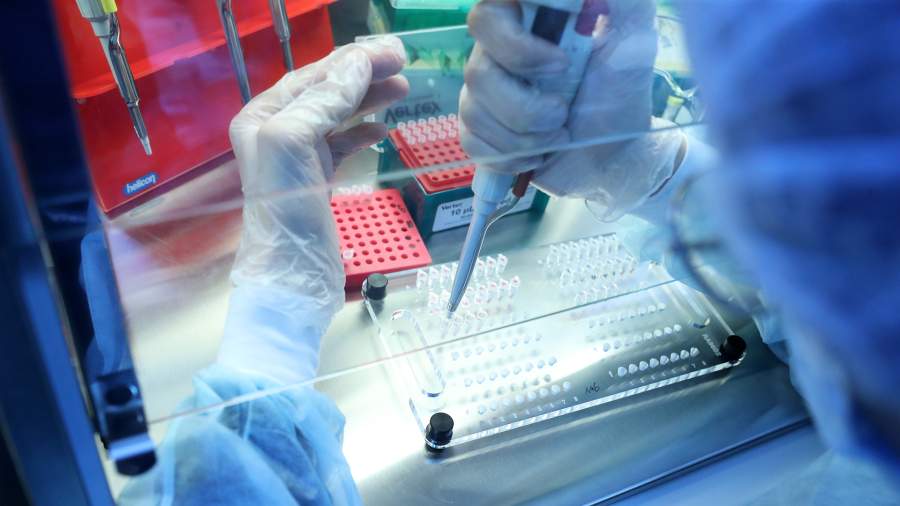
Swedish scientists have used genetic technology to develop for the first time a strain of bacteria capable of producing casein— the main protein in milk. In the future, the technology can be used for the industrial production of alternative dairy products without the help of cows or other animals. A group of European experts has developed an AI-based model that can "add" lost parts of ancient Latin manuscripts. And Russian physicists have discovered a mechanism that algae use to increase photosynthesis efficiency. This data opens the way to the creation of an artificial system for energy production. These and other events from the world of science can be found in the weekly Izvestia collection.
Frequent rocket launches can destroy the ozone layer in 25 years.
The development of space technologies can negatively affect the state of the ozone layer, the protective shell of the Earth that protects all living things from aggressive UV radiation. This conclusion was reached by scientists from St. Petersburg State University, who, together with colleagues from New Zealand, the USA, Switzerland and Spain, modeled the effect of rocket launches on the ozonosphere.
According to the researchers, in recent years, the number of systems in near-Earth space that provide satellite Internet, navigation, Earth sensing and other services has increased significantly. Such systems consist of thousands of vehicles located in orbits at altitudes from 250 to 600 km. To maintain their performance, they require constant updating and replacement of individual satellites, which leads to frequent rocket launches. As a result, the stratosphere is experiencing unprecedented stress.
— Many gases and solid particles that are formed during the operation of rocket engines have high chemical and radiation activity and are capable of destroying the ozone layer. Moreover, this effect occurs both during launches and during the return of spacecraft to the atmosphere," Evgeny Rozanov, co—author of the study and head of the Laboratory for Ozone Layer and Upper Atmosphere Research at St. Petersburg State University, told Izvestia.
All fuels leave a carbon footprint that affects the ozone layer, he said. It is impossible to abandon rocket launches, since the development of technology and the exploration of outer space depend on them. However, it is possible to reduce their negative impact by reducing the use of solid fuels with chlorine content, Evgeny Rozanov believes.
Scientists from Russia and China will study climate change in the Arctic together.
Under the leadership of Professor Wang Lin from the Institute of Atmospheric Physics of the Chinese Academy of Sciences, a team of researchers based at the A.M. Obukhov Institute of Physics and Technology of the Russian Academy of Sciences will solve a scientific problem in the field of monitoring and forecasting the state of the environment in the Arctic. Academician of the Russian Academy of Sciences, Chairman of the Scientific and Technological Council of the Russian Academy of Sciences Alexander Klimenko told about this in an interview with Izvestia.
—We believe that combining the potential of Russian researchers and the competencies of foreign experts will bring our science to a fundamentally new level," he said.
Scientists will consider how climate change affects the appearance of tornadoes and other meteorological anomalies in the Arctic region and Northern Eurasia. They will also have to understand how to improve the predictability of the state of the snow and ice cover in the seas of the Arctic Ocean, including along the Northern Sea Route. These and other questions will be answered by researchers not only from the IFA RAS, but also from the Hydrometeorological Center of Russia, the G.I. Marchuk Institute of Computational Mathematics of the Russian Academy of Sciences, the P.P. Shirshov Institute of Oceanology of the Russian Academy of Sciences, Moscow State University, as well as the Institute of Computational Mathematics and Mathematical Geophysics of the Siberian Branch of the Russian Academy of Sciences.
Improved photosynthesis of algae will make solar panels more efficient
Russian scientists have found out how the patterned shells of unicellular diatoms react to light. They use a special optical effect to enhance photosynthesis. The results of the study of microorganisms can be used to develop light sensors, biosensors, protective coatings against ultraviolet radiation, solar panels, as well as to create artificial photosynthesis systems capable of converting carbon dioxide and water into fuel.
"We are learning more and more about the properties of diatom shells, and some of the mechanisms they use may eventually prove useful in photonic devices, biosensors, self—regulating photosensitive coatings, and solar panels-maybe even in artificial photosynthesis systems that convert sunlight energy not into electricity, but into chemical fuel."- said Yuliana Tsvetinovich, Senior researcher at the Center for Photonics and Photonic Technologies at Skoltech.
Experts intend to continue their research to gain a deeper understanding of the processes in algae.
A method of producing milk without using cows or other animals
Scientists from Sweden have created a strain of bacteria that can independently produce casein— the main protein in milk. To do this, the specialists injected the microorganisms with a bovine gene and some enzymes related to milk production. The discovery will allow the development of new methods for the production of dairy products. However, so far the technology has been implemented only on the scale of a scientific laboratory, and for industrial applications scientists have to solve a number of problems.
According to the developers, the technique will reduce the negative impact of agriculture on the environment, in particular, the amount of methane released by dairy animals. According to them, artificially produced proteins can become a full-fledged substitute for dairy products needed by humans.
AI will help solve the mysteries of ancient texts
European scientists have developed an artificial intelligence-based model called Aeneas. She is able to determine the origin of ancient Roman texts, assess their age and fill in their missing parts. To do this, the AI was trained on the materials of the three largest databases of melon Latin documents, which contain about 180 thousand artifacts.
"Aeneas can almost instantly find corresponding parallels in text from our entire database, since each text in it has a unique identifier," said Yannis Assael, co—author of the study and a researcher at Google DeepMind.
To verify the accuracy of the dating system, the developers asked 23 professional experts to determine the age of the manuscripts independently and using a model. Without a neural network, experts dated the inscriptions to an accuracy of 31 years. The dates predicted by the AI turned out to be correct with an accuracy of 13 years.
Переведено сервисом «Яндекс Переводчик»
