
Price under the gun: why oil is getting more expensive
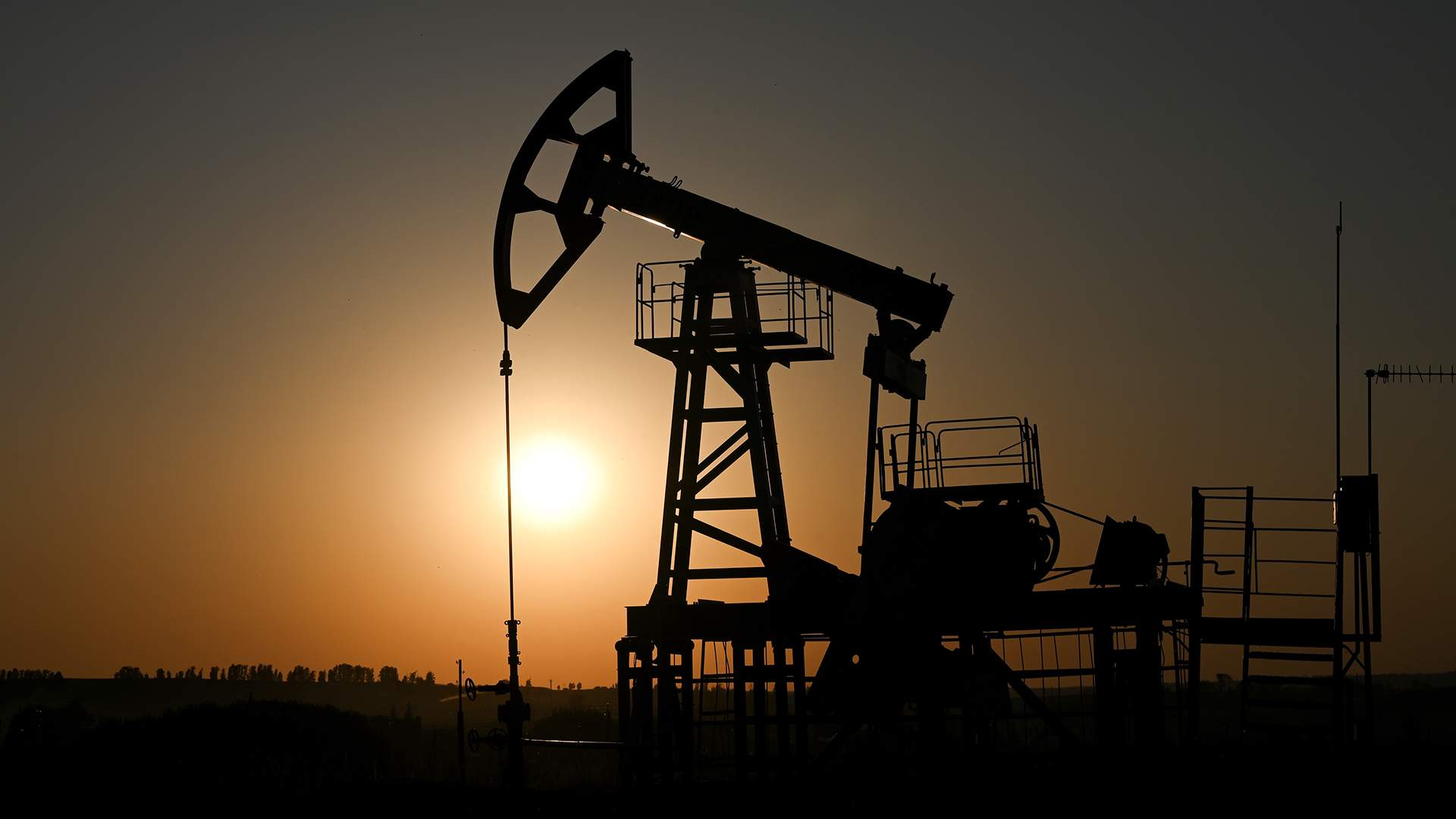
Global oil prices are rising despite the threat of trade wars and economic turbulence. Brent has exceeded $70 per barrel again, and the Russian oil basket is showing resilience. The experts interviewed by Izvestia understand the reasons for this trend and what the market can expect in the second half of the year.
Against the background of a weak dollar
The increase in Brent quotations to $70 per barrel in mid-July was an unexpected signal of the stability of the oil market. Despite the difficult macroeconomic environment, including the aggressive trade policy of the new US leadership, prices continue to creep up.
— Several factors have influenced the price of oil in recent weeks. First, the weakening of the dollar amid expectations of a Fed rate cut makes commodities more attractive to investors. Secondly, there is still high demand from Asia, especially China and India, which are actively replenishing strategic reserves," explains Ekaterina Kosareva, Managing Partner of the VMT Consult agency.
OPEC+ is also acting on the supply side: the cartel countries, despite loud statements about a return to balance, continue to keep supplies below the demand level. "Saudi Arabia and Russia are acting in concert, supporting the market against the backdrop of geopolitical tensions," she adds.
Oil without a ceiling
In the Russian market, oil prices are also showing growth. The price of Russian Urals oil has already exceeded $60 per barrel. Despite the formal price ceiling set by the G7 countries, demand for Russian raw materials remains consistently high: due to the sale of oil with the transfer of ownership in ports, the use of an independent fleet and schemes for the reissue of cargo in neutral waters.
According to Olga Orlova, head of the Industry department at the Institute of Oil and Gas Technologies, Russian supplies have adapted to the new conditions. "We are witnessing a steady increase in exports along the southern corridor: through the ports of Novorossiysk and Taman. This allows us to flexibly respond to the situation on the global market, including in terms of pricing," she notes.
Duties and barriers
However, the price increase is taking place against the background of increased trade tensions. US President Donald Trump is threatening to impose 500 percent tariffs on countries importing Russian oil and gas. The measure is designed not so much to limit supplies as to create conditions for negotiations, experts believe.
As Yulia Makarenko, deputy director of the Banking Institute for Development, notes, "these duties play a rather symbolic role: they signal Russia's readiness to defend its economic and political interests harshly." Despite the fact that the main supplies of Russian energy resources have already changed their direction.
The Trump administration's policy is increasingly aggressive towards its leading trading partners. Since January 2025, the White House has already announced several waves of import duties, including on commodities, as well as its intention to review US participation in a number of international energy agreements. This increases nervousness in the commodity markets and creates the effect of a "political premium" in the price of a barrel.
Trump and the "new isolationism"
Experts recall that Donald Trump opposes the "green" policy of the previous administration and actively supports American oil production, especially the shale sector. On the other hand, a new wave of protectionism and pressure on China could bring down oil demand in key regions.
— If Washington continues to tighten the screws on China, as well as impose restrictions on technological and energy cooperation, this could slow down the recovery of the Asian economy and hit global demand for raw materials. But at the same time, Trump is interested in cheap oil for the American consumer, and this may restrain the growth of quotations, says Ekaterina Kosareva.
In fact, every step of the current US administration now has an impact on the oil market, both in terms of logistics and in the context of the investment climate.
What will happen next
In the second half of 2025, the oil market will balance between geopolitics and the fundamental conjuncture. According to Olga Orlova, if there are no large-scale shocks, Brent will remain in the range of $ 68-75 per barrel. Urals, taking into account logistics and discounts, will trade around $60.
Yulia Makarenko adds that price behavior is increasingly determined not only by classical supply and demand factors, but also by financial flows. "More and more speculative capital is entering the oil market. In conditions of uncertainty, investors use oil as a safe haven asset along with gold, which makes it volatile but attractive during periods of instability," she emphasizes.
The situation on the foreign exchange markets will also remain an important factor. If the dollar continues to weaken, this will be an additional driver of price growth. However, in the case of tight monetary policy from the Fed and rising yields on US government bonds, it is possible to lock in profits on oil contracts and roll back to the range of $ 60-67 per barrel.
Forecast for the end of the year
Experts agreed that by December 2025, the price of Brent crude oil will be in the range of $70-78 per barrel. Russian oil will keep a discount, but it will steadily sell above $60.
The final price will depend on a number of factors: the rigidity of the White House's policy, the pace of recovery in the Asian economy, the course of trade negotiations, and a possible revision of OPEC+'s position.
— We are entering a period of high uncertainty, when any statement can affect the cost of the resource. But there is also a positive aspect: the Russian oil industry has proven that it is able to adapt to any conditions, whether it is price ceilings, embargoes or new duties," summarizes Ekaterina Kosareva.
Переведено сервисом «Яндекс Переводчик»
