
Let's live: Russians will die less in road accidents
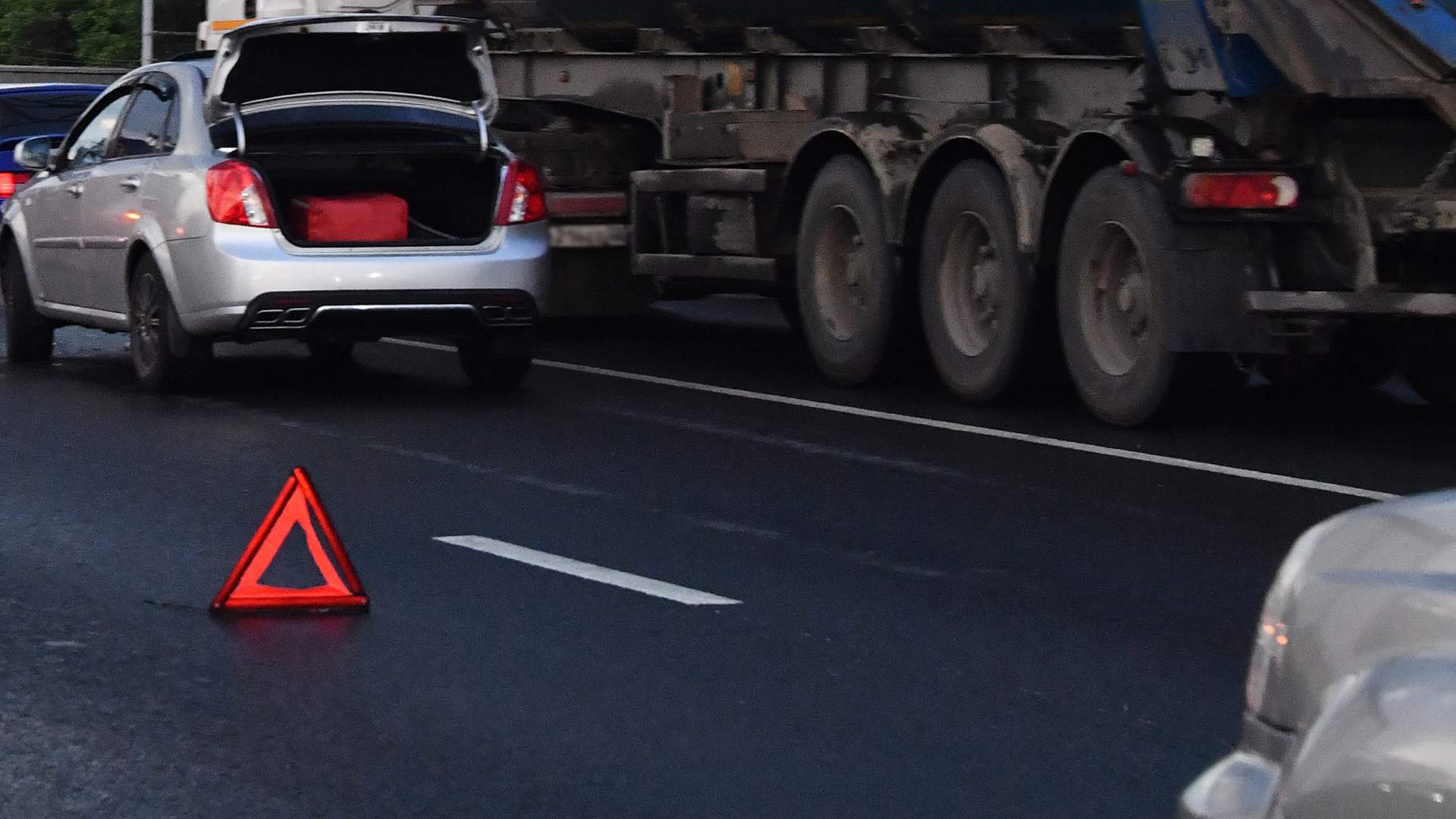
The Ministry of Internal Affairs of the Russian Federation has prepared a draft Strategy for improving road safety. By 2030, the death rate in road accidents should decrease by one and a half times, and by 2036 — by half. The agency named the key issues that directly affect the state of accidents in the country. It will be very difficult to achieve the intended goals, but it is realistic, experts say. The details are in the Izvestia article.
By strategy
The Russian Ministry of Internal Affairs has developed a draft Strategy for improving road safety. The document has been published on the federal portal of draft regulatory legal acts. It provides for a one—and-a-half-fold reduction in the death rate in road accidents by 2030 (compared to 2023), and by half by 2036.

The Interior Ministry notes that in order to achieve these goals, ensuring road safety must be considered "as the common responsibility of all subjects of the system, not just road users, with the priority of state responsibility."
"A safe systematic approach involves not only responding to the causes and locations of specific road accidents, but also continuous proactive improvement of the road transport complex," says the accompanying documents to the draft Strategy.

The State Traffic Inspectorate of the Ministry of Internal Affairs of the Russian Federation notes that the proposed Strategy is based on an approach where the road user is recognized as a key figure requiring continuous educational and preventive influence. At the same time, it is the most vulnerable link in road traffic, whose mistakes must be compensated by the capabilities of the road infrastructure and the design of vehicles, the department emphasizes.
"To achieve this goal, a comprehensive impact of all branches and levels of government on the components of the road safety system is envisaged as part of solving tasks aimed at improving the management system in this area, improving the safety of road users, vehicles and services in the field of transport, road infrastructure and the effectiveness of responding to accidents," the State Traffic Inspectorate said.
Acknowledge the problems
The draft strategy lists the main problems that directly affect the state of accidents and death rates on Russian roads. One of the key issues on which the effectiveness of road safety depends is the imbalance and lack of funding in the regions, the department notes.

"In the regional Road safety projects, more than a third of the subjects of the Russian Federation lacked funding in 2024. In nine out of ten such entities, financing of measures to ensure road safety has not been provided since the beginning of the implementation of these projects," the document says.
Since the regions differ in terms of socio-economic, transport, and urban development, there is an imbalance in the level of road safety between them. As a result, less economically prosperous regions are characterized by higher values of social risk and slower rates of its reduction, the Interior Ministry emphasizes.

The Interior Ministry also notes certain problems in the inconsistency of targets in related areas related to BDD. For example, the standard condition of roads is currently assessed according to criteria (longitudinal evenness and absence of defects in the roadway), which do not fully reflect the safety level of the highway. Without taking additional measures, including infrastructural and technical changes and additions (lighting, stops, road signs, markings, etc.), this may lead to a deterioration of the situation, the ministry said.
In Russia, the problem of driving vehicles by drivers under the influence of drugs is getting worse, the Interior Ministry admits. The number of deaths in road accidents involving such drivers increased by 34.5% last year. And over the past seven years, their share has increased by more than one and a half times. However, in cases where the driver refuses to undergo a medical examination, such facts remain latent. In addition, the problem of vehicle management by drivers under the influence of drugs that impair reaction and attention remains unresolved, the text of the document says.
The authors of the draft Strategy draw attention to the "lack of discipline in the use of seat belts." According to statistics, every fifth driver or passenger who died in an accident was not wearing a seat belt.

"The problem of non-use of motorcycle helmets is even more acute, the facts of which in 2024 were established for every third deceased driver and every second deceased passenger of a motor vehicle. In seven years, the number of deaths of motor transport drivers who do not use a helmet when driving has more than doubled," the document says.
According to the Ministry of Internal Affairs, a significant threat to BDD, which has worsened in recent years, is the management of vehicles by children and adolescents. In seven years, the number of child drivers killed in road accidents has increased two and a half times (from 26 to 65), and the number of injured has increased almost fivefold (from 542 to 2,501). At the same time, in eight out of ten such accidents, they were driving a motor vehicle. This problem is further aggravated by the fact that the number of cases of minors driving pit bikes, ATVs and other equipment not intended for driving on public roads is growing, the police say.
"Online trading platforms (marketplaces) are rapidly developing, which sell not only individual components, but also vehicles, as well as devices not intended for driving on public roads. At the same time, there is a lack of effective control, which prevents the timely exclusion of such goods and services from the market and negatively affects road safety," the document says.
The market also offers goods and services that "contribute to illegal activities." We are talking about devices that hide license plates, "plugs" for seat belts, surrogates for child restraints that do not meet safety requirements, the sale of fake driver's licenses, medical certificates, etc.

The problem of participation in traffic by drivers with medical contraindications and restrictions on driving also needs to be solved, the Interior Ministry is confident.
"Further improvement of the medical security system for access to driving vehicles is required, including the development of information interaction mechanisms between law enforcement agencies and medical organizations at all stages," the Strategy text says.
Cars and roads
The aging of the Russian fleet poses a serious problem for road safety. According to the results of last year, about a quarter of passenger cars, a fifth of buses, 38% of trucks and 80% of motorcycles on Russian roads were over 15 years old.
"As the service life increases <...>, the severity of the consequences of an accident increases for those in the cabin. First of all, this is due to a decrease in the strength characteristics of the vehicle and, as a rule, a lower level of its active, passive and post—accident safety," the Interior Ministry said.

The police noted that the sanctions pressure and the withdrawal of foreign automakers from the Russian market as a result of the changing geopolitical situation led to an increase in prices for cars and components. At the same time, as stated in the Strategy, "the introduction of a long-term indexation scale of the recycling fee contributes to a further increase in prices for new cars."
"Modern safety systems are not widely used in vehicles manufactured in Russia, and some cars are not equipped with even the minimum necessary systems. In the period 2022-2023 alone, an average of nine out of ten domestic passenger cars were produced without separate safety systems, which has already led to an increase in the severity of the consequences of accidents for people inside the car," the Interior Ministry said.
Due to the rise in the price of spare parts, citizens are increasingly using counterfeit or non-original parts, and the inter-service life of vehicles has increased, the police said.
At the same time, an increase in imports of right-hand drive vehicles has led to an increase in the main accident rates with their participation, the police admit. Last year, more than 10% of all accidents occurred with "right-hand drive" cars.
"These circumstances may have a negative impact on BDD in the medium and long term. In the current conditions, it is important to stimulate the renewal of the vehicle fleet and the massive introduction of modern security systems that help minimize human errors," the document says.

The Interior Ministry also noted the poorly developed infrastructure of the legal regulation of traffic accidents, the need for more prompt and high-quality assistance to victims of road accidents, as well as an integrated approach to the modernization of the road network.
Positive effect
The development of the system of photo-video recording of traffic violations has had a positive impact on strengthening the discipline of road users, primarily drivers, the Interior Ministry said. Over the past seven years, the number of complexes on the roads has more than doubled, and their functionality has expanded. In addition, the procedure for the placement of complexes has been regulated, taking into account the interests of road safety, including informing drivers about their locations.
Nevertheless, "existing measures do not always allow for a proper preventive effect on the violator, including due to the disproportionality of punishment to the threats posed by the violation," the department notes.
The possibility of paying discounted fines for a number of traffic violations also had a positive impact on road safety. However, this was accompanied by "an increase in the number of violations, especially repeated ones committed by individual citizens." In addition, the Ministry of Internal Affairs believes that the practice of registering accidents without victims in a simplified manner needs to be improved, since now only about a third of such accidents are registered in this way.

The State Traffic Inspectorate said that within the framework of each of the tasks, areas have been identified, the implementation of which involves the development of new and improving the effectiveness of existing measures, including through the active introduction of modern technologies and digitalization.
— The draft Strategy, after approval, involves the development of an action plan for its implementation. When preparing the draft Strategy, proposals from about 300 stakeholders were taken into account, including government authorities, including at the regional level, as well as educational, scientific, public and commercial organizations, the traffic police emphasized.

It's difficult, but it's possible
In the current conditions, it will be quite difficult to achieve the planned targets, but these are quite realistic benchmarks, said Igor Morzharetto, a member of the Presidium of the Public Council under the Ministry of Internal Affairs of the Russian Federation.
— The main difficulty, oddly enough, is that significant results in reducing accidents and deaths in road accidents have already been achieved. Because of this, the available leverage and methods may no longer be as effective. Currently, the main focus should be on the prevention of law-abiding behavior of road users, their training, and comprehensive modernization of the road network. These processes are very slow and require coordination and joint work of absolutely all authorities, ministries and departments," Igor Morjarretto told Izvestia.

Maxim Kadakov, editor-in-chief of Za Rulem magazine, emphasized that the Interior Ministry has been as open and honest as possible about the problems that affect road safety.
— All the existing problems — from the increase in the number of accidents by drug-intoxicated drivers and the number of accidents with child drivers, to issues of safety of domestic cars and infrastructure for SIM — are not glossed over, but on the contrary, they are discussed as openly as possible. This will allow us to quickly identify the primary levers and mechanisms of influence on them," Maxim Kadakov emphasized.
Valery Soldunov, a member of the Civic Chamber of the Russian Federation and chairman of the All-Russian Society of Motorists, agrees with him. These issues have been repeatedly discussed at round tables and meetings of the Public Chamber, he recalled.
— Of course, it's bad that they haven't been resolved yet. But it is encouraging that these issues, which are being discussed by society, are reflected in the draft Road Safety Strategy," he said.
Переведено сервисом «Яндекс Переводчик»
