- Статьи
- Culture
- Coast of the Left, coast of the right: Izvestia publishes a fragment of a book about Palestine and Israel

Coast of the Left, coast of the right: Izvestia publishes a fragment of a book about Palestine and Israel

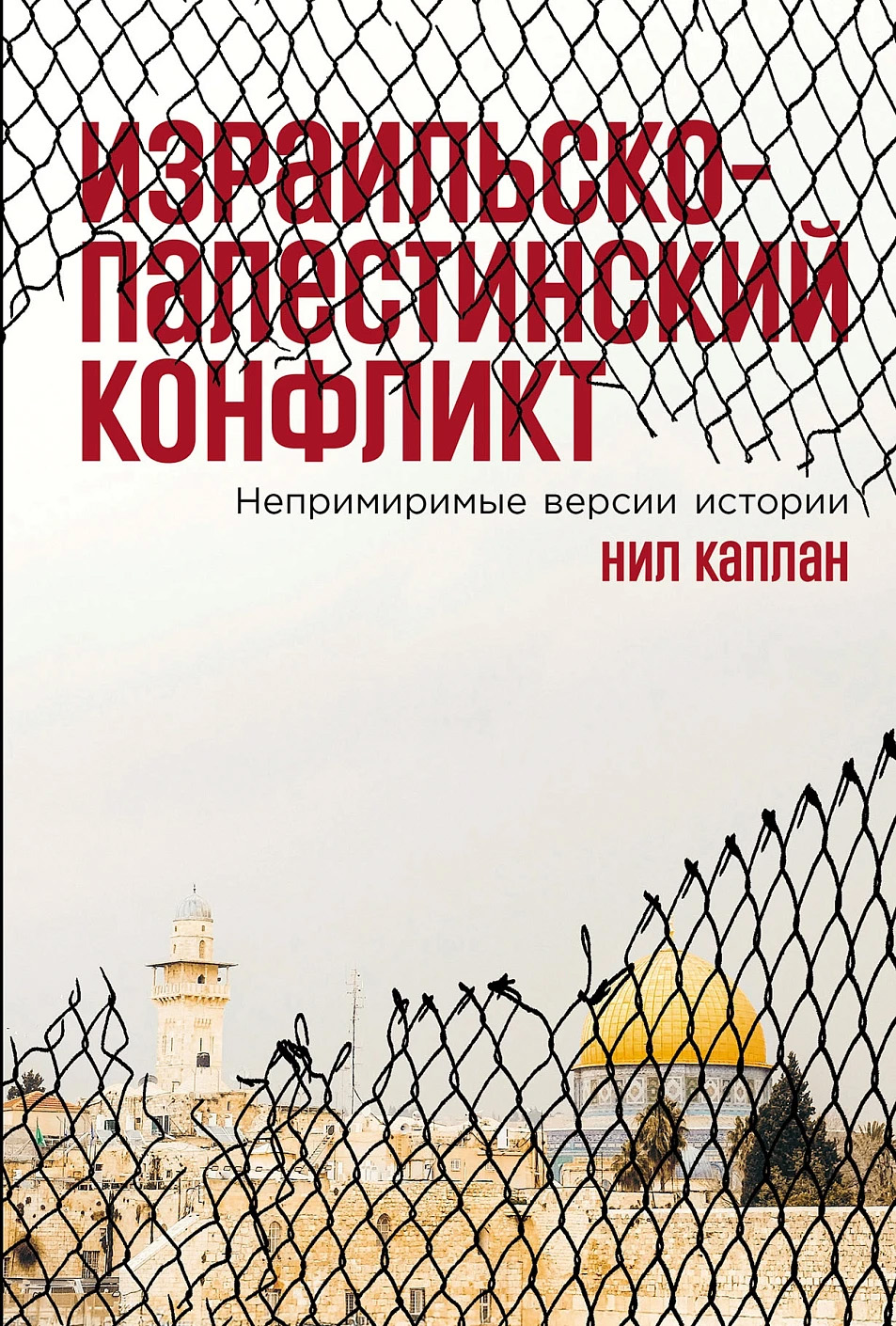
For more than half a century, Neil Kaplan, a lecturer at Vanier College in Canada, has researched the decades-long struggle between Israelis and Palestinians and has lectured, published articles and books on the subject. The book "The Israeli-Palestinian conflict: Irreconcilable Versions of History" can be considered the result of this work. The first edition was published in 2009, followed ten years later by a second, expanded and more pessimistic one. Izvestia publishes an exclusive fragment of this book, which Alpina Non-Fiction publishing house will release in July for the first time in Russian.
"The Israeli-Palestinian conflict: Irreconcilable versions of history" (fragment)
Recalling the harsh assessments that David Ben-Gurion and Avni Abd al-Hadi gave to the conflict almost a century ago, let me quote the words of two Israelis and two Palestinians discussing the essence of their still unresolved dispute. Although they all formulate their assessments in terms of a clash of nationalisms or a clash of narratives, the degree to which they accept the narrative of the other side varies significantly, and they see different ways to resolve the conflict.
Mordechai Bar-He personally participated in the 1948 war, in the 1950s he served as chief of the office of the head of the General Staff, Moshe Dayan, and then became a scientist and a fighter for peace. He proposed the following definition:
The hundred-year-old conflict between the Zionist movement and the Arab national movement is neither the result of a mistake made by one side, nor the result of one side's misunderstanding of the other's true motives. A fierce confrontation was inevitable from the moment when, at the end of the 19th century, the Jews decided to restore their national sovereignty in Palestine, in the land they had always called the Land of Israel (Eretz Israel), but which was occupied by another people. The roots of the conflict lie in the tragic collision of two motivation systems and two processes that were initially independent of each other, but over time became firmly intertwined and collided head-on.
A similar point of view is shared by historian Shlomo Ben-Ami, an Israeli of Moroccan origin who was a member of Ehud Barak's cabinet and led the Israeli delegation at the second Camp David talks. His memoirs are called "Scars of War, Wounds of Peace: The Israeli-Arab Tragedy" (Scars of War, Wounds of Peace: The Israeli‐Arab Tragedy). He's writing:
It is the total and absolute nature of the Israeli-Palestinian conflict that has made it so protracted. After all, this is not just a war over territory or a banal border dispute; it is a clash of rights and memory. Longing for the same landscapes, mutually exclusive claims to ownership of land, religious shrines and symbols, as well as the ethos of deprivation and refugee, which both sides claim as their monopoly, make their national narratives practically incompatible.

Astute Palestinians have also been quite clear about what they believe lies at the heart of the conflict. Ahmad Sami Khalidi, an analyst working in London and a participant in the negotiations of the second track, writes challenging Israel's demand for recognition by the Palestinians of Israel's right to exist as a state of the Jewish people.:

A view of damaged Palestinian buildings in the Nur Shams refugee camp.
The Palestinians do not believe that the historical presence of Jews on this land and their connection with it entail preferential rights to it. Palestine as our homeland was created over the course of more than fifteen centuries of continuous Arab-Muslim presence; only superior force and colonial machinations deprived us of this land. We completely reject the Zionist narrative, according to which the houses built by our ancestors, the land they cultivated for centuries, and the shrines they erected and worshipped in did not really belong to us at all, and our desire to protect them was morally unlawful and perverse: [the Zionist claim that] From the very beginning, we had no right to all this.… [We reject the argument that] the cause of the conflict was not the Zionist encroachment on Arab lands and rights, but the disagreement of the Arabs with it.… We understand that there is a Jewish majority in Israel today and that the nature of the State reflects this fact. But we cannot break the thread connecting the past with the present and, inevitably, with the future.

Israeli soldiers during an operation in the southern city of the Gaza Strip
Finally, calling the Zionist-Israeli and Palestinian narratives "irreconcilable," the late Edward Said defines their clash as follows:
The Israelis say that they fought a war of liberation and thus achieved independence; the Palestinians say that their society was destroyed, and most of the population was expelled...
The conflict seems to be insoluble because it is a dispute over the same land between two peoples who believed they had a legitimate right to it and hoped that the other side would eventually give up or leave. One side won the war [in 1948], the other lost, but even now [in early 1999] this confrontation is deeper than ever. We, the Palestinians, ask why a Jew born in Warsaw or New York has the right to settle here (under the Israeli Law of Return), but we, the people who have lived here for centuries, have no such right...

It is impossible to ignore the fact that in 1948 one nation ousted another, thus committing a blatant injustice. A parallel reading of Palestinian and Jewish history not only makes it possible to feel the tragedy of the Holocaust and what later happened to the Palestinians, but also shows how, during the joint existence of Israelis and Palestinians since 1948, one nation, the Palestinians, bore a disproportionately large burden of pain and loss.

1944 concentration camp for Jews, Terezin
Perhaps not everyone will agree with the four interpretations of the conflict presented here, but these are honest starting points, genuine voices from representatives of the warring parties, whose frankness can help us better understand what this conflict really is, why it has not yet been resolved, and why it may never be fully resolved.
Переведено сервисом «Яндекс Переводчик»
