
Sector without gas: what a new round of energy crisis in Transnistria will lead to
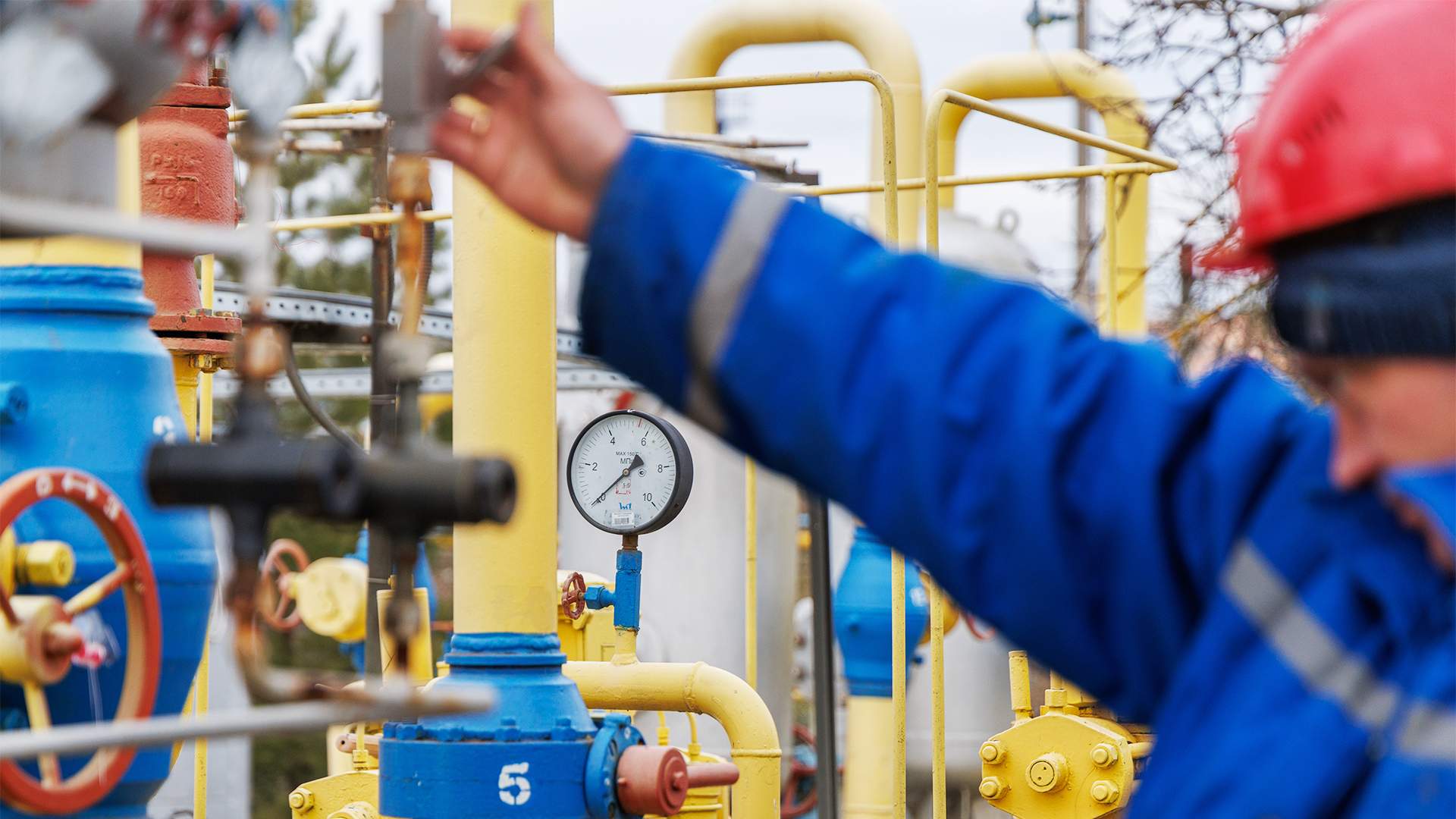
After a short break, Transnistria is again on the verge of an energy crisis. The fact is that on February 10, the fuel supplied to the republic thanks to a European grant will run out. Chisinau and Brussels are ready to continue supplies, but they demand new concessions and insist, among other things, on raising tariffs for consumers. "Izvestia" looked into the situation.
Transnistrian energy sector revived after the EU grant
On January 1, the contract for pumping Russian gas through Ukraine ceased to be in force, and one of the consequences was a severe energy crisis in Transnistria. The unrecognized republic was left without blue fuel, as well as without heat and hot water. Electricity was supplied to consumers on a scheduled basis, with blackouts lasting five to eight hours a day. Large industrial enterprises were shut down, schoolchildren were dismissed for vacations, and kindergartens accepted only those children whose parents were both working.

As a result, throughout January hundreds of thousands of Transnistrians lived in semi-darkness in frozen apartments. This led to a surge of colds, and the number of patients in hospitals increased by an average of 150-170 people per day. In addition, due to overloading of power grids there were more than 60 fires, 25 people were injured and four died. At the same time, Tiraspol emphasized that the situation could worsen even more, because by the end of the month coal reserves were running out.
Against this background, the leadership of the republic tried to urgently solve the problems that had arisen. Thus, in mid-January, DMR President Vadim Krasnoselsky flew to Moscow, where he agreed on humanitarian fuel supplies. According to published information, the Russian side agreed to buy gas for Transnistria on the European market in the amount of 3 million cubic meters per day, spending about $164 million, and Hungarian companies were expected to be involved in the transit.

However, it was not possible to achieve the realization of this scheme: several objections followed from the side of Chisinau. Moldovan President Maia Sandu said that such supplies would allegedly violate anti-Russian sanctions and hinted at the need to withdraw Russian military and peacekeepers from Transnistria. Other officials demanded that representatives of Moldovagaz be involved in the negotiations.

As a result, at the end of January, when the final collapse of the Transnistrian energy sector was just days away, a new option emerged. The European Union offered to allocate a grant of €30 million so that the DMR would receive the necessary volume of gas between February 1 and February 10; Moldova was satisfied with this scheme, and fuel began to flow into the republic. Brussels emphasized that the money was given only for social needs, i.e. Transnistrian enterprises remained frozen.
Chisinau and Brussels put forward new demands
After the first gas supplies, the situation in Transnistria began to improve. The Moldavian state district power plant started to work in the usual mode, beginning to generate electricity from blue fuel, as a result, heat and hot water began to flow into homes and light began to appear. The load on power grids decreased, and the number of accidents fell. Schoolchildren returned to classes, and most kindergartens started working. The head of the republic, Vadim Krasnoselsky, said on this occasion that we can breathe a sigh of relief.
However, the situation in the economy remains difficult, as most enterprises are still idle. It is known that in January Transnistrian exports collapsed by 60%, 135 organizations, that is, one third of all economic structures of the republic, completely stopped their foreign economic activity. Tiraspol emphasizes that there are funds in the budget to pay salaries and pensions for January and February, but further opportunities will be limited because tax revenues are minimal.

Besides, the future is in question, because the situation with the gas after February 10 is still unsettled. Today there are two options for the development of events. The Transnistrian authorities expect that they will still manage to establish uninterrupted, constant supplies. Thus, the head of the TMR Foreign Ministry, Vitaly Ignatiev, said that negotiations with Moscow and Budapest are underway, and fuel and its transit are supposed to be paid for with funds from a Russian loan.
The second option is a new grant from Brussels. European Commissioner for Enlargement Marta Kos said that the EU is ready to provide the unrecognized republic with €60 million, which will be enough to cover social needs until the end of February. At the same time, the list of conditions between Brussels and Chisinau is expanding. Now they demand from Tiraspol not only to leave large industrial enterprises without support, but also to raise tariffs for consumers and to "respect fundamental human rights and freedoms".
There is not much time left until the end of the current humanitarian period, but there is still no clarity about the further development of the situation. On the one hand, from the economic point of view, Moldova would benefit from the first option - in this case, the Moldavian TPP in Transnistria would work again at full capacity and in a regular mode, and Chisinau could buy this electricity at a profit.

On the other hand, Kishinev and Brussels can bet on the second option; in such a scenario, it will be possible to keep Transnistria in constant tension, gradually minimize economic activity, and eventually lead to the republic's rejection of independence. Andrei Safonov, a deputy of the Supreme Council of the TMR, directly writes in his social networks that the European Union may seek a social explosion in the republic.

According to the parliamentarian, Brussels in exchange for aid actually demands to stop and destroy large enterprises. "This means being left without jobs, without income to the treasury, and eventually without the state. Then the situation will be exploded with the demand to bring the tariffs for housing and communal services to the level of Moldova and Romania," he notes, adding that the demands to respect human rights and media freedom are far-fetched, because there are no banned parties in the DMR and all political activists are at large.
What experts say
Igor Shornikov, associate professor at the Financial University under the Russian government and former deputy head of the TMR Foreign Ministry, emphasizes that gas has become a lever of pressure on Transnistria.
- It is quite possible that Tiraspol will have to agree to a European grant to somehow survive the winter period. This will be a very hard decision, because it will allow to solve social problems for a while, but it will aggravate economic difficulties. Enterprises will stand idle and lose customers, the budget will be devastated, people will leave in search of a better life. It is possible that everything is being done for this purpose, Transnistria is being deprived of its economic base and forced to obey," he says.

Moldovan political scientist Alexander Korinenko reminds that the country's authorities also receive grants from the European Union to solve problems in the energy sector.
- The situation is very favorable for Chisinau now. On the one hand, Maya Sandu's team receives gratuitous financial aid from Brussels. On the other hand, there is also an opportunity to put pressure on Transnistria. I do not see any motivation to change anything. Probably, a comprehensive solution of the problem will be taken up when the grants stop coming, but not before. I think that Tiraspol understands this as well, it is not for nothing that two channels of Moldovan public television started working in the republic for the first time in the years of independence," he says.
Переведено сервисом «Яндекс Переводчик»
